By Arden Berry | Staff Writer
As students return to crowded dorms, apartments and classrooms, flu season rages on. According to the Center for Disease Control and Prevention’s Weekly U.S. Influenza Surveillance Report, seasonal influenza activity remained elevated across the country as of the week ending in Jan. 10.
In their report for the week ending in Jan. 3, the CDC said that while some indicators showed a decrease in flu cases, this downtick could be due to changes in healthcare seeking or reporting during the holidays, meaning the number of cases may not have yet reached its peak.
“The country is still experiencing elevated influenza activity, and elevated influenza activity is expected to continue for several more weeks,” the CDC’s report read.
According to the CDC, the virus has also been particularly severe this season, with 15 flu-associated pediatric deaths and eight during the week ending in Jan. 10 alone, as well as an estimated 9,300 deaths total.
Health Services Medical Director Dr. Burritt Hess said the severity of this flu season is likely due to its most common strain, the Type A variant H3N2, which was not included in this year’s flu vaccine.
“Though the flu vaccine does provide some partial immunization to it or protection against it, it doesn’t completely eliminate the possibility of it,” Hess said.
Hess said the symptoms associated with this strain are particularly wide-ranging.
“We’re seeing not only the upper respiratory elements but also seeing some lower gastrointestinal manifestations, nausea, vomiting and diarrhea associated with it,” Hess said. “So it seems to be sort of hitting both above the belt and below the belt, so to speak.”
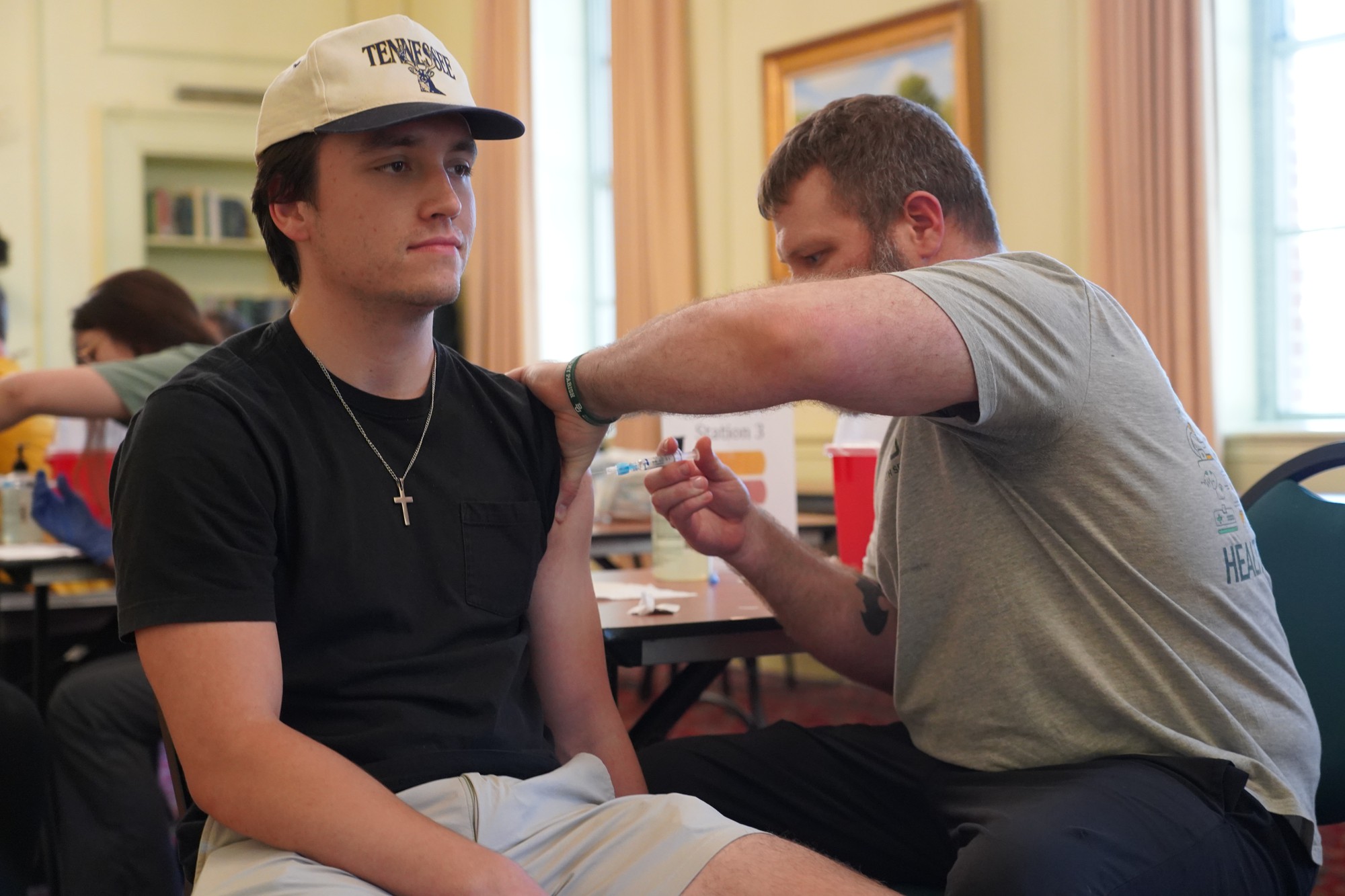
Lilia Gonzalez, director of nursing, said there are special populations that are higher at risk this flu season, including children, adults over 65, pregnant women and people with chronic health conditions, including asthma or diabetes. The Health Services still recommends students get the flu vaccine to protect against other strains.
“It is recommended that they receive a flu vaccine as well to help spread,” Gonzalez said. “If you’re sick, stay home. Try to stay away from people that you know are sick. Also, cover your cough, cover your sneezes, wash your hands frequently and avoid touching your mouth, your eyes, your nose.”
For those who do get the flu, Hess said antivirals such as Tamiflu taken within 48 hours of symptoms appearing will be most effective for relief. However, Hess has noticed a trend on TikTok to “downplay or disregard” antiviral medications such as Tamiflu due to reports of hallucinations.
“The reality is that severe flu can also cause neuropsychiatric side effects, and it isn’t clear in the information that’s being shared around that the hallucinations that are being reported were not actually due to the flu itself,” Hess said. “We’ve got years and years of data with it now. And it’s really quite safe to take with the caveat that it can cause some nausea and vomiting.”
To protect students with chronic health conditions as well as other special populations students may interact with, Gonzalez and Hess recommend students work to prevent contracting the flu. Hess said it may be helpful for students, especially if they are exhibiting symptoms, to consider wearing face masks.
“We’re not thinking exclusively about individuals here,” Hess said. “We’re thinking about individuals and the communities with which they interact and whether that’s their nuclear family or some type of larger community, whether that be a dorm community or perhaps a shared apartment situation. Those are the circumstances where even if somebody is healthy and they get the flu, if they’ve got a roommate or a dorm mate who has one of these chronic diseases, they could be more susceptible to a higher level of severity with this flu.”