By Ryan Vasquez | Reporter
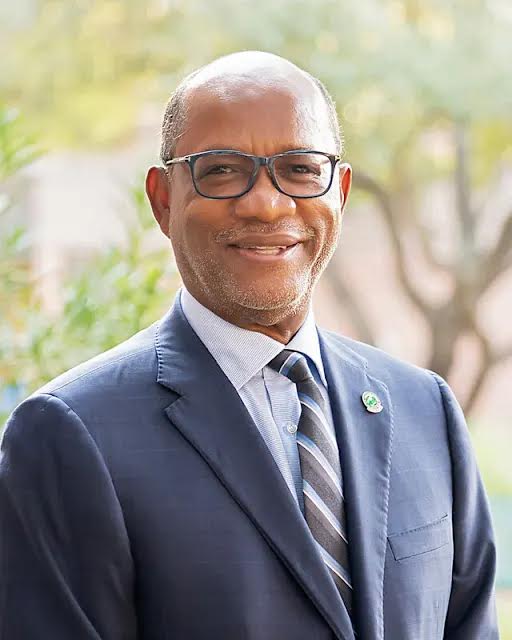
Michael Heiskell, Fort Worth attorney and the first Black lawyer to graduate from Baylor Law School, has seen immense success in his 50 years of practice.
Heiskell grew up in Pelham, an all-Black farming community outside of Waco. Heiskell was constantly surrounded by people of color, which changed drastically when he arrived at Baylor, he said.
Heiskell graduated from Baylor in 1972 and, following the advice of his political science professor Robert Williams, started at Baylor Law that fall.
“You could tell certain people resented me being there,” Heiskell said.
Despite being faced with discrimination, Heiskell said his father remained his “North Star” throughout the process.
“What always resonated in my mind is what my father told me, and that is make sure that you focus on your goal, your objective, and that is to graduate and get out of there,” Heiskell said. “Don’t be sidelined by others who may try to divert your attention or distract you from that purpose and goal.”
With the support of his family, as well as close friend Dickie Ingram, another law student at the time, Heiskell graduated as the first African American from Baylor Law School in 1974.
“Mike is what a lawyer ought to be,” said Mark Daniel, a Fort Worth criminal defense attorney and Heiskell’s longtime friend.
“In a legal community — prosecutors, judges, fellow defense lawyers — he treats everybody with absolute kindness,” Daniel said. “He is magnanimous to a point. His ability to handle people is really pretty neat, pretty special.”
After graduating from Baylor, Heiskell began his career as an assistant criminal district attorney in Galveston, where he experienced overt discrimination, he said.
Heiskell recalls being summoned for a meeting but walking into the conference room to find a burning cross made of popsicle sticks and Styrofoam cups.
“I could have gotten upset, angry and lashed out, but I didn’t,” Heiskell said. “I didn’t let that deter me from pursuing my job there and doing what I had to do to get that experience.”
Heiskell’s work led him to many prestigious positions. He was previously chairperson of the U.S. Court Advisory Committee for the Northern District of Texas and was inducted into the American Board of Criminal Trial Lawyers. In 2023, he served as the 65th president of the National Association of Criminal Defense Lawyers, which is a organization of lawyers devoted to ensuring prestige and fighting inequality within the law system, according to their website.
“It’s more than America; it’s a success story,” Daniel said. “It truly is.”
Heiskell currently serves as chair of the academic committee of the Board of Regents for the Baylor Law School, an achievement he takes much pride in.
“I am happy to give my all to the university because I see where they’re taking us, and I want to make sure that we arrive there and continue forward to make this the best university in the world,” Heiskell said.
For Heiskell, diversity is a two-way street, and while equality has come a long way, he believes that there must continue to be an influx of people of color in education.
“You don’t need a uniform voice on each and every issue; you need to bring in different voices,” Heiskell said. “And people of color can bring those different voices and experiences for those to hear and listen to.”