By Arden Berry | Staff Writer
At Career Day, students were introduced to a variety of career opportunities. For those looking to the next step, the Career Center is offering resources for interview preparation.
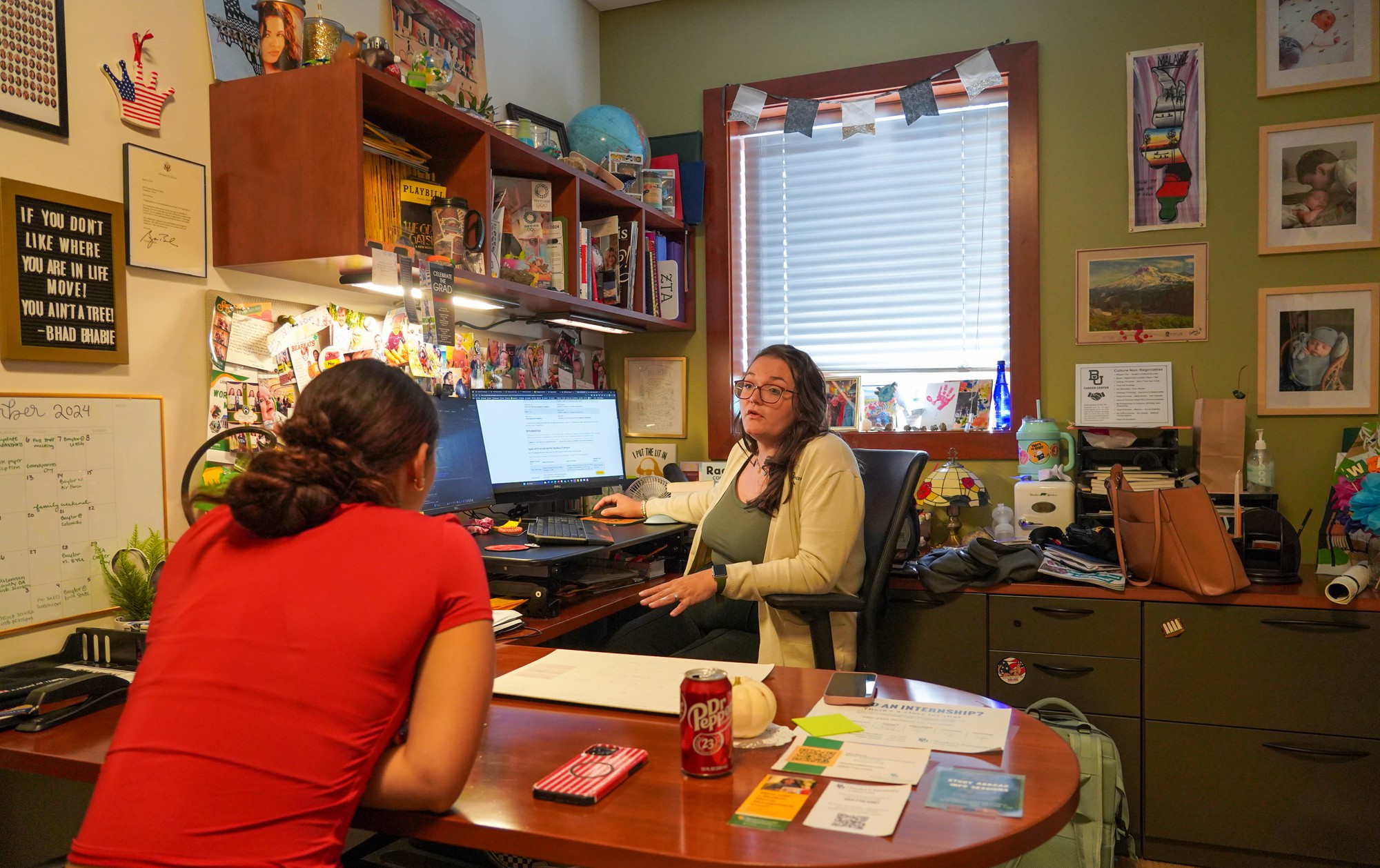
One of these resources is a mock interview, during which a Career Success Professional asks the student questions as if they were in an actual interview.
Alex Stucky, Career Center assistant director of clinical procurement and placement, said there are three main approaches the Career Center takes for mock interviews. The first is treating them as if they were the real thing, providing feedback afterward and offering guidance on how to improve. The second approach is similar, except the Career Success professional provides feedback after every question.
“You can kind of reassess the way that you’re going to answer the questions as you move forward,” Stucky said. “I ask, ‘Tell me about yourself,’ you give the response, and then I’ll say, ‘All right, let’s pause and kind of think about maybe what that admissions committee or what that employer is really looking for when they ask that question.’”
In all approaches, Stucky said the Career Center hopes to encourage students to figure out what the employer is really looking for when asking certain questions. This perspective is especially evident in the third approach.
“If they are truly at the beginning phase of preparing for interviews, it’s just walking through the different types of questions, kind of getting back to that purpose of the question,” Stucky said.
To prepare for potential behavioral questions — questions that aim to understand an applicant’s behavior by asking them to tell a particular story, such as one about a time they displayed leadership — Stucky said students should come up with 10 “STAR stories.”
“It’s an acronym for situation, task, action, response,” Stucky said. “It, I think, empowers students to be more powerful in their responses and to be a lot more articulate.”
Franklin, Tenn., sophomore Morgan Cumbie said she has had eight job interviews so far. She visited the Business School Career Center for a mock interview after doing a couple of real ones.
“She was able to look over some of the responses that I had been giving and to give me some feedback on how to better structure them and maybe present my resume and tell my story a little bit better in a way that actually applied to the jobs I was looking for,” Cumbie said.
The Career Center also provides resources such as its AI Copilot Interview Agent and Big Interview, a website that allows students to record themselves and provides feedback.
“It gives students the opportunity to record themselves so that you can see maybe your non-verbals, your facial expressions,” Stucky said. “It allows you to consider all those things maybe you haven’t considered before.”
The Career Center also included a section in an email with general advice, including to arrive early, ask questions, actively listen and dress professionally.
Stucky said she would encourage students to wear professional outfits that give them confidence, even for virtual interviews.
“I think it also puts you in that headspace if you’re wearing the blazer or wearing the heels that you really feel like, ‘OK, I’m ready,’” Stucky said. “I even tell people look in the mirror during a phone interview so that you really feel like you’re engaging somebody, even if it’s yourself.”
Stucky said mock interviews can be for graduate school planning, employment or any other type of interview.
“Whatever it is that students are preparing for, it is our calling and our mission and our purpose here on campus to support students in that,” Stucky said. “So we really, really want them to be in here utilizing our services, utilizing all the resources that we have to offer.”