

Close Menu
The Baylor Lariat
    Facebook X (Twitter) Instagram YouTube LinkedIn
    Trending
    • Here’s the tea: Review of Waco hot tea
    • 5 films to cure your seasonal depression
    • No. 19 Baylor men’s tennis upsets No. 8 Texas A&M for first ranked win
    • Take notes, musicians: Noah Kahan’s new ticketing system best prioritizes fans
    • When politics are all the talk, art speaks louder than words
    • Living with an illness nobody understands
    • Beyond the classroom: A fitness outlet for students
    • Data centers, voter turnout surface at Waco Democratic forum
    • About us
      • Fall 2025 Staff Page
      • Copyright Information
    • Contact
      • Contact Information
      • Letters to the Editor
      • Subscribe to The Morning Buzz
      • Department of Student Media
    • Employment
    • PDF Archives
    • RSS Feeds
    Facebook X (Twitter) Instagram YouTube LinkedIn
    The Baylor LariatThe Baylor Lariat
    Subscribe to the Morning Buzz
    Tuesday, February 10
    • News
      • State and National News
        • State
        • National
      • Politics
        • 2025 Inauguration Page
        • Election Page
      • Homecoming 2025
      • Baylor News
      • Waco Updates
      • Campus and Waco Crime
    • Arts & Life
      • Wedding Edition 2025
      • What to Do in Waco
      • Campus Culture
      • Indy and Belle
      • Sing 2025
      • Leisure and Travel
        • Leisure
        • Travel
          • Baylor in Ireland
      • Student Spotlight
      • Local Scene
        • Small Businesses
        • Social Media
      • Arts and Entertainment
        • Art
        • Fashion
        • Food
        • Literature
        • Music
        • Film and Television
    • Opinion
      • Editorials
      • Points of View
      • Lariat Letters
    • Sports
      • March Madness 2025
      • Football
      • Basketball
        • Men’s Basketball
        • Women’s Basketball
      • Soccer
      • Baseball
      • Softball
      • Volleyball
      • Equestrian
      • Cross Country and Track & Field
      • Acrobatics & Tumbling
      • Tennis
      • Golf
      • Pro Sports
      • Sports Takes
      • Club Sports
    • Lariat TV News
    • Multimedia
      • Video Features
      • Podcasts
        • Don’t Feed the Bears
        • Bear Newscessities
      • Slideshows
    • Housing 2026
    • Lariat 125
    • Advertising
    The Baylor Lariat
    Home»Opinion

    Who are the Founding Fathers for the 21st century?

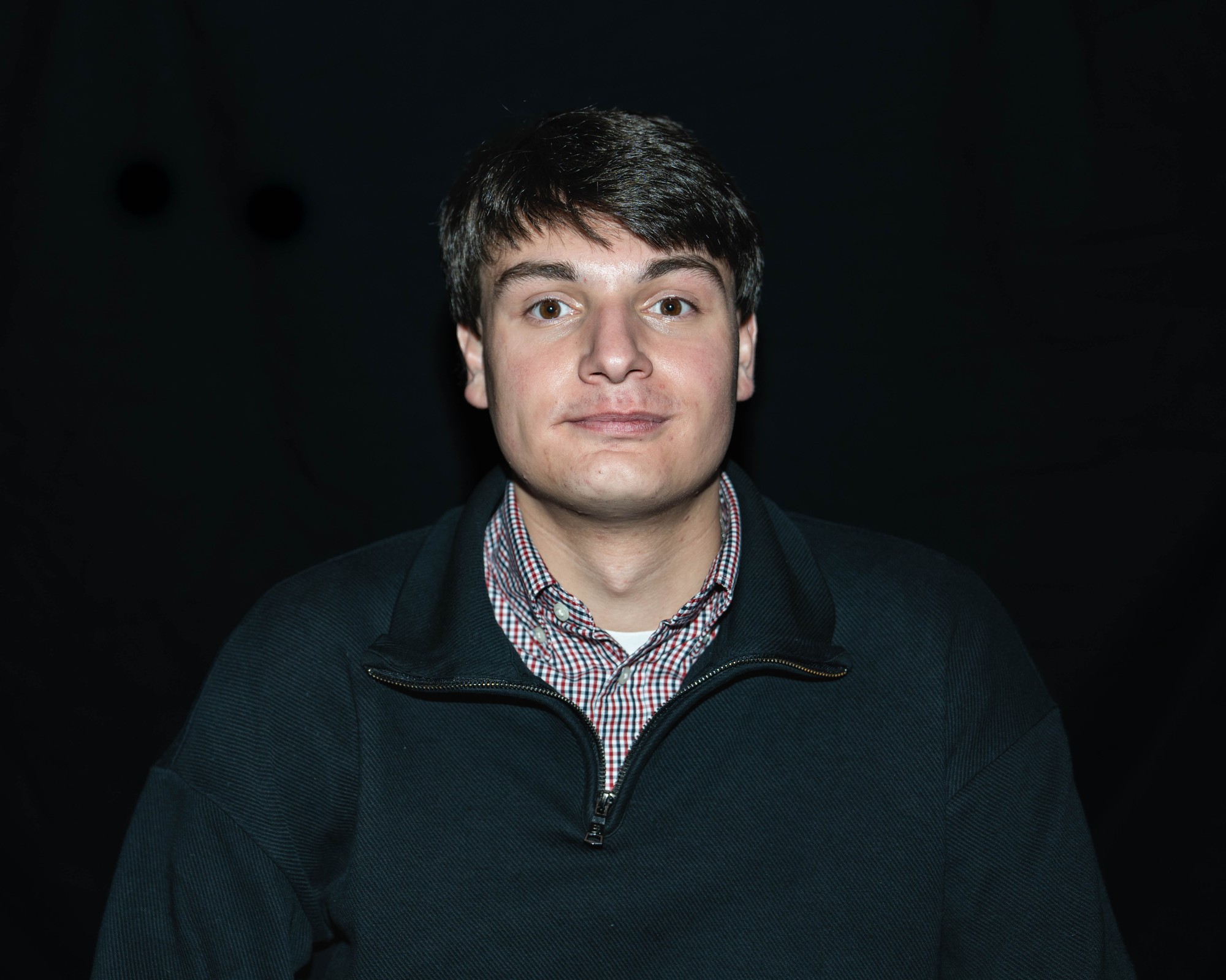
    Elliott NaceBy Elliott NaceMarch 17, 2025 Opinion No Comments3 Mins Read
    Elliott Nace | Staff Writer
    Share
    Facebook Twitter LinkedIn Pinterest Email

    By Elliott Nace | Staff Writer

    When the dust settles on a given period of history, a few key players always seem to rise. Politicians, philosophers and mathematicians — these great thinkers and their writings seem to blur the lines separating science from dialectic.

    Polymaths, intellectuals whose knowledge and contributions to society draw on a wealth of disciplines, enter the public consciousness through their work. Shakespeare, Maimonides and the like are renowned for dabbling in all sorts of artistic mediums. Our Founding Fathers, namely Thomas Jefferson, brought his education in the Western Classics to the presidency.

    The polymath archetype is nothing new and has not gone anywhere. The arts, sciences and understanding of the human person dictate our collegiate and professional studies today, and in many cases produce scholars who fit the description. But who are these polymaths, and where can we find them?

    According to an article by Dr. Mandar Marathe, “Polymathy is an action, and not an attribute or quality. And the person who performs that action is a polymath, while they are performing it.”

    The range of personalities and occupations that comprise this label attest to it ultimately being a way of life; Marathe details the holistic value of engaging in several different fields of study and practice, and how the benefits of polymathy trickle down into everyday life. No matter our professions, David Scharf wrote that “the math is always there.”

    Even if the parameters of polymathy continue to expand, thanks in large part to the internet and increased efficiency of education, there is one ingredient currently lacking in our intellectual stew — notoriety.

    One clear shift seen throughout the 20th century was the move away from docile neoclassicists’ aging sensibilities in favor of an ever-changing technological and ideological landscape. Modernity ushered in countless polymaths with a radical set of new skills, yet brought with it the need for specialists.

    Specialty is not the enemy of polymathy, but rather a product of volatile times. Medicine, computers and literary critique all flourished a century ago and at such a volume that students needed to fully concentrate on a given area of expertise.

    What did begin to chip away at the popularity of polymathy was the newfound fame following specialized breakthroughs. Sir Isaac Newton and Gottfried Leibniz needed to invoke every mathematical paradigm they had in their time. Conversely, a later scientist like Alexander Fleming was able to streamline prior work done in microbiology to assist his discovery of penicillin. More and more scholars began to stay within the world of critical research and therefore opted to interpret primary sources instead of writing their own.

    The “big bands” dominating the worlds of jazz and blues morphed into the breakout “gods” of guitar-driven rock music. Televised sports immortalize the skills of many football and baseball players — people who we will always remember as exceptional, standalone athletes.

    What changed is that fame became attached to the now. Great thinkers still change the world in more ways than one, but their observations lack the impact needed to stay relevant in a world where the individual breaks ground on a daily basis. Such a practical environment does not eliminate the need for broader thinking and instead gives us the challenge of taking up polymathy when looking at the bigger picture.

    J.R.R. Tolkien, most famous for his high fantasy novels, also happened to be a philologist who created his own languages. So as long as we remember Mr. Tolkien for the sum of his pursuits, we will know who — and where — the polymaths are.

    great thinkers intellectualism literature Mathematics Philosophy polymaths
    Elliott Nace
    • Instagram

    Elliott Nace is a sophomore University Scholars major with a secondary Major in Classics from Tyler, Texas. He loves studying languages and talking about popular music. Following graduation, he plans to pursue graduate work in the field of languages and literature.

    Keep Reading

    Take notes, musicians: Noah Kahan’s new ticketing system best prioritizes fans

    When politics are all the talk, art speaks louder than words

    Living with an illness nobody understands

    Create more than you consume

    ‘Little Women’ revolutionized literature, changed who I am

    Enforcing immigration laws should not mean erasing humanity

    Add A Comment

    Comments are closed.

    Recent Posts
    • Here’s the tea: Review of Waco hot tea February 9, 2026
    • 5 films to cure your seasonal depression February 9, 2026
    About

    The award-winning student newspaper of Baylor University since 1900.

    Articles, photos, and other works by staff of The Baylor Lariat are Copyright © Baylor® University. All rights reserved.

    Subscribe to the Morning Buzz

    Get the latest Lariat News by just Clicking Subscribe!

    Follow the Live Coverage
    Tweets by @bulariat

    Facebook X (Twitter) Instagram YouTube LinkedIn
    • Featured
    • News
    • Sports
    • Opinion
    • Arts and Life
    © 2026 ThemeSphere. Designed by ThemeSphere.

    Type above and press Enter to search. Press Esc to cancel.

    Insert/edit link

    Enter the destination URL

    Or link to existing content

      No search term specified. Showing recent items. Search or use up and down arrow keys to select an item.