By Juliana Vasquez | Staff Writer
The Trump administration’s Liberation Day tariffs haven’t appeared to be liberating for America’s small businesses or shoppers, but trade agreements and bargaining power will likely be threatened if ruled unconstitutional.
The tariff policy, announced on April 2, aimed to reshape American trade policy by applying a minimum 10% tariff on all goods from foreign countries, according to NPR News. The U.S. Constitution gives Congress the power to impose tariffs; however, the Trump administration utilized the International Emergency Economic Powers Act to impose tariffs. This move and its debated constitutionality are at the core of the current case against the Trump administration.
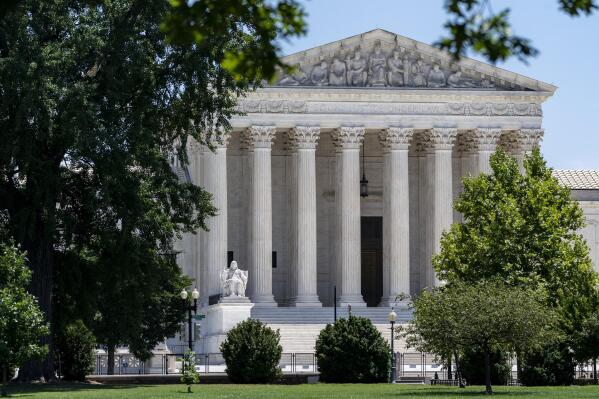
The case, titled Learning Resources V. Trump, asks whether or not the IEEPA authorizes the president’s power to impose tariffs. Learning Resources Inc. is a small business that creates and distributes educational tools for children. Their manufacturing is outsourced to international partners, so when the tariffs went into place, their business — along with countless others — was harmed.
San Jose, Calif., senior Ananya Bommareddy said she already sees the impact of the tariffs in her day-to-day life, specifically when shopping at the grocery store.
“I’ve noticed, specifically at H-E-B, prices are going up [for] I feel like very basic things,” Bommareddy said. “Like fruits and vegetables are getting really expensive.”
With something as mundane as a grocery store run, Bommareddy said tariffs for fruits like strawberries, which are typically imported from Mexico, have become more expensive for a smaller quantity.
Dr. Lourenço Paz, director of the international business program, said tariffs may impact small businesses by raising the cost of the products many outsource from foreign countries.
“[They’re] going to be forced to raise their prices, and then your consumers will buy less from you, so it may actually reduce your profits,” Paz said.
Paz said the outcome of the case could have a much larger impact than just on small businesses, especially since the case regards the president’s emergency powers in the IEEPA because the tariffs were not implemented for a concrete emergency.
“This is not an emergency because if it were an emergency, it would be for a handful of products or maybe two or three countries,” Paz said. “It cannot be on everybody.”
Traditionally, the IEEPA gives the president the authority to impose sanctions on foreign powers, restrict international transactions and target those with malicious intent towards the U.S. However, the IEEPA has never been used to impose tariffs on foreign nations.
“The administration has some trouble justifying where the emergency is … and at the same time … it’s kind of the executive branch doing the job of the legislative branch, so you have a problem of division of powers,” Paz said.
How the court rules could have negative impacts for both sides, Paz said, and particularly when it comes to presidential power and utilizing the IEEPA for good.
“If they side with the administration, then you should expect that the current administration will become bolder in terms of playing with tariffs in order to negotiate trade agreements,” Paz said.
However, if the court rules against the Trump administration, they will likely make the phrase “emergency” more restrictive, forcing the administration to change its trade strategy and potentially harming the domestic industry, Paz said.
“If the Supreme Court sides with those small businesses, there will be a lot of economic consequences because that will affect trade agreements [and] change the bargaining power of the U.S. government,” Paz said.