By Aarah Sardesai | Intern
For many Baylor students on the pre‑health track, imagining their future means picturing a single physician performing a surgery or a lone physical therapist guiding a patient through recovery. What many don’t realize is how deeply collaborative and multifaceted real patient care is.
That gap in understanding of the collaboration of patient care is what San Jose, Calif., sophomore Ananya Bharathapudi and Tulsa, Okla., junior Enzo Henry hope to address. Baylor’s Interprofessional Events, a series created in partnership with the Office of Prehealth Studies, aims to help students see healthcare as a team‑based, interconnected field.
Henry said the purpose of the events is to broaden students’ thinking about healthcare. Bharathapudi said the events emphasize something students often don’t learn until much later.
“We think healthcare is holistic,” Bharathapudi said. “To be a healthcare provider is to work with people from other careers. To be successful, you have to work together.”
Unlike many pre‑health opportunities that focus on medical school preparation, Interprofessional Events zoom out. They highlight teamwork, communication and the different factors that shape patient outcomes.
Both student leaders said their motivation comes from wanting to give back.
Henry, who had no healthcare background when he arrived at Baylor, said mentors played a major role in his journey.
“As a freshman, I didn’t know anyone in healthcare,” he said. “My mentors helped me so much, and now as a TA, I get to help students across all pre‑health tracks learn more about the field.”
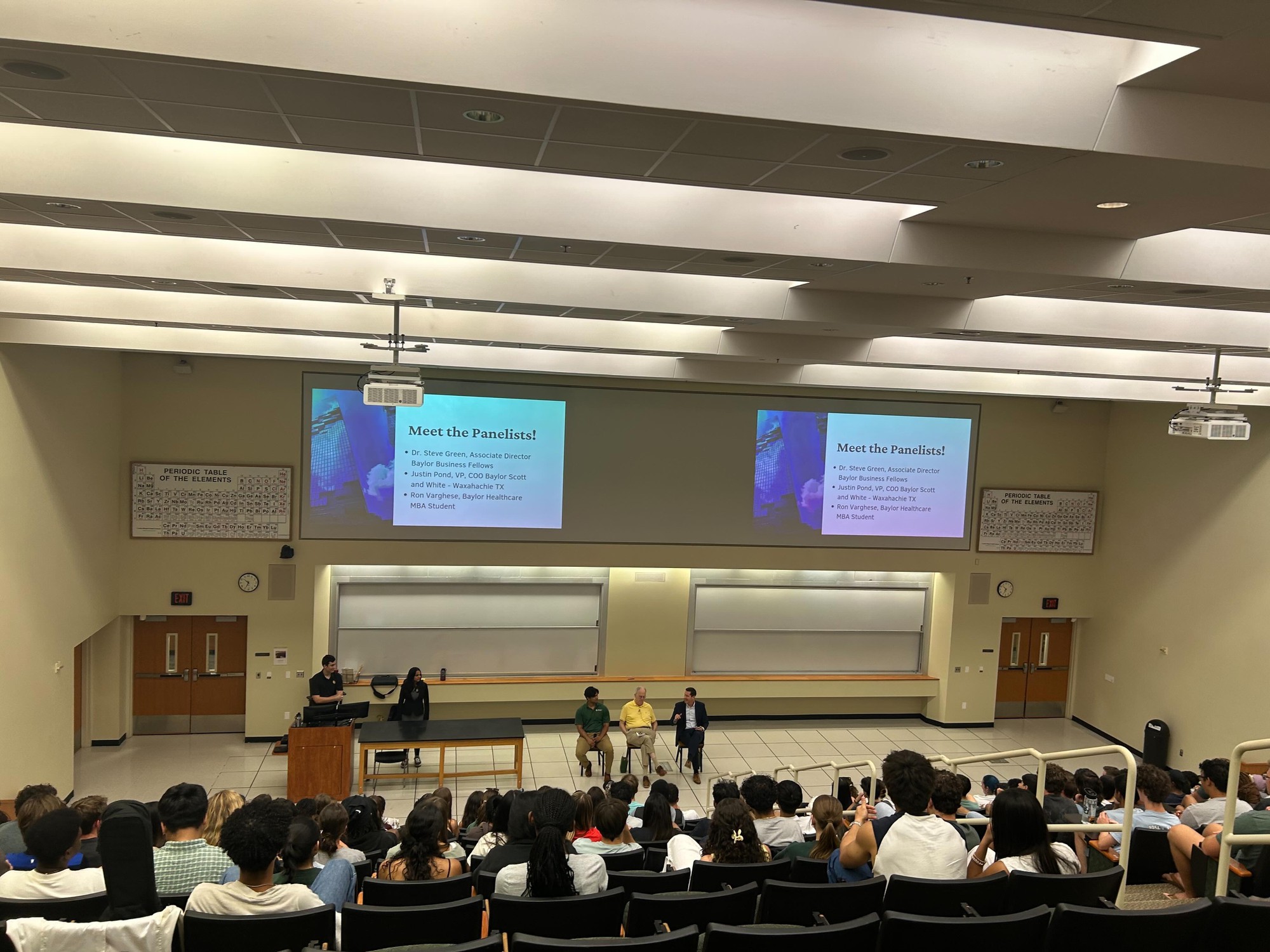
For many students, the events are their first chance to interact with professionals outside the classroom. Bharathapudi said the variety of formats keeps students engaged.
“Students come in and learn from diverse speakers who are professionals in their fields,” she said. “We’ve had live actors simulate a sports injury, and we’ve had teams walk students through a day in their lives. If students are passionate, they can ask questions and really deepen their understanding.”
According to Henry, students often arrive unsure of what to expect, but that changes quickly.
“By the end, there’s an open Q&A, and students are lining up to talk to the speakers,” he said. “You can see them investing in themselves.”
One event that stuck with Bharathapudi focused on maternal health. A social worker explained how something as simple as a patient living on the second floor can change the entire care plan after childbirth.
“It opened my eyes to how all‑encompassing healthcare is,” Bharathapudi said. “You have to think about a patient’s life outside the clinic.”
Henry said students also gain confidence speaking with professionals.
“One speaker was an MBA who works at Baylor Scott & White Health,” he said. “Hearing about his daily life and getting firsthand insight is something you can’t get from a lecture.”
Both leaders said the events have shaped their own paths. For Henry, hearing professionals’ discussions of the nuances of healthcare strengthened his interest in the field.
“It’s really cool hearing them talk about things you don’t learn in class,” he said.
For Bharathapudi, the events changed how she thinks about patient care.
“I’ve learned to consider the different limitations in a person’s life,” she said. “It’s not just their diagnosis — it’s everything that surrounds it.”
But the event-planning doesn’t happen overnight. Henry said it takes months, and one of the biggest challenges is coordinating with busy professionals.
“It’s inspiring how willing they are to speak with undergrads,” he said.
Despite their impact, many students still don’t know the events exist. Henry said that’s a missed opportunity.
“There are students who are 100% interested in healthcare, but they don’t realize how much goes into the other fields that work hand‑in‑hand with medical professionals,” he said.
Both leaders hope the program continues to grow and reach more students.
Bharathapudi said the value is undeniable.
“There’s no reason not to come,” she said. “You get to meet people who are excellent in their field and learn their thought process. If you’re passionate about healthcare, meeting professionals who live it every day will only help you on your journey.”