By Rhea Choudhary | Staff Writer
Nearly 80 years after it was built, Baylor’s Student Union Building is struggling to keep up with current students’ needs, prompting student government leaders to push for both immediate upgrades and long-term renovations.
As hundreds of students pass through the SUB each day, Student Body President Landon Self said, as one of the most heavily used buildings on campus, the space is no longer equipped to serve the modern Baylor student body
“The Senate passed a resolution to advocate for the SUB to be a priority for Baylor to renovate,” Self said. “What we’ve seen right now in the SUB is a growing, inadequate building.”
The SUB was designed for a much smaller campus population than today’s Baylor. Now nearly a century after its construction, Self described how the building’s limitations became apparent.
“It was built in the 1940s and designed to serve a student population from that time, but it is 2026, and it is time for an enhanced union experience,” Self said.
While long-term renovation efforts are still being discussed, effective student-led improvements are already in action. San Diego freshman and Student Senator Noah Seroter said the SUB update project began in August 2025 and took around four months of planning and collaboration.
“The bill was about a four-ish month process of meeting with our campus partners, interior design team, contractors and all of the people necessary,” Seroter said.
Seroter worked with fellow student government leaders, as well as university officials, including Director of Student Activities Jordy Dickey and SUB leadership, to identify the areas most in need of improvement.
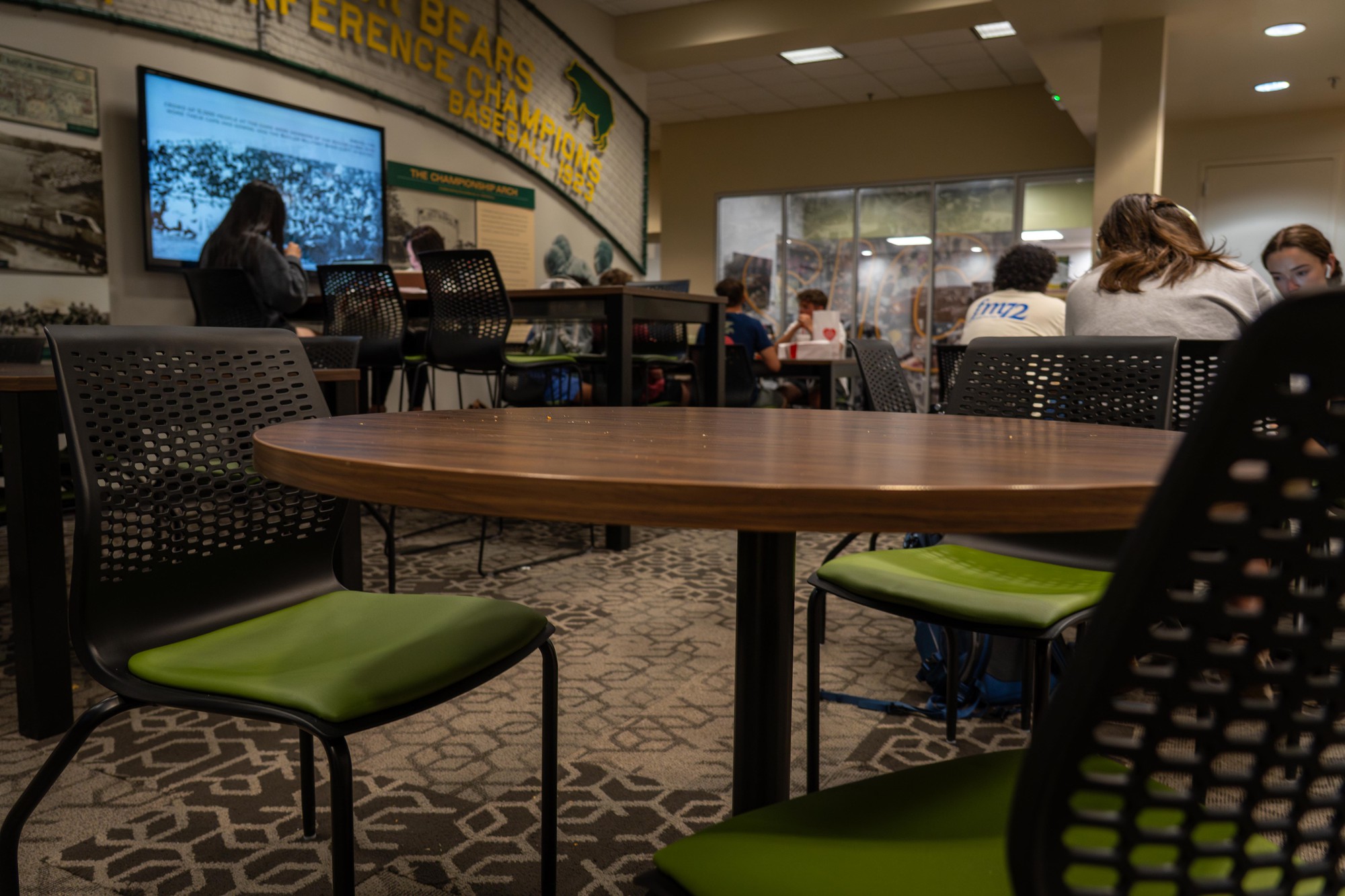
Their focus ultimately landed on the Common Grounds area, where outdated furniture and inefficient layouts restricted how students could use the space. Seroter said one example was the couches, which were too low to work productively on assignments.
“Parts of it just really aren’t functional, and the SUB is so widely used, too, whether students prefer hanging out with their friends for a quick meal or just using it as a pit stop between classes,” Seroter said.
Despite having some of the highest foot traffic on campus, the building lacks the space and infrastructure to support that demand.
The student government bill funding these upgrades, totaling a little over $20,000 from the Student Government Allocation Fund, followed a multi-step legislative process before passing in December 2025.
“We propose a bill, then it goes through first reading,” Seroter said. “Then it goes through finance committee and CIA committee, and then second reading is where we debate it.”
After around four weeks of review, discussion and revisions, the Senate approved the bill, allowing the project to move forward. The upgrades focused on improving seating options, including higher tables better suited for studying and collaboration.
“As student government, our goal is to enhance student quality of life,” Seroter said. “The goal was wanting to make sure we foster that kind of environment. The space before just really wasn’t conducive to that.”
Beyond functionality, Seroter explained that the project represents a larger goal of improving campus life. Student feedback shows the changes are already making a positive impact.
“It’s been nice to see university-wide change actually take place, not just be discussed in theory,” Seroter said. “Students have really loved the upgrades that have been done, and they’re very willing to see student government actually take initiative and make more change occur.”
Self explained that these smaller improvements also signal university leadership toward larger renovations that are needed.
“With our current budget, the goal is not to build a new union right now, but to shine a light on the growing inadequacies of students’ most utilized, current buildings across campus,” Self said.
Those inadequacies pertain to issues affecting students on a daily basis, including overcrowding, limited seating and aging infrastructure.
“Those include long lines at Chick-fil-A, limited seating and older infrastructure that is in constant need of repair,” Self said.
To strengthen their case, Self and Seroter looked beyond Baylor’s campus for solutions.
“My team and I visited four other universities … to see how their student unions serve their student bodies,” Self said.
He then brought those findings directly to university leadership.
“I had the privilege of speaking about this to the Board of Regents, where I was able to advocate for the student union in that space,” Self said.
As discussions about larger renovations continue, Self explained that recent upgrades are just the start of improvements.
“Renovating the SUB, expanding it, adding onto it and redoing the layout would be super beneficial for all of the Baylor student population,” Self said.
For now, student leaders hope these visible changes, from updated seating to improved functionality, will not only improve daily student life but also prompt future investment in one of Baylor’s most central spaces.
“Every student will use these updates and if we can keep improving campus, even in small ways, it shows what is possible when students’ voices turn into action,” Seroter said.