By Mackenzie Grizzard | Assistant News Editor
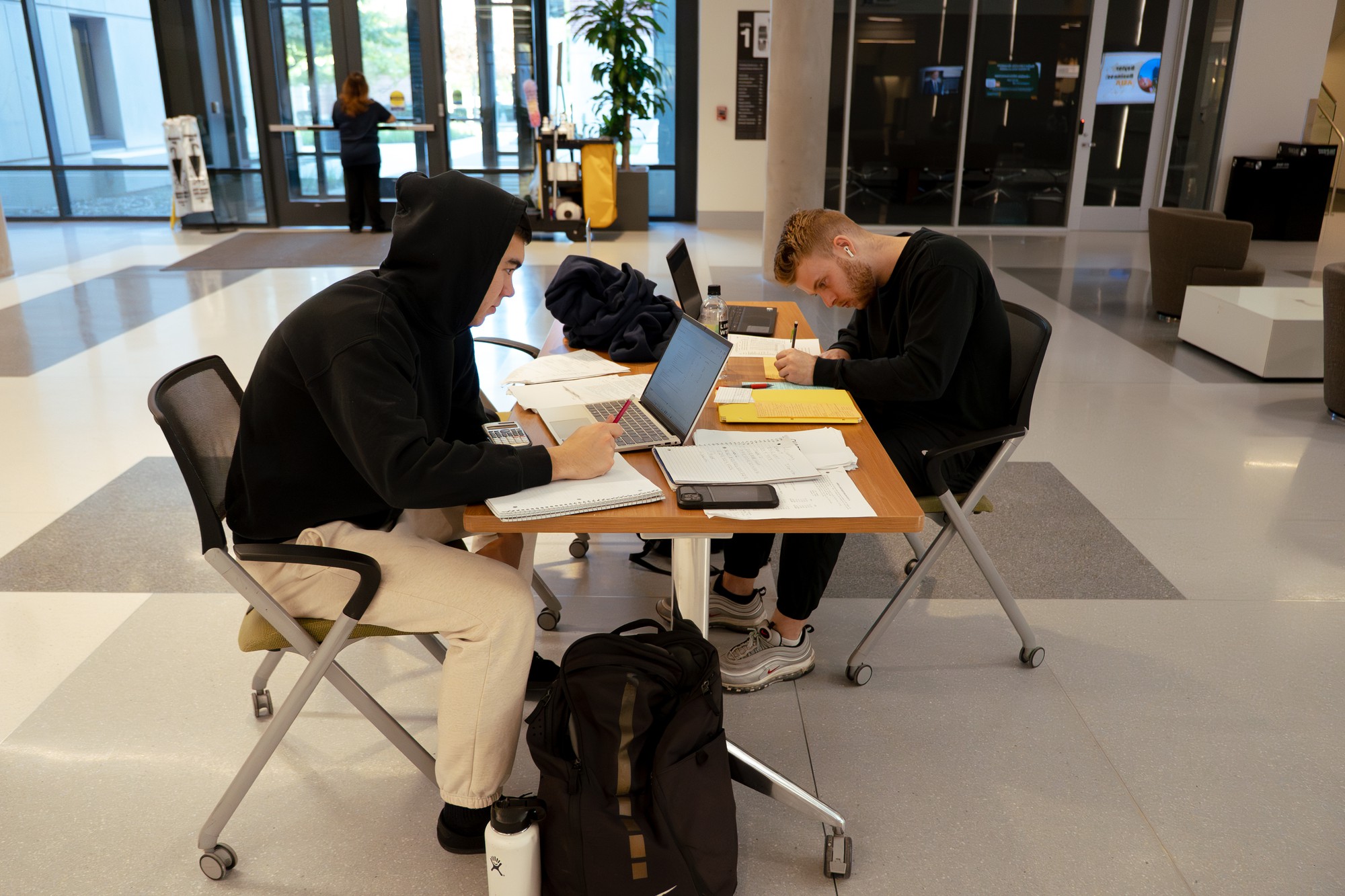
It’s an all too familiar time of year. As campus Christmas lights twinkle in the cold night, the bright fluorescents of Moody Memorial Library seem to echo the exhaustion and futility felt by its caffeine-fueled students.
Finals season has arrived, and its effects are felt through every corner of campus. Cold and flu cases surged in just the past two weeks, and ongoing construction makes Moody Library more cramped than usual.
Psychologists and universities around the country have released research on the most effective study methods, ranging from the Pomodoro Method to other forms of active recall. With so many different ways to study and a plethora of health advice during this season, students often find themselves overwhelmed by how to study and struggle with the material.
Senior lecturer in Baylor’s English department Dr. Clay Butler recalls many conversations he held with students about finals week pressure when he served as faculty-in-residence at Martin Hall.
With a schedule filled with back-to-back exams, Butler emphasized the importance of not just making a study plan, but sticking to it.
“Don’t just wing it,” Butler said. “Write down all your exam times, figure out which ones carry the most weight, and create a study schedule.”
Particularly for more difficult subjects, Butler stressed the importance of studying “smarter, not harder.” Utilizing flashcards and explaining a subject out loud will always beat staring at notes for hours on end, he said.
“Mix it up — alternate subjects, change locations and various study methods,” Butler said. “Variety helps your focus stick.”
Dr. Doug Weaver, chair of the religion department, urged students to stay realistic during finals season, especially when faced with cumulative exams.
“If you haven’t read all throughout the semester, you are not going to get it done in two or three days right before finals,” Weaver said. “By that time, you need to make the best use of the time you have left and study what you have from your notes.”
Don Carpenter, clinical associate professor and 2303 program coordinator in Baylor’s Hankamer School of Business, concurred with Weaver.
“Be realistic when taking finals; your time is limited,” Carpenter said. “Know which finals are likely to change your grade — either help or hurt — in a class, and concentrate on those.”
According to Weaver, finals week is always the most stressful and overwhelming time of the semester. More often than not, regular schedules and routines are disrupted, but it’s not permanent.
“Finals week is not the time when you are going to get your beauty sleep and your exercise routine in every day,” Weaver said. “Better said, you won’t get them done and the studying you need to do.”
Despite daunting workloads, late-night cramming and schedule disruptions, Butler emphasized that students should try their best to cling to normalcy by studying smart and efficiently.
“Sleep, eat and shower — stick to your normal routines,” Butler said. “No single exam, class or semester defines who you are.”