


By Kalena Reynolds | Opinion Editor
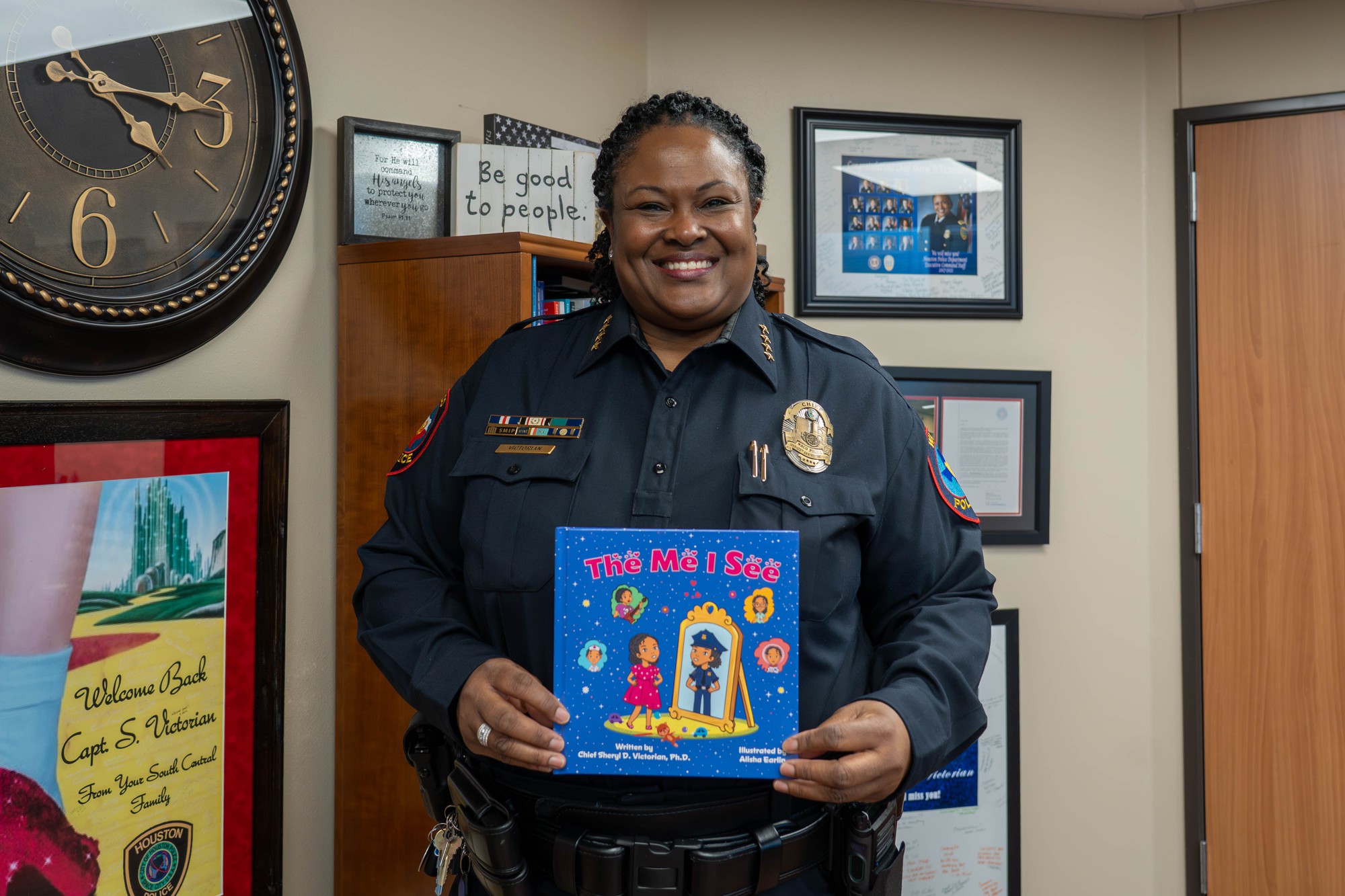
A large painted sign reading “be good to people” perched on top of a bookshelf in the corner of Waco Chief of Police Sheryl Victorian’s office — a motto that resonates strongly throughout her leadership at the department and within the community.
According to Victorian, women make up only 3% of police chiefs in the U.S. She is not only Waco’s first female police chief, but also the first African American to hold the position.
Victorian’s resume is extensive, including a Ph.D. in administration of justice from Texas Southern University and prior service as an assistant chief at the Houston Police Department, the fourth-largest police agency in the U.S. However, there is one unique accomplishment that Victorian credits with helping her improve as police chief and person: being a writer.
Growing up, writing was an all-consuming pastime for Victorian, and a tool she used to connect more with those around her and her faith. Victorian previously wrote all the Easter and Christmas plays for her church and also wrote plays titled “The Wisdom of God’s Women” and “Left Back,” each relating to Christian themes.
As church became her inspiration for many of her topics, she began to delve into her own faith-driven creativity. Eventually, she connected with her pastor’s wife, who heard that she wrote plays, and was immediately impressed with her work.
“The pastor’s wife gave me a script from somebody else, and she was like, ‘Make this fit our church,’ and I was like, OK, and it was a Christmas script, and I did it,” Victorian said. “And so from then on, every time we had a women’s event, every time a holiday came around, I was writing the Christmas plays, and was writing the plays for Easter, women’s ministry … you name it.”
In 2024, wanting to share the experience of being a police chief with more children, Victorian utilized her knowledge of playwriting to publish a children’s book inspired by the community of Waco.
“I love going out into the community and reading to the kids,” Victorian said. “I went to one school and one young lady came to me and she said, ‘I didn’t know girls could be the police’ … and then about four months later I went to another school, and I had a little girl say that she didn’t know girls could be police chiefs.”
Victorian said the story, “The Me I See,” is about a little girl who didn’t know she could be a police officer.
“It’s encouraging young boys and girls to be police officers, and reminding them of the characteristics of police officers, and then that some of those characteristics that we are looking for in policing, that they already have and that they already demonstrate,” Victorian said.
Waco PD Public Information Officer Cierra Shipley said Victorian’s empathetic outlook in her writing is ultimately one of the attributes that has helped her as a police chief.
“I think that when you have a good heart and you have true means of wanting success for other individuals and your community and you put that at the forefront of the work that you want to do, then you’re going to have great outcomes,” Shipley said.
As Victorian has utilized her writing to build relationships with the community, Shipley said that she used those same methods to encourage more “relational policing” at the department.
“We like to say that the future of policing has been changing for many, many years, and a big part of that change is that relational policing aspect,” Shipley said. “It’s being engaging with the community in every aspect and building a rapport with them from something as simple as an event like a traffic stop.”
The results of Victorian’s leadership skills haven’t just impacted the relationship between the department and the community, but they have also brought a significant shift to the crime rate in Waco, Victorian said.
“I feel like I have the credibility, and I’ve established the credibility in the job,” Victorian said. “Crime is the lowest it’s been in Waco since we could accurately record. It has been for the last three years.”
As both a police chief and writer, Victorian said she hopes to use her accomplishments as a tool to break stereotypes and enlighten future generations about what policing is really like.
“I always realize that I’m representing women, and I’m representing Black women when I’m in the room, right?” Victorian said. “So any stereotypes that you may have, hopefully I can break down some of those stereotypes based on conversation, based on decisions, based on my experience and what I bring to the table.”
