


By Ryan Vasquez ⎹ Reporter
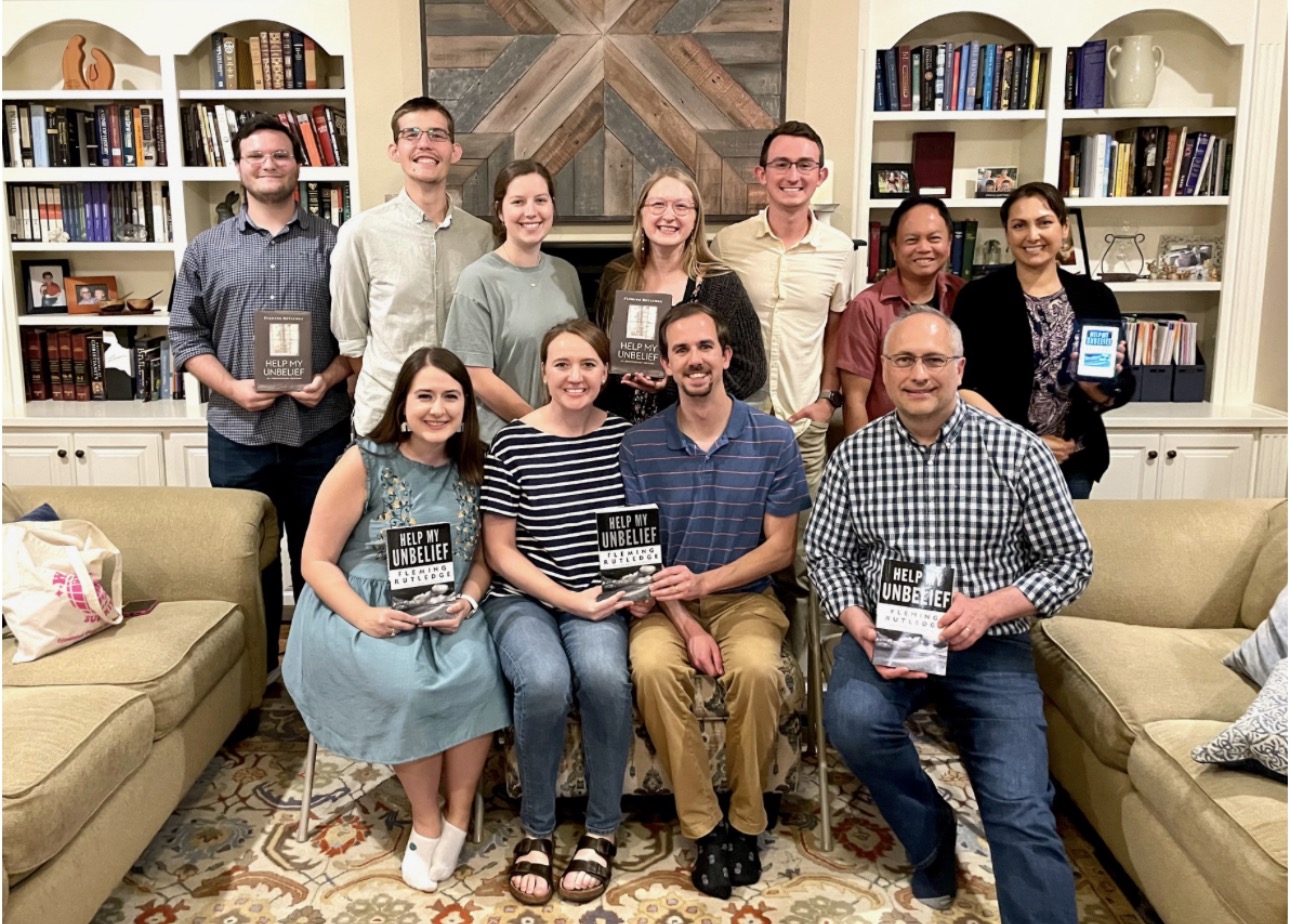
Students of George W. Truett Seminary gathered to discuss modern theory as part of this year’s start of the Dialectical Club. The book club, hosted by Truett Professor Dr. Kimlyn Bender at his home on Saturday, offered refreshments and a space for students to converse.
This semester, the group is reading “Destroyer of the Gods: Early Christian Distinctiveness in the Roman World” by Larry Hurtado.
The club, while hosted by Bender, is completely student-motivated. Though the club was started by students in the spring of 2023, this semester marks the fourth that the club has met in Bender’s home.
“This club was for students, and the reason it continues is because there is absolutely no obligation for them to come to my home on a Saturday,” Bender said. “I’m still kind of surprised by it, but it’s continued on, and the only thing I can take from that is that they enjoy reading and thinking and conversing about this and doing it in a different social context.”
In past semesters, the book was chosen by students who wanted to examine different themes across subjects and periods of history. This year, Bender chose the book because of how its exploration of early Christian lives can relate to those in the modern world.
“One reason I’ve chosen this book is it’s not entirely different from books by Robert Wilken and others, but it tries to see how Christianity and its convictions really differed from the dominant religious, political, cultural and social convictions of the time,” Bender said.
This discussion is important for Truett students as they study ministry and prepare to preach in the world today, Bender said.
“What students are interested in, and what I’m interested in, is what made early Christians different from the people around them,” Bender said. “How did the people around them see Christians and understand them? What practices did early Christians have that were intriguing to the people around them? I think especially in view of how Christians are thinking about living in the current situation, we can learn things from the original Christians in the context in which they lived.”
Ryan McCord, a Master of Divinity and Master of Social Work student from Round Rock, is a member of the Dialectical Club. McCord particularly enjoys the book chosen for this semester, as it applies to both past and current Christianity.
“It was clear to me the goal of this book club was not just to read theology or to read sermons together, but to think deeply about the wisdom from the past theology gifts us and how we can use this to make us better ministers today,” McCord said.
Students gain a different experience from the classroom through the Dialectical Club. Bender’s home provides a more casual space for students to go deeper into the book than they would in the classroom.
“When I was in seminary, I had a professor who would have graduate students in her home, and then we would eat afterward,” Bender said. “I think there’s something about conversation and food that is very powerful, and I think it allows students to see a different side of you.”
McCord said students share this view of the atmosphere and how the change in spaces shifts the conversation. McCord said she is deeply grateful for Bender’s hospitality and passion for his work.
“I could tell how much Dr. Bender cared about this club, not only for the content we discussed but also for the way the group connected and learned together through the care displayed in Dr. Bender’s opening his home up,” McCord said. “Some of my favorite memories took place after we finished our discussion for the night as we gathered in the Bender’s kitchen, shared sweet treats and often savored decaf coffee together.”
While exploring Hurtado’s description of early Christianity, Bender hopes students will resonate with the material and reflect on how it affects them today.
“I think we so often believe we live in particularly difficult times as Christians,” Bender said. “I understand that on one level — and I’m not saying there aren’t particular challenges in the times in which we live — but all Christians have felt that they lived under the pressures of their time.”

