By Josh Siatkowski | Staff Writer
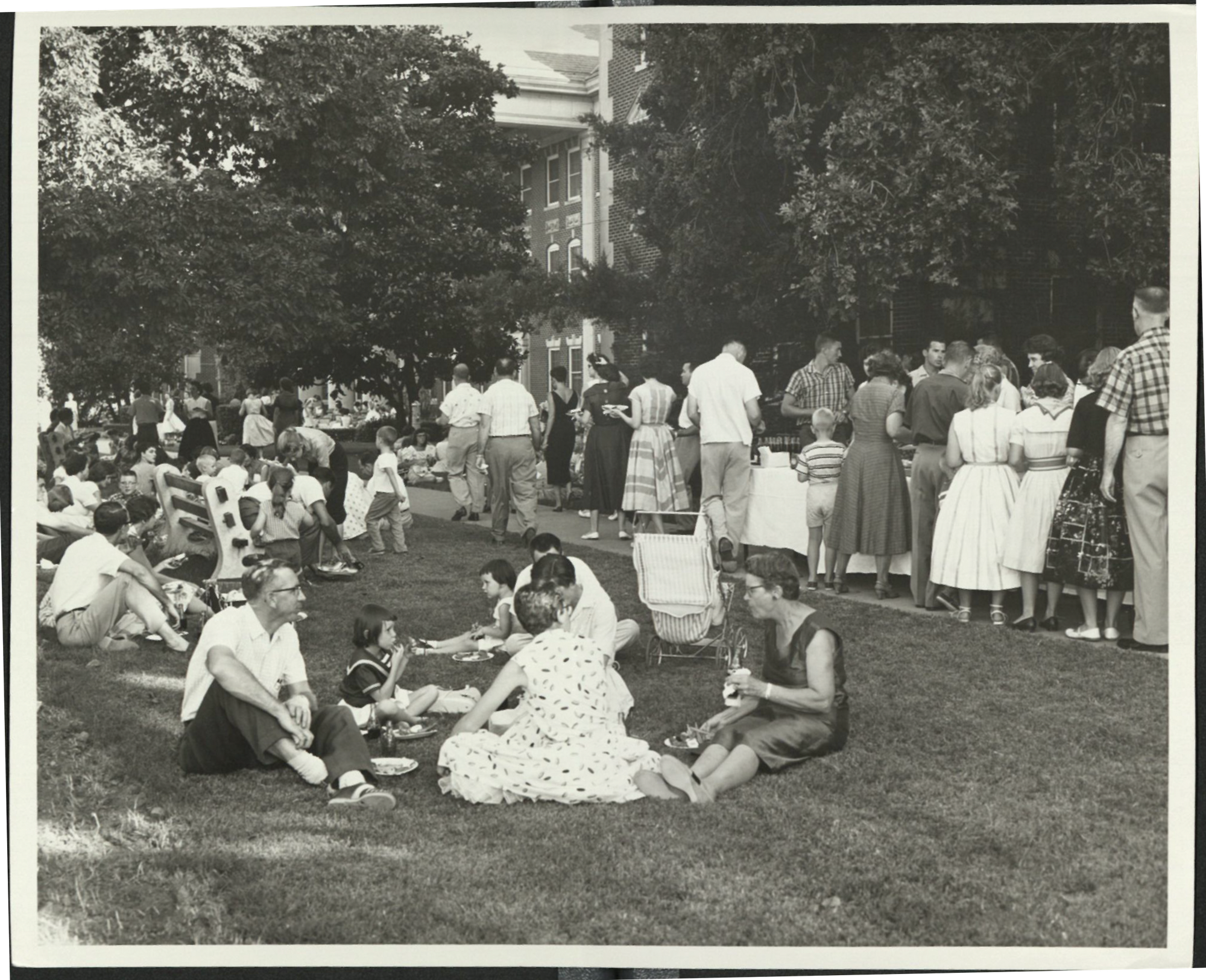
Depending on when they graduated, Baylor alumni will give you a different profile of their time in Waco. From year to year, those differences might be as small as a better football record or a few new faculty, but when you compare Baylor of the 1970s to the campus we call home today, the two schools are vastly different.
From student culture to campus amenities to affordability, almost everything about Baylor in the last 50 years has evolved. So if you’re walking around campus for the first time in a while and wondering to yourself, “How did we get here?”, these are a few factors that might help you answer that.
Athletic Ascension
When Dr. Allen Seward, a member of Baylor’s class of 1975, began as a student, Baylor’s football team was a weak spot. They hadn’t won a Southwestern Conference Championship in 47 years, and without a change, it didn’t seem like the curse would be broken anytime soon.
“There was a list of the 10 Worst College Football Teams in America, and Baylor and Brown would rotate as who was No. 1 on that list,” Seward said.
But in 1972, when Coach Grant Teaff began his 20-year career at Baylor, things started to turn around. The team won its first conference championship in 1974. Just two years before, Seward and his friends were sitting in the empty bleachers of Floyd Casey Stadium doing calculus homework while the Bears took a beating.
“It changed the perception of Baylor,” said Seward, the director emeritus of Baylor Business Fellows with an over 40-year career on campus. “It also changed who was willing to come to college.”
The same redeeming, perception-altering story can be seen in Scott Drew’s turnaround of Baylor basketball in 2003, Seward said. Taking command after one of the worst scandals in sports history, Drew responded with over 20 tournament wins and a national championship.
These athletic ascensions directly caused some of the nationalization and diversification of Baylor’s student body. Westfield, N.J., sophomore Lily Norton, who was raised in the northeast, would not have found her school without it.
“I knew about [Baylor] from March Madness and through football,” she said.
From Teaching to Research
Outside of sports, one of the largest underlying factors driving Baylor’s national ascension was research. When Seward began at Baylor, most faculty were trained for teaching, not publication. However, when a new Business School dean arrived, that changed.
“In 1978, Richard Scott became dean of the school of business, and in the first faculty meeting that he had, he said, ‘We need to have an increased focus on research,’ which meant we actually had none,” Seward said. “Not that there wasn’t any research, it just wasn’t a focus.”
Scott began by asking faculty to consider publishing in more public-facing outlets, like newspapers and magazines. But over time, new faculty were brought in to publish in academic journals, and existing faculty learned the trade of publication. By 1998, Baylor Business was responsible for over 50% of academic publications while making up only 20% of faculty. That disparity prompted a shift in the 21st century in which the entire university adopted research.
As Baylor athletics made the national spotlight, Baylor’s research faculty brought the academic reputation to the spotlight as well. The combined forces were enough to incentivize real growth on campus.
Financing a “Country Club Campus”
Baylor’s historic relationship with debt was tumultuous. After facing financial strain during the Great Depression, President Pat Neff eliminated all of the university’s debt to avoid future distress. A shared aversion united the decades that followed in their pursuit of leverage, Seward said. While it kept the university safe from financial distress, it also limited the rate at which the university could grow.
“When I came as a student in 1971, there had been a plan from the Board of Trustees of Baylor back in the 1950s saying that the next building we need to build is a science building,” Seward said. “So 20 years later, they were still saying the next building needed was a science building. They just couldn’t get the funding together for this expensive building.”
By the 1990s, Baylor’s asset base had grown, and the economy was strong. Under new president Robert Sloan, the university made the decision to incur debt to build the Baylor Sciences Building, which was completed in 2004. Following the project, other major builds went up, such as McLane Stadium and Foster Campus for Business and Innovation, both of which were financed by a combination of gifts and loans. Through the decision to borrow money and accelerate campus growth, Baylor’s identity has shifted in more ways than one.
“[The construction of the BSB] was a dramatic change just to the physical campus,” Seward said. “It also became easier to recruit good science faculty members.”
Alongside stronger faculty growing Baylor’s brand, the buildings continue to attract students with their magnitude. On Norton’s visit to campus, the beauty was enough to warrant an application.
“It’s so green, and the buildings are very impressive, so that immediately caught my attention when I came to visit,” she said.
As helpful as the renovations have been for the growth of Baylor’s student and faculty populations, the campus upgrades have completely altered the Baylor experience. The more residential, homey feel to Baylor’s smaller campus has been replaced, Seward said.
“You almost feel like you’ve gone to a country club,” Seward said. “That environment did not exist when I was a student.”
But the environment Seward alludes to is not just physical — it’s cultural.
Shifting Demographics
Baylor’s growth didn’t just come from financial gifts and strategic borrowing. As the school gained in reputation and the higher education market exploded, Baylor charged much more. And as the sticker price soared, it led to a fundamental shift in who attended Baylor.
When Seward started at Baylor, classes were $35 per semester hour. Excluding living expenses, Seward’s total tuition and fees came to about $800. While more than a drop in the bucket, the price was manageable enough for him to handle mostly himself.
“Just working a minimum wage job full-time for 12 weeks in the summer would actually cover a full semester cost of going to Baylor,” Seward said.
So during his time at Baylor, Seward worked washing dishes, as a funeral home attendant, as a hospital maid and a number of other odd jobs. But today, paying for Baylor takes more than just willingness to work summers — it takes a benefactor.
Like most students today, Norton’s parents — both lawyers in New York — pay for her education. It’s a telling sign that, compared to 50 years ago, Baylor students are of an “unquestionably higher socioeconomic status,” as Seward put it.
But economic status isn’t the only demographic trend. There’s also the fact that the student body is far larger, more national, and while still Christian, less Baptist.
In 1971, when Baylor was roughly 6,000 students strong, the school was heavily weighted toward Baptists and Texans. Seward said that around 90% of students checked the Baptist box on their applications (perhaps to improve chances at admission, he said), and well over 75% of students were from Texas. An eighth of students planned to work in ministry.
Nowadays, those numbers have moved. Of the now over 15,000 undergraduates, the Office of Institutional Research reports that 64% are from Texas and only 18% are Baptist — though the vast majority are still Christian.
While not exactly “demographic,” one of the biggest shifts affecting Baylor’s culture today is the debate around pre-professionalism. Perhaps a way to justify the high cost of attendance is the idea that students and faculty alike should see college as a step toward a career. During Seward’s time, the concept was foreign.
“When I was a student, people didn’t even talk or think about entering the job market until your senior year, and maybe not until spring of your senior year,” Seward said. “I think people from the ’70s might be more inclined to a view that says less pre-professionalism and more about how to think.”
But for Norton, career readiness is at the center of it all.
“I definitely consider how a class affects my career … I don’t take enjoyment into consideration,” Norton said. “I know in my future, I don’t want to be reliant on anyone else or not be in control of my own life. So I feel like I need to put my head down and do the work now, and it will pay off later.”
People are People, Baylor is Baylor
With more research and athletics funding, an increased focus on national image and monumental physical and cultural shifts to campus, it’s undeniable that the Baylor of today is vastly different from the Baylor of 20, 30 or 50 years ago. But as dynamic as Baylor’s history has been, Seward said the essence of Baylor is still strong.
“I think people are fundamentally people, and I think they would get along just fine,” Seward said. “Baylor students as a whole have generally been pretty agreeable and they tend to get along with each other. They respect people. They’re welcoming.”