By Stephanie Starks | Staff Writer
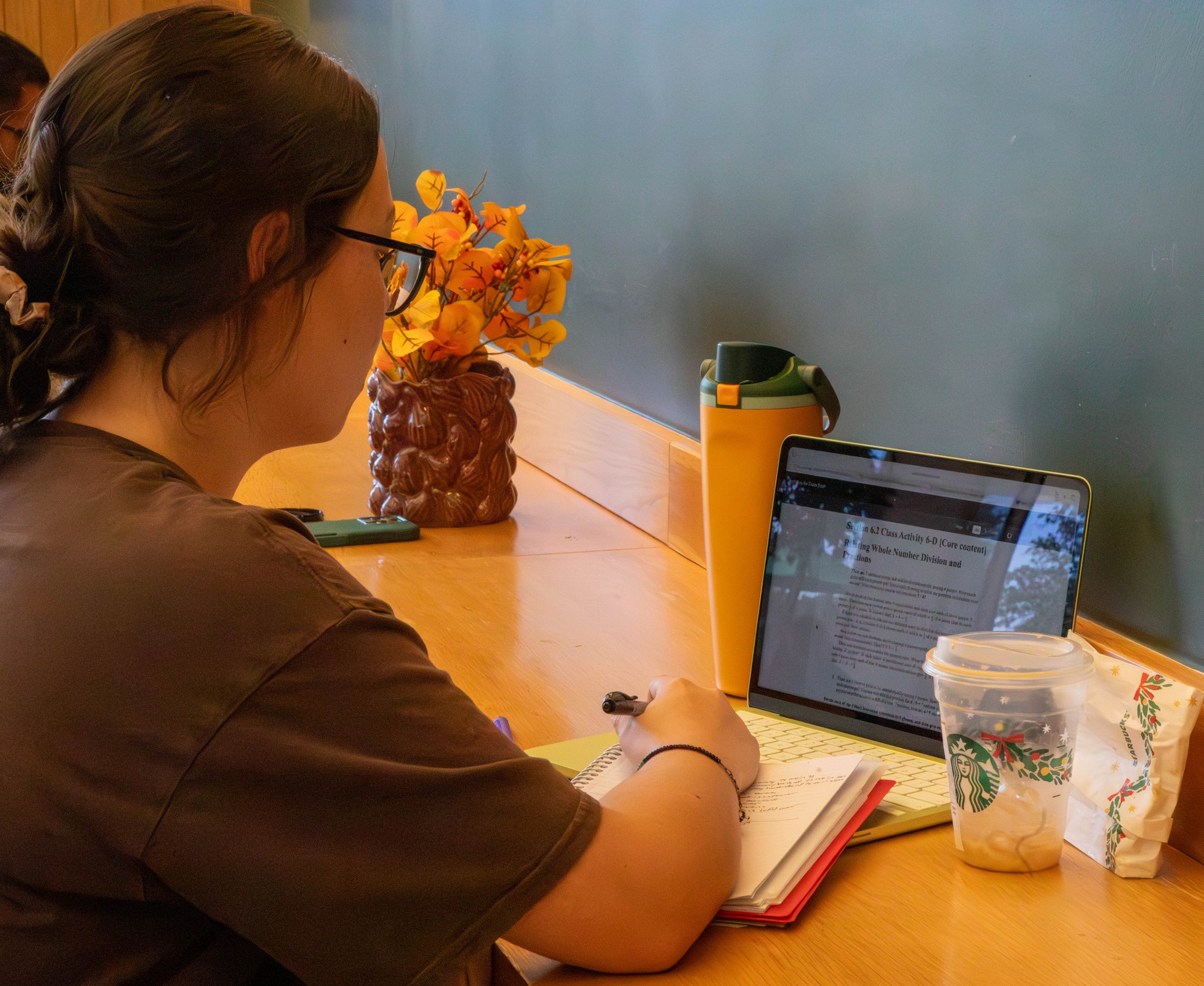
One cup turns into two, and two become part of the morning routine. For many coffee drinkers, caffeine consumption is not always a conscious decision but a habit shaped by repetition, environment and the desire for an energy boost.
According to the National Coffee Association, approximately 195 million Americans, or 72% of the population, drink coffee at least once a week.
Coffee is one of many sources of caffeine, a natural stimulant found in products ranging from tea to energy drinks. According to Healthline, approximately 90% of Americans consume at least one caffeinated product per day.
Dr. Fernanda Andrade, an assistant professor of psychology, studies self-regulation, examining the strategies people use to achieve their goals. She said coffee consumption can begin as a deliberate choice but eventually becomes an automatic part of someone’s routine.
“Coffee drinking may have started with a goal — to socialize, to enjoy the taste of coffee,” she said. “But once this behavior is repeatedly paired, say, with friends, with the time of day, with doing this for breakfast or for lunch. Over time, people start doing this because of routine and they actually lose a little bit of the goals that led to drinking coffee to begin with.”
A coffee run with friends or a morning stop at a favorite shop can gradually become a habit tied to a particular time or place. Andrade said these environmental cues can influence consumption in ways that resemble patterns seen in other addictive behaviors.
“There is a big effect of the environment of the situation that cues the behavior,” Andrade said. “And in that sense if a [student] is constantly drinking coffee with breakfast, if they drink it on their walk to class, if they drink it at noon, if they always drink it at the Starbucks, at the library, that pairing of the behavior, with the situation can make the situation a trigger for the behavior, and that can look a lot like other addictions.”
Although caffeine consumption can lead to dependence and withdrawal symptoms, caffeine-related conditions are treated separately from other substance use disorders in the Diagnostic and Statistical Manual of Mental Disorders. Andrade’s research highlights how repeated behaviors and environmental triggers can contribute to consumption patterns.
Beyond the behavioral patterns associated with coffee, caffeine also has physical effects on the body.
Dr. Bradley Keele, associate professor of psychology and neuroscience, studies the neurobiology of emotional behaviors, including anxiety disorders and depression. He said caffeine acts as a central nervous system stimulant, affecting both mental and physical activity.
CNS stimulants increase activity in the central nervous system, which can affect energy levels, alertness and tiredness.
“Caffeine is a central nervous system stimulant,” Keele said. “It provides behavioral effects including increased energy, reduced fatigue. It can interfere with sleep.”
Caffeine also activates the sympathetic nervous system, which can increase blood pressure and heart rate. Keele said these effects can become more noticeable as caffeine consumption increases.
“Some individuals may be more sensitive to [changes in blood pressure and heart rate],” he said. “When we start looking at three, four or five cups of coffee, then those automatic effects become pretty significant.”
For students and other regular coffee drinkers, however, the appeal often goes beyond caffeine’s stimulating effects. Stephanie Bela, a server at Cafe Cappuccino, said customers frequently gravitate toward flavored drinks, including white chocolate, vanilla, hazelnut, chai and coconut vanilla.
“If I have a good drink and it tastes good in the morning, I feel like my whole day is going to go good,” Bela said. “Maybe that is something people look forward to when they come in here.”
Waco senior Maddie Peacock has been trying to reduce her caffeine intake and now typically orders decaf coffee.
“I enjoy the taste of coffee,” Peacock said. “I think it is a great opportunity to socialize with people and share something without having the commitment of a whole meal together.”
Peacock said she began cutting back after noticing that caffeine made her feel more anxious.
Other students have different relationships with their morning coffee. Charleston, South Carolina, freshman Charlotte Alwine said she prefers stronger coffee because of its higher caffeine content and typically drinks it shortly after waking up.
Alwine said she cannot remember the last time she went without coffee in the morning.
“If I wait to have coffee until later, then I get a really bad headache, and I just cannot think,” she said. “Then I am just really off the rest of the day.”
San Antonio freshman Lucia Garcia enjoys drinking lattes but said she notices physical effects when she consumes too much caffeine, including restlessness and changes in her appetite.
“I get really jittery and really hyper, and I just do not want to eat anything,” Garcia said.
Garcia said she enjoys coffee as part of her routine, although she recognizes that going without it can be difficult.
“Coffee gives me something to look forward to, but also if I do not have it, it can be kind of hard,” Garcia said. “I don’t necessarily need it, but I might.”
Garcia also said Starbucks coffee sometimes makes her feel more anxious than coffee from other shops.
“There is something in the beans,” she said. “I can’t explain it. It is good, but there is something different in [the coffee].”