By Kamryn Anthis | Staff Writer
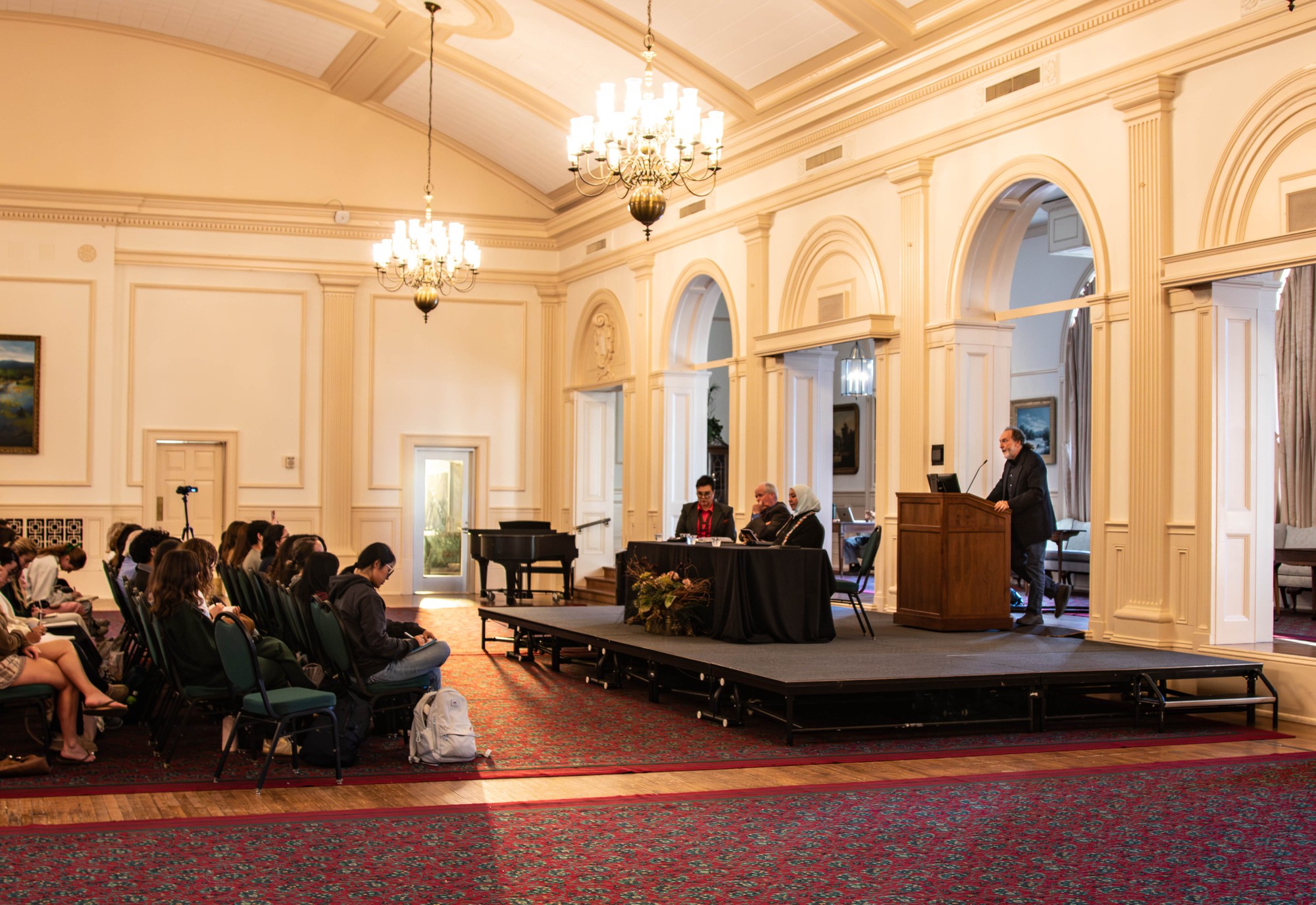
Baylor’s department of medical humanities hosted a faculty panel at 4:30 p.m. Monday in the Barfield Drawing Room about professors’ experiences with spirituality in their work.
Entitled “Why Religion Matters in Medicine: Spirituality as a Social Determinant of Health,” the event tackled the connection between religion and perspectives on illness and death.
Dr. Ben Doolittle, a professor of general medicine, pediatrics and divinity at Yale University, explained how an understanding of religion in medicine transcends belief in any one faith.
“In the posture of denying religion, you still have to drive past a church or mosque and think about it,” Doolittle, a Christian healthcare provider, said.
The panel’s intended audience was students pursuing various healthcare careers and those who come from a wide variety of faiths and backgrounds. Doolittle appealed to those students and the challenging future they face in their prayer life and work.
“We’re left-brained, evidence-based people, but we’re also soulful people who care about others and their well-being … There’s a tension in our lives,” Doolittle said.
Doolittle said the students and faculty in attendance were in the right place, since “you can’t go to a better place in the world than Baylor to pursue these questions.”
Clinical Professor of Psychiatry at Stanford University School of Medicine Dr. Rania Awaad shared her personal experiences with holistic healing.
Awaad said she believes that “the soul part of the conversation is often missing” and that “excluding the soul excludes spirituality and religion.”
Awaad shared that in her Muslim faith, a core value is that there is no illness, physical or mental, that God sent to the earth that He didn’t also send a treatment for.
Islamic hospitals, Awaad continued, were the first to incorporate psychiatric care into hospitals, and represent how the Islamic faith factors into certain cultural views of health.
As an educator, Awaad said she’s noticed how her students often don’t know what to do for patients in a religious context, and hopes to see a change in this trend as students become more cognizant of patients’ attitudes toward faith-based treatment.
Dr. Jeff Levin, a professor of epidemiology and population health and of medical humanities at Baylor, emphasized a statistical understanding of the relationship between his disciplines.
Levin, a Jewish man, explained how understanding religion on a broad scale matters for professionals across all fields.
“There’s empirical research that suggests that faith influences patient outcomes of clinical care, influences length of hospital stays, patient satisfaction and so on,” Levin said.
Levin shared an example of a time he felt his pain in the hospital following a surgery was mitigated by the kindness of strangers inviting him to recite a blessing, which he and his wife attributed to his quick discharge.
Levin said the academic and clinical research conducted around him reinforces the importance of spirituality in medicine and rule.
“All of us can draw on our own faith backgrounds and spiritual paths to serve as a resource that can inspire us in our callings in our own lives, and at the same time help us be agents of healing to our patients,” Levin said.