By Mackenzie Grizzard | Assistant News Editor
The Baylor Annual Fire Safety and Security Report saw an increase in burglary, motor vehicle theft and stalking reports from 2023 to 2024, including incidents on the main Waco campus and branch campus locations.
The Clery Act requires institutions to cite reports of Clery-reportable incidents, so the numbers in the 2025 report may include more than one statistic for each reported incident.
This report is required to be published and distributed every year by Oct. 1 in compliance with the Clery Act, a federal consumer protection law that requires colleges and universities that receive federal funding to publish campus security and safety policies as well as crime statistics occurring in the past three years.
Director of Clery Compliance Chris Charanza delved into the extensive components of this 84-page annual report, highlighting the work he and his office does daily.
“One of the biggest things about our report every year is it’s front-loaded — we put the statistics on the very front so everyone can see what’s going on,” Charanza said. “But the majority of that document goes far beyond the statistics. It offers programs and resources.”
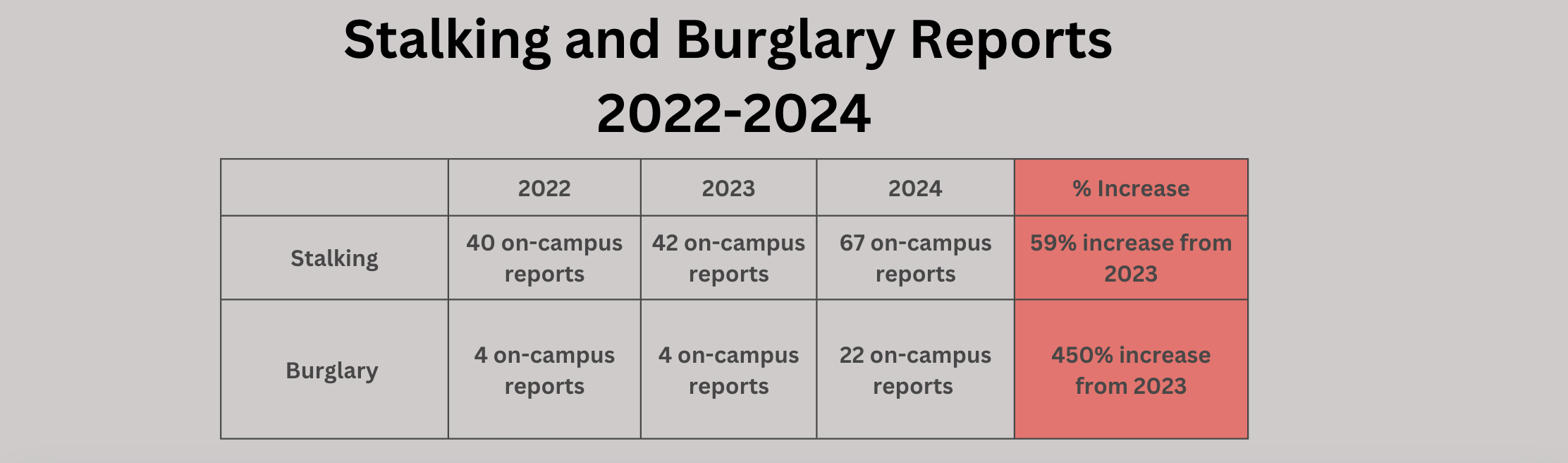
According to the report, campus burglaries increased by 18 reports, and on-campus stalking increased by 25 reports since last year. This sharp increase is contrasted with other categories like rape and aggravated assault, whose numbers have remained relatively the same year by year.
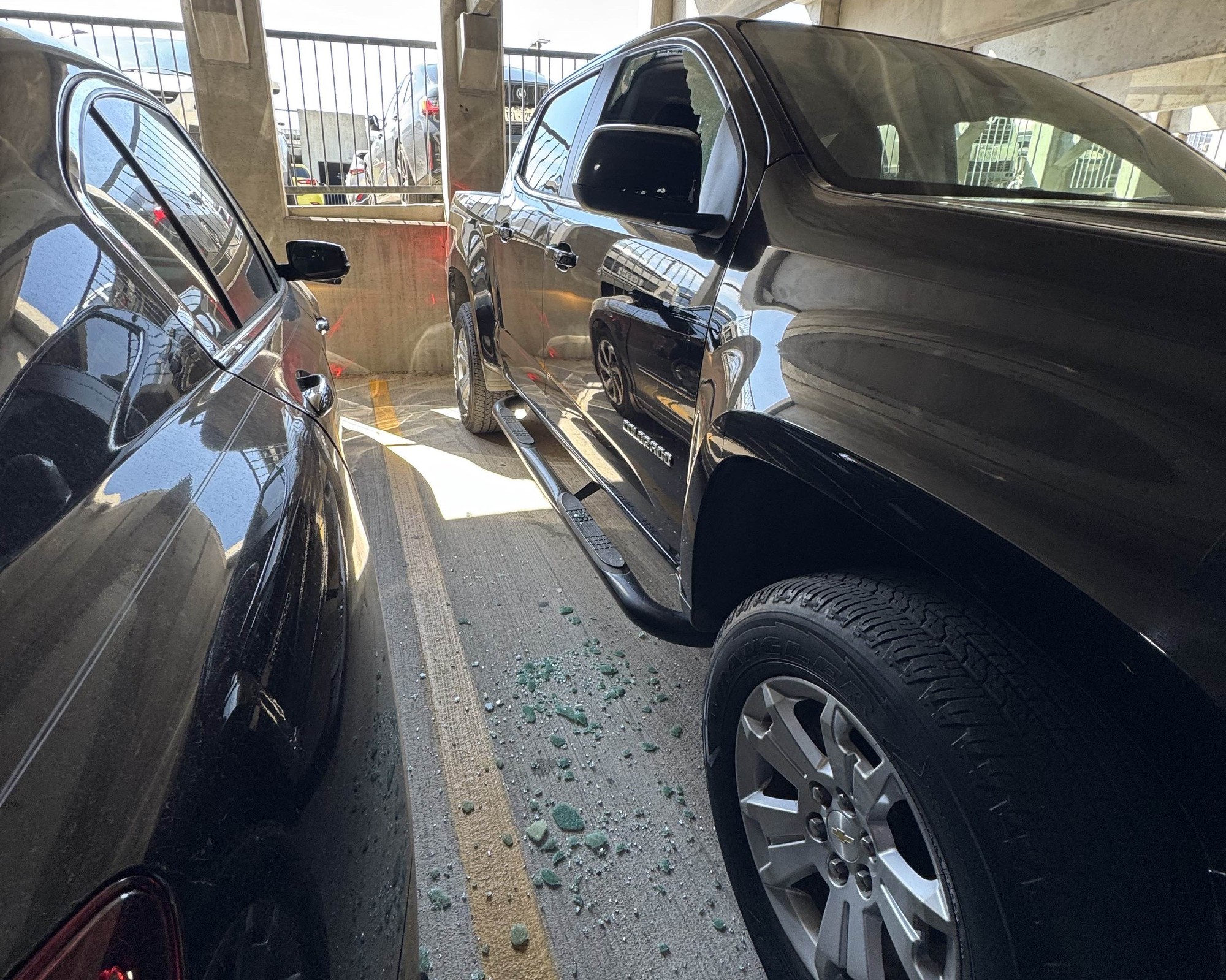
“The increase in our number of burglaries this year is largely as a result of things that were happening at [Clifton Robinson Tower],” Charanza said. “We had offices that were being entered into and wallets and purses being taken out of offices.”
Charanza said that motor vehicle thefts, applying to anything with an engine, are directly correlated to the increase in e-scooters, e-bikes and motorized skateboards.
For the increase in stalking reports, Charanza explained how federal guidelines impact how reports are categorized as stalking and the potential wide range of offenses.
“A large portion of the stalking statistics was ex-partners calling, texting, sending messages via social media or attempting to make contact through third parties,” Charanza said. “Because it can be through a third party, it can be through someone else. They don’t even have to make direct contact with the person who is the victim in these cases. [But] we still have to report it as stalking based on how the guidelines are set for us.”
Charanza said that for a report to be characterized as stalking, there must be more than one occurrence, and one has to occur on Clery geography, which includes the Baylor campus and streets and locations immediately adjacent to campus, the Diana R. Garland School of Social Work and several other Baylor properties like the Louise Herrington School of Nursing and Truett Seminary. Additionally, a stalking report also encompasses unwanted electronic communication, like text or email.
“So it’s very rare that we get reports of what people think stalking is — with someone hiding outside the bushes with binoculars,” said Dr. Laura Johnson, associate vice president for equity and Title IX coordinator. “So we in our office, like Clery, always err on the side of caution and include something as a report rather than exclude it.”
Johnson emphasized that her office maintains a proactive approach to reports of sexual and interpersonal misconduct. Whenever a report is received that appears to violate policy or is close to it, outreach is made immediately.
“We’ll meet with them, offer whatever support and resources are available, including resolution options if they want that,” Johnson said. “And then we’ll try to … carry forward, allowing them autonomy to keep the reins in terms of what happens next.”
Additionally, the annual report includes updates reflecting the Stop Campus Hazing Act, which was enacted in December 2024, amends the Clery Act to increase transparency and require institutions to implement prevention measures against campus hazing.
“Hazing really has no place in our community, has never had a place in our community, and this federal legislation brings some greater clarity on transparency to how we share about incidents of hazing that do happen on our campus, as well as how we report in our Clery reporting information,” Dr. Sharra Hynes, vice president of student life, said.
The rest of the report includes updated emergency response and evacuation procedures, reporting resources, emergency notifications, crime prevention and awareness, sex offender registration, drug and alcohol policies, fire safety and other training materials.
“We go above and beyond to be able to ensure the safety and security of our community, and that comes alongside with our partners that we have within the community,” Donald J. Rodman, senior director of public safety and security, said.