By Kamryn Anthis | Staff Writer
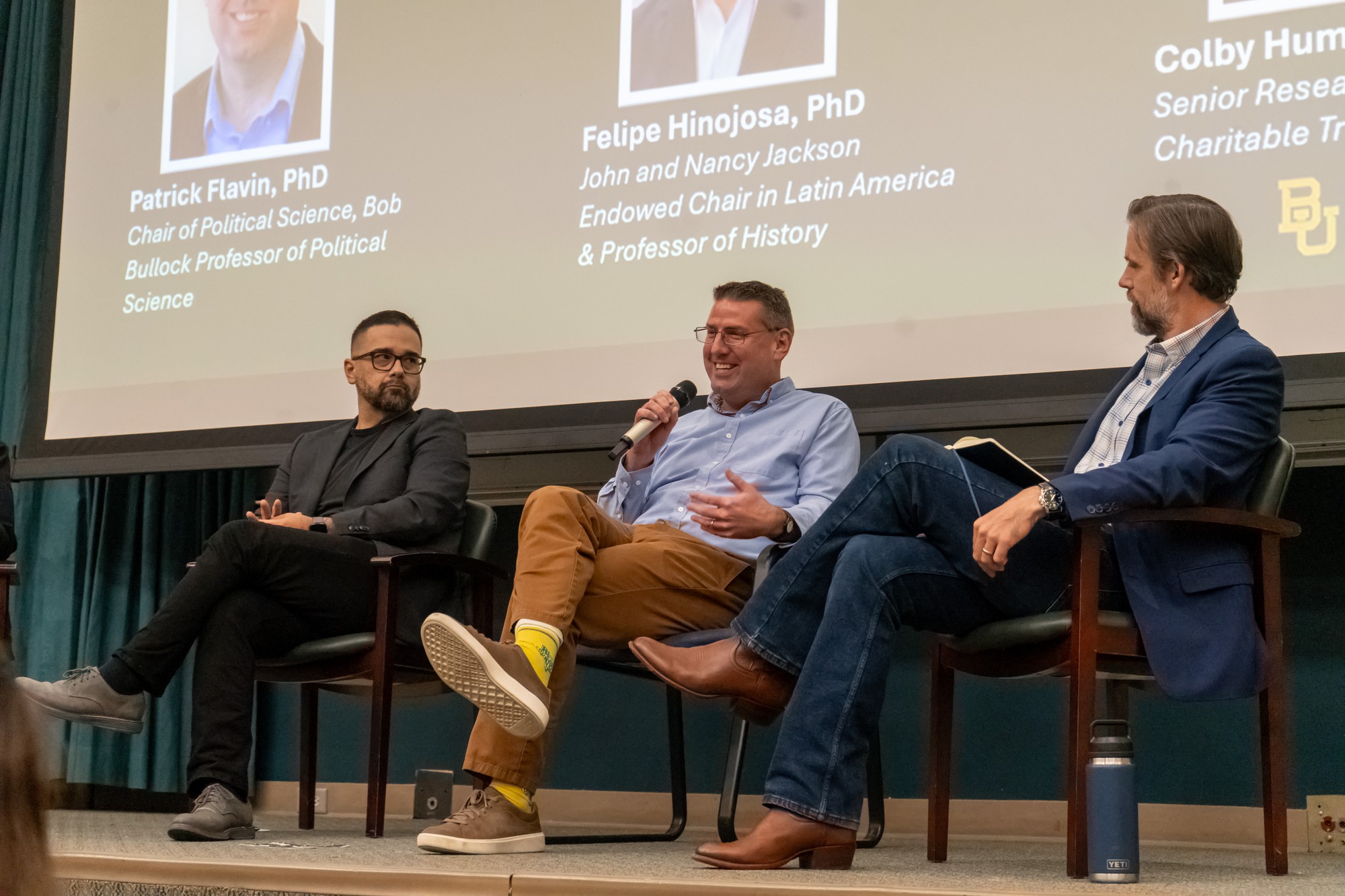
With the midterm elections just weeks away, Baylor faculty and students gathered Thursday night in Bennett Auditorium for a panel discussion encouraging students to make their voices heard at the polls, even amid growing political division and dissatisfaction with both major parties.
Dr. Rebecca Flavin, teaching professor of political science, mediated the event. Panelists included Dr. Patrick Flavin, chair of political science; Dr. Felipe Hinojosa, professor of history; and Dr. Colby Humphrey, senior research officer.
Rebecca Flavin opened the discussion by acknowledging that young people often feel disconnected from political parties. Patrick Flavin echoed the sentiment.
“Just about any survey you look at, especially with younger viewers, shows high levels of discontent with both political parties.” Patrick Flavin said. “As a voter, it absolutely can be frustrating.”
The panelists encouraged students to recognize the significance of their right to vote, noting that many people throughout history have been denied that opportunity.
“Voting is a privilege; most people in human history have not had the ability to vote,” Humphrey said.
Offering a historical perspective, Hinojosa emphasized the importance of remembering those who fought for voting rights.
“Remember the people who came before you that made it possible for you to vote,” Hinojosa said.
The panelists also addressed the belief that individual votes don’t make a difference, urging students to consider the potential impact of close elections.
“If you look at Texas, these races could be decided by a few thousand votes, so your vote most definitely does matter,” Humphrey said.
Hinojosa expressed concern about voting suppression and encouraged students who feel powerless to recognize the influence they can have through voting.
“Make no mistake about it — [voter suppression] continues to be contested, and it’s part of a practice in this country to keep certain types of people in power,” Hinojosa said. “Voting gives the people power to reject those powers that be.”
Amid political division, panelists also emphasized the importance of civil discourse. Hinojosa said meaningful change begins with ordinary people coming together.
“It’s hard to love your neighbor right now,” Hinojosa said. “The most successful movements that I’ve learned from over the years have had everything to do with how willing each of you is to build coalitions with fellow students … across race and class and political orientation”
Patrick Flavin acknowledged that political discussions can create tension but warned against avoiding them altogether.
“At Baylor, it’s very rare to see students wearing candidates’ T-shirts or hats,” Flavin said. “One reason is that it can create conflict and judgments; I totally get it … but I think the alternative might be worse if we become apolitical to the point where we become uncomfortable talking about our political views.”
The panelists also discussed the challenges of navigating political information in the age of social media, particularly for younger voters.
“I’m sympathetic with students because there’s so much information coming at you constantly,” Humphrey said. “My first piece of advice would be avoiding social media like the plague. … Go to primary sources.”
Panelists encouraged students to research candidates and issues independently before heading to the polls.
“The fact of the matter is some people are spewing hate speech out there,” Hinojosa said. “We have to do our homework and find out what is causing these tensions and make sure we aren’t disengaged from the discourse”
As many Baylor students prepare to vote in their first midterm election, the panelists urged them to take their civic responsibilities seriously.
“Get out there and vote early,” Hinojosa said. “Find out who the candidates are… It’s a good feeling when I vote … I’m a part of something bigger than I am.”
Early voting begins Oct. 19, with the Baylor Welcome Center serving as a polling location.
“Be a savvy news consumer and a savvy voter,” Patrick Flavin said.