By The Editorial Board
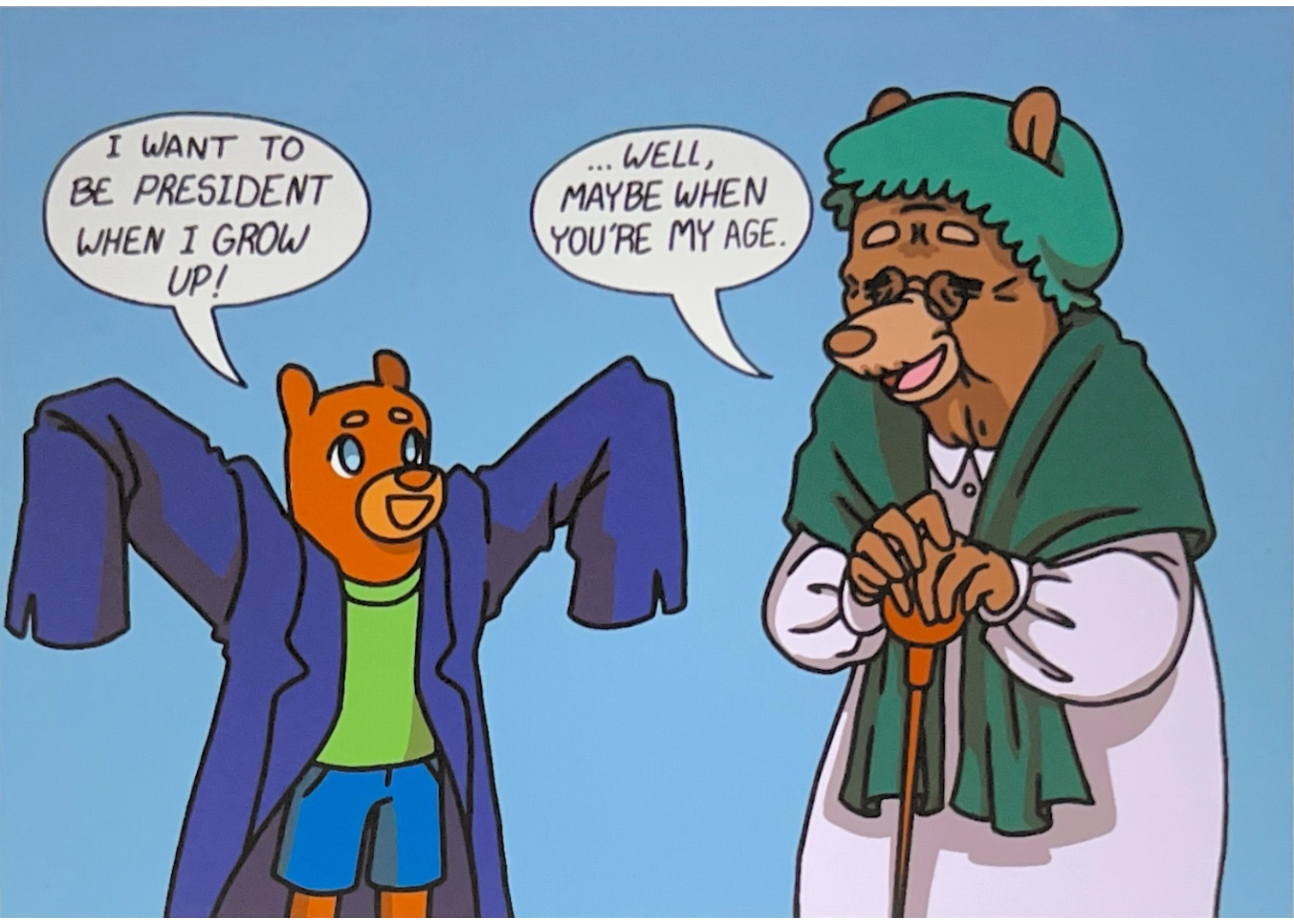
Once the words “president,” “senator” and “representative” get thrown around, another descriptor often follows: “too old.”
How often do we have to confront the effects of age in our government? At the national level alone, it seems members in each branch and in the bureaucracy have long overstayed their welcome.
A poll conducted by NPR in May found that eight in 10 Americans vouch for imposing direct “age caps” on veteran members of Congress. The reason why is simple: both parties’ highest-ranking officials have overstayed their welcome.
Mitch McConnell, the senior Republican Senator from Kentucky, suffered a fall earlier this year, which led to a three-month absence from the Senate floor. Posts on X from Nov. 8 show the 84-year-old Senator unresponsive when asked about Republicans’ upcoming loss of both Congressional majorities come 2027.
Dianne Feinstein, a Democrat and former senior Senator from California, died during her sixth term in office on Sept. 28, 2023. She was 90 years old, and by the time of her death, she had faced criticism for her apparent lack of mental acuity.
A Pew Research Center article published in 2023 found that U.S. presidents typically enter office in their 50s. However, Presidents Donald Trump and Joe Biden assumed office in their 70s, prompting critiques of both men’s ability to lead our country.
Biden’s infamous string of gaffes during his only debate against Trump in the 2024 presidential election cycle may stand out as a possible turning point for public opinion against aging politicians, yet a poll released by ABC News in July 2024 suggested that a plurality of American adults had concerns about his age months before then.
What made the debate a turning point, however, was Biden announcing the suspension of his presidential campaign on July 21, 2024, which prompted repudiation from worried voters and Democrat aides alike. McConnell, previously the Senate Republican conference leader, followed suit with an announcement Feb. 20, 2025, saying that he would retire following the conclusion of his current term in January 2027.
Following the Nov. 3 midterms, more young blood is flowing into Congress, with The New York Times reporting that the projected pool of Senators being sworn in next January has an average age of 54.7 — a sharp drop-off from the ages of staying and leaving Senators, 65.3 and 69.3 respectively. Compare this to the whole European Parliament, where the average age of incoming members is 50.
The ages of Texas’ major incoming politicians, Senator-elect James Talarico and Gov.-elect Gina Hinojosa, are dwarfed by the ages of Republican incumbents John Cornyn and Greg Abbott. Talarico is half Cornyn’s age at 37, while Hinojosa is 16 years Abbott’s junior at 52.
Whether this younger age will become commonplace in Congress remains to be seen. Regardless, this shift should be the new norm.
That is not to say that the elderly should be barred from holding office. Rather, our elected officials need to strive for a happy medium between healthiness and professional seniority.
The U.S. needs competent leaders. That means a strong work ethic and stamina high enough to keep up with the demands of a demanding nation, along with the experience needed to make sound decisions on matters of local and national significance.
Politicians can serve later in life, but the excessive time some spend in office limits the advancement of policies that younger Americans value.
Chuck Grassley, a Republican and the 93-year-old senior Senator from Iowa, began his political career in the Iowa state legislature in 1958. While some argue that no one in U.S. politics out-qualifies Grassley, the fact that he has influenced the changing tides of American life for almost 70 years puts his age into perspective.
Our politicians cannot be invisible figures in suits thousands of miles away, especially if they begin to cognitively decline. While professionalism and veteran positions on specific issues deserve appreciation in our democracy, there comes a point when the old guard must become the vanguard.