By Tripp Henderson | Staff Writer
President Donald Trump has approved the execution by firing squad of Nidal Hasan, the former Army major convicted of killing 13 people in the 2009 Fort Hood mass shooting, with the execution scheduled for 1 p.m. Dec. 3 at the Central Texas military installation, roughly an hour from Baylor’s campus.
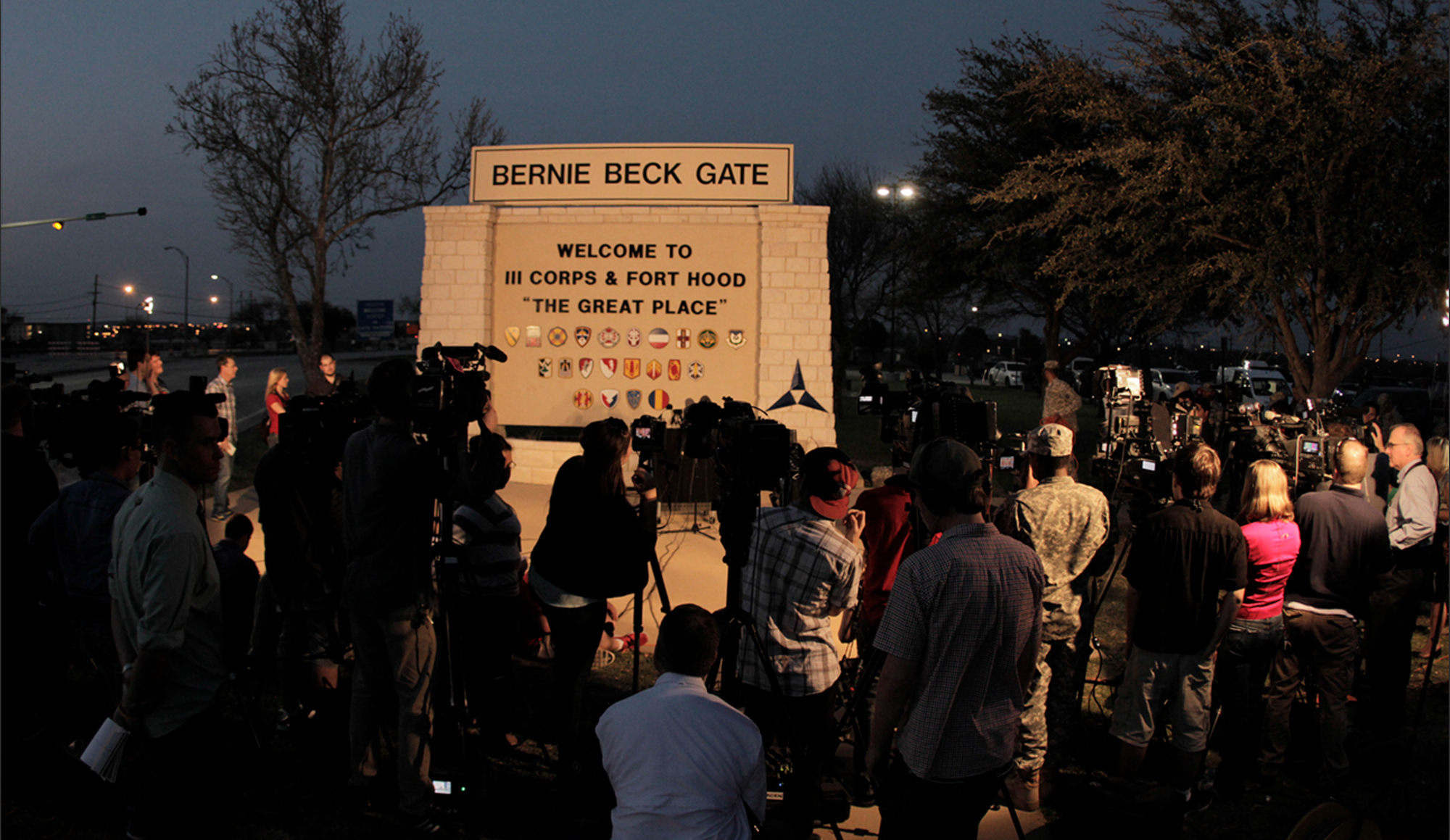
Acting Secretary of the Army Adam Telle announced Tuesday that Hasan would be executed at Fort Hood, where he killed 13 people and wounded 32 others on Nov. 5, 2009, in the deadliest mass shooting on a U.S. military installation.
The Pentagon confirmed Thursday that it would livestream the execution, following comments from Secretary of War Pete Hegseth that the public should be able to watch the execution.
“President Trump approved the execution earlier this week,” according to The New York Times. “The execution could still be derailed, but if it is carried out, Major Hasan will be the first person to be executed through the military justice system since a soldier was hanged in 1961.”
Trump has long championed the use of the death penalty, and in April the Department of Justice announced measures expanding the availability of execution methods, including firing squads, in federal executions.
While it is not clear why Trump chose a firing squad as the means of execution, Professor Geoffrey S. Corn, Director of the Center for Military Law and Policy at Texas Tech University and a retired U.S. Army Lieutenant Colonel, said that the execution is largely a “symbolic measure of retribution.”
Corn explained that just because Trump ordered the execution does not mean it is guaranteed to take place. Hasan can appeal the sentence, which would place the Dec. 3 execution on hold and trigger an automatic review in civilian court.
“This sentence is unlikely to be carried out anytime soon,” Corn said. “But it is significant that this is at the point now where the president has authorized going forward with [the execution].”
Corn said he thinks many people in the military community feel the execution is long overdue.
“It will send the message that this person is paying the ultimate price that society imposed on it through a legitimate criminal justice process where he had the opportunity to defend himself,” Corn said.
Hasan, a devout Muslim, served in the army for 21 years as a psychiatrist before he “switched sides” and fired on fellow servicemen because of what he described as retaliation for U.S. violence in the Middle East against Muslims.
Hasan went to trial in 2013 and represented himself. He was convicted of 13 counts of premeditated murder and 32 counts of attempted murder. Hasan said that “The evidence will clearly show that I am the shooter,” according to NPR.
Corn, who attended portions of the trial, said Hasan remained largely silent in court.
“He boycotted the trial,” Corn said. “He just sat there through the whole trial. I think in the whole trial he asked maybe one or two questions.”
After Hasan was convicted, Corn said that he “accepted the assistance of appellate lawyers and he pressed a pretty comprehensive set of legal issues on appeal.”
Given how determined Hasan was in the appellate process, Corn said he will likely try to petition for habeas corpus.
Hegseth originally recommended Hasan’s execution, according to the Death Penalty Information Center.
Hasan is one of four on the military’s death row and, if executed, will be the first person executed through the military justice system since 1961, when Army Pvt. John Bennett was hanged. He would also be the first military prisoner executed by firing squad since Pvt. Edward Donald Slovik in France during World War Two, the New York Times reported.
The military death penalty has undergone several changes since then. In 1983, the Supreme Court temporarily suspended the military death penalty in United States v. Matthews, but it was reinstated by President Ronald Reagan in 1984. More recent Army regulations in 2023 gave the president discretion to choose the method of execution, including firing squads.
Despite the announced execution date and livestream, further legal challenges could determine whether Hasan’s sentence is carried out as scheduled.