By Beckett Rakes | Staff Writer
As Thanksgiving approaches, food becomes a central theme of the season. But beyond the holiday meals and family gatherings, shared meals hold a deeper significance in the Christian faith.
Throughout the Bible, meals serve as opportunities for God to provide for his people and bring them together. From the Last Supper to the marriage supper of the Lamb in Revelation, Scripture can be viewed through the recurring image of God dining with his people.
Sam Langenbahn, college pastor at Harris Creek, said what happens around the table is central to Christianity. He pointed to God’s provision of bread for the Israelites in the wilderness and Jesus’ description as the “bread of life” during the Last Supper.
South Brunswick, New Jersey, junior David Frederick said food also serves as a reminder of humanity’s dependence on God.
“God chose his provision through food, and then God uses that emphasis of provision to show us how vital he is to us,” Frederick said.
Dining together was also a crucial part of how early Christians practiced hospitality. However, in modern America, some worry that the habits and skills needed to gather around the table are becoming less common.
“I do think that in a fast-paced, productive society, it’s not high on many people’s priority to order the groceries, pick up the groceries, cook the meal and open the house,” Langenbahn said.
For Langenbahn, Christian hospitality means more than sharing a meal with friends and family. It also means making room at the table for people from different backgrounds. Just as Jesus ate with tax collectors, sinners and Gentiles, Christians are called to build relationships with those who may be different from them.
For Baylor students, that could be as simple as inviting an international student over for dinner. Although the gesture may seem small, research and reporting on international student experiences have highlighted how many never enter an American home during their time in the country.
“Christ broke bread with all kinds of people in order to bring them into the community through food,” Frederick said.
Langenbahn said modern culture can make it difficult to prioritize the time and effort required to build those relationships.
“It begins with an invitation,” Langenbahn said, “That invitation leads to an opportunity. It’s across the table where Gospel conversations can happen. I think it’s across the table that friendships can be formed, and I just don’t think you can get that if you pivot to go grab Torchy’s.”
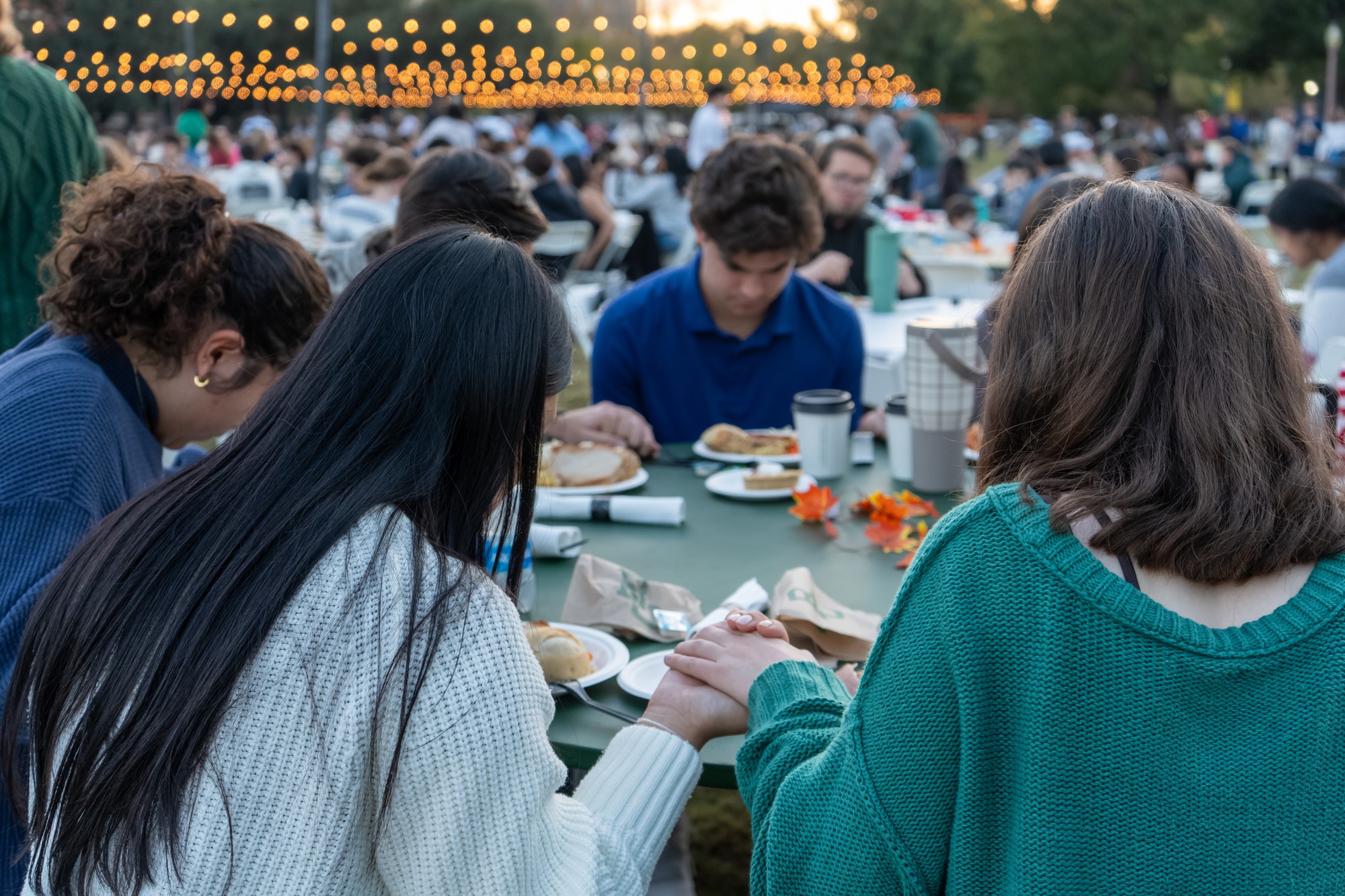
As the semester winds down and the holiday season approaches, Langenbahn said churches and the Baylor community have opportunities to put that message into practice. He pointed to Harris Creek’s Friendsgiving, which brings together people across generations and backgrounds.
“You discern your role and you walk in obedience to it,” Langenbahn said, “And I don’t think it’s changed on one night. I think it’s one invitation at a time; students are experiencing Christ through the table, and that really opens the doorway to Gospel opportunity.”
Frederick also emphasized Christians’ responsibility to reach out to people experiencing hardship in their communities. He pointed to Waco’s homeless population and events such as First Baptist Waco’s weekly dinners, which provide free, home-cooked meals to people from different circumstances.
Frederick encouraged students to make time for meals with others rather than defaulting to takeout or eating alone.
“It’s hard because time is time, but if that’s something God calls us to do and share with people, then that’s something we should want to do,” Frederick said.