By Joana Karoshi | Staff Writer
Student Senate passed a bill Thursday allocating up to $60,000 to revamp Fountain Mall in a 36-8 vote, with one abstention, following an extended debate over how much of its remaining budget to commit to the project.
The proposal, initially requesting $60,000 to $80,000, was amended to set a funding range of $40,000 to $60,000. Senators ultimately rejected a subsequent attempt to lower the range to $30,000 to $50,000 before approving the bill.
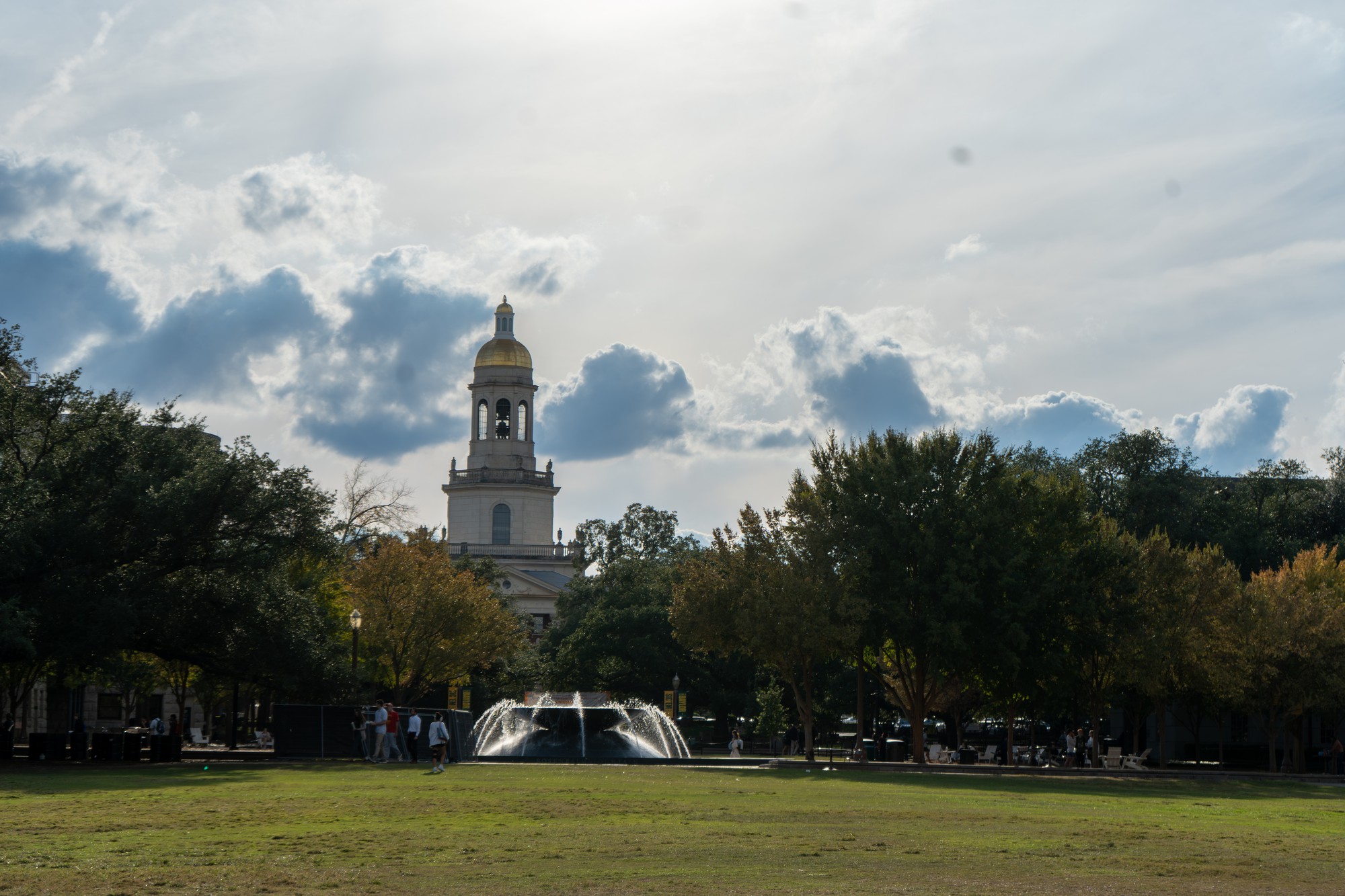
The renovation, authored by San Diego sophomore Noah Seroter, chair of Baylor Student Government’s Campus Improvements and Affairs Committee, and Simi Valley, California, senior senator Alex Kelly, in partnership with University Facilities Management, will revamp the Rosenbaum Fountain area.
The project includes installing turf in the surrounding areas and adding tables, chairs, lounge seating, and other furnishings to create student study spaces.
The legislative proposal estimates the total cost at approximately $225,000 to $325,000. That estimate includes $74,730 for outdoor furniture and approximately $150,000 to $250,000 for turf installation and related site work.
The proposal also cited results from the Fall 2026 Campus Improvement Assessment survey, in which 62.9% of respondents ranked outdoor study spaces among their top two priorities and 33.5% identified outdoor social spaces as a priority.
The funding is subject to several conditions, including finalized vendor quotes, Facilities Management approval and written confirmation that sufficient university funding or other institutional resources will cover the remaining project costs.
The proposal also requires an agreement with Baylor to provide visible Student Government recognition in the renovated area. The proposal establishes a Feb. 15, 2027, deadline for the required documentation and agreements.
If the conditions are not met by the deadline, the reserved funds will be released back to Student Government’s allocation fund and made available for other projects.
The project, Seroter said, has remained on the university’s priority list for nearly a decade, but other campus needs have taken precedence. Student Government is now working with Facilities Management to execute the renovation.
“Facilities naturally has a whole bunch of projects that they continually work on,” Seroter said. “It’s been put on the back burner a little bit because there’s been a lot of other needs across the university for things to be fixed up.”
Although Seroter believes the university will contribute, funding discussions are still ongoing. Seroter said the group is also exploring potential contributions from alumni and donors.
“Those conversations to fund the remaining aspects of the project are still ongoing, but we feel very confident that the university will invest the rest of the funds,” Seroter said. “We’re kind of exploring all options of funding the remaining part of it, but the university will be a significant partner with us on this.”
If the remaining funding is not secured by the proposal’s Feb. 15, 2027, deadline, Student Government plans to continue pursuing alternative funding sources rather than abandon the project.
“We’re not just going to let one roadblock stop us from pursuing what the students want to see,” Seroter said. “We’re going to exhaust all options, so we get the result that the students deserve.”
If the funding and approval process proceeds as planned, construction could begin in summer 2027, with the renovated space ready for the fall semester.
Seroter said the proposed allocation reflects Student Government’s responsibility to represent student priorities, even if committing a substantial portion of its available funding means fewer resources for other projects.
“The students will always come first; their priorities will always come first,” Seroter said. “And we will fund the appropriate amount to match that.”
Austin freshman Annalise Eisenbarth, a senator, said the lengthy debate reflected senators’ efforts to carefully evaluate the proposal and ensure the funding would be used appropriately.
“I think the attention to detail on all of the senators’ behalf to really thoroughly analyze every aspect of this bill to ensure that it was a proper use of our funds,” Eisenbarth said.
Eisenbarth said the proposed allocation also required senators to consider how the renovation would affect Student Government’s ability to fund other student priorities, including student organizations and campus wide events.
“We want to ensure that we can afford the student body in multiple aspects, not necessarily just campus improvement, but also other organizations and campus wide events,” Eisenbarth said. “So we needed to give due diligence to that fact.”