By Elliott Nace | Assistant News Editor
We should never forget that there are some strange things in our neighborhood.
Baylor and Waco’s rich histories are not without their tales of ghoulish intrigue. Here are five stories whose subjects have not yet been laid to rest.
Brooks Hall’s phantom fifth floor
The story of Brooks Hall is of a building that no longer exists.
Demolished in 2006, the original Brooks Hall stood on the current grounds of Brooks Residential College and Brooks Flats. The traditionally male dormitory had five residential floors, the first four of which revolved around stairwells central to the building’s structure.
Dr. Charles North, the director of Baylor Business Fellows, received his bachelor’s and master’s degrees at Baylor. During his first stint at the university, he caught word of upcoming changes that would need to be made.
The residence hall needed to be renovated by 1987 because its stairwells violated the university’s fire code. The ensuing changes to the building’s floor plan, according to North, led to situations such as three students occupying double rooms.
“It quickly became the dorm no one wanted to live in,” North said.
Yet the fifth floor crucially differed in layout. Since it was impossible to renovate, its permanent closure and abandonment followed.
North said he began to hear rumors of the fifth floor’s haunting by the time he returned as a faculty member in the late 1990s.
“This is evidence of what little time it takes on a college campus for ghost stories to go from what was likely a made-up practical joke played on some freshmen living in the old dorm to a full-throated legend that everyone knows and at least pretends to believe,” North said.
Brooks Hall’s fifth floor, known in posterity to have been haunted by candlelight, a sharp-dressed ghost and “violin music,” now carries on its phantasmic legacy in the clueless corridors of the new Brooks Village.
The victims of Lovers’ Leap
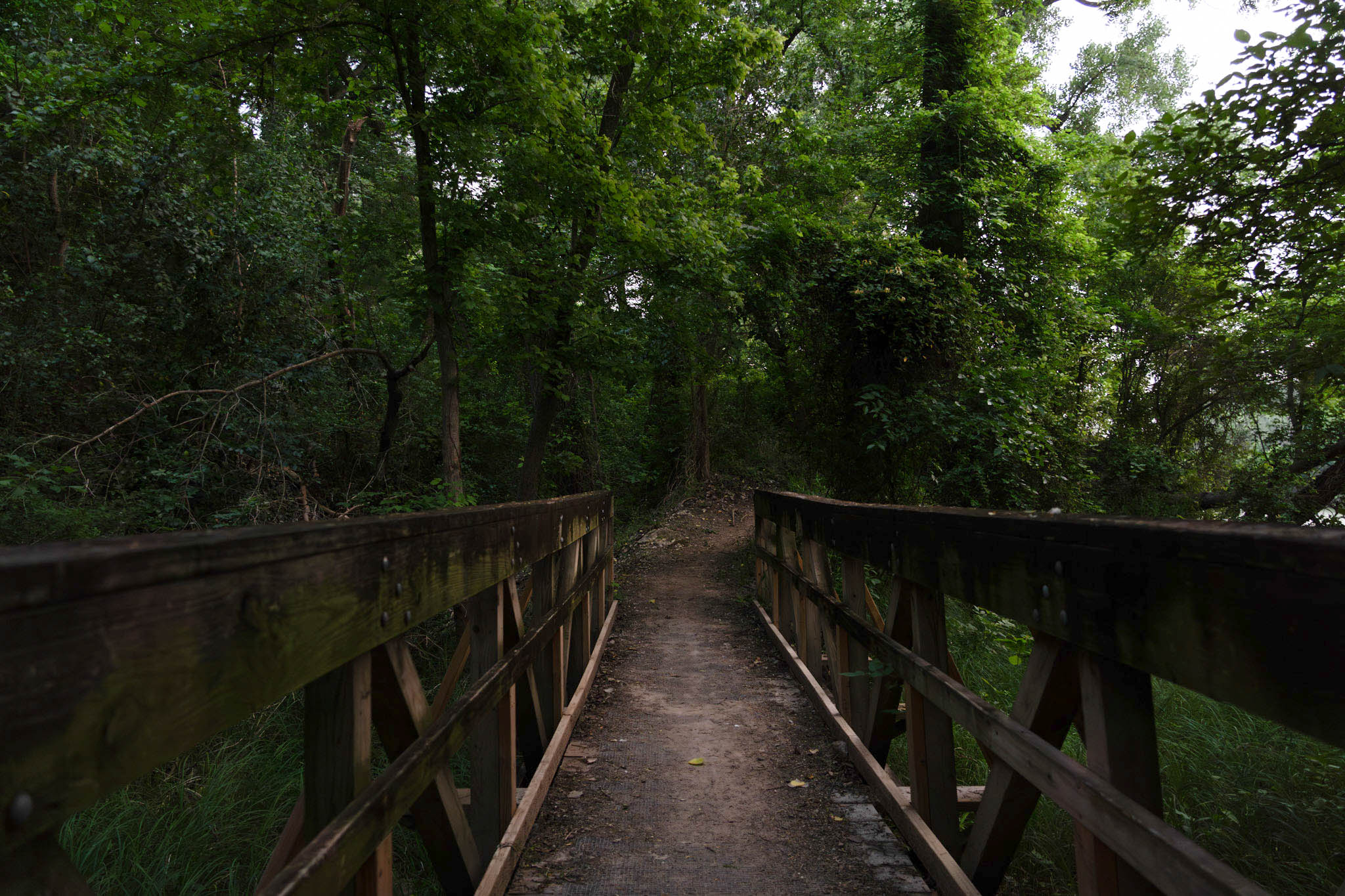
Nestled within Cameron Park is Lovers’ Leap, a limestone cliff whose name derives from an old story about the star-crossed love of an Apache gentleman and his never-to-be betrothed, an Indigenous Wacoan woman named Wah-Wah-Tee.
Animosity between the two tribes all but dashed any chances of the two uniting in marriage, leading to an all-too-familiar outcome. After their elopement failed and they were faced with no other options, the pair jumped off the cliff, hand in hand, into the Bosque River below.
The optimist may say that the love the two had for each other brings happy couples to the cliff. On the other hand, a sinister view may see the lovers as the vengeful spirits they truly are, doomed to wallow in their heartbreak year after year.
The ghostly writings of Dorothy Scarborough
Dorothy Scarborough, a late academic whose portrait graces the hallway connecting Burleson Hall and Old Main, was one of the first women to graduate from and teach at Baylor.
After receiving her doctorate from Columbia University, Scarborough wrote her own ghost stories such as “The Wind,” which was published in 1925.
According to an article from The Anxious Bench, Scarborough uses the titular wind to visualize protagonist Letty Mason’s mental torment from all angles. Scarborough’s intent for the novel was to “show the woman’s side of pioneer life” at a time when scholars were few and far between.
Though Scarborough’s likeness may be sheltered from the buffeting wind, her insight into the phantom side of life may linger on in the oldest part of Baylor campus.
The witch of Cameron Park
Waco’s best-known haunt may be just minutes from Baylor’s campus.
Many flock to an old stone-brick structure in the back of Cameron Park, believing it to be the former stomping grounds of a mysterious witch.
Dr. Stephen Case, a psychologist in the Counseling Center and Waco native for the last eight years, began to take note of the witch at Cameron Park after beginning to hike there. He explained how he has heard of people “feeling a presence” around the overgrown ruin.
“I know that for a long time, that’s been a local spot where teenagers and people have taken adventures at night, especially around Halloween time, to go and see and basically creep themselves out by going to that house and telling the story of why it is haunted,” Case said.
The structure’s arched entrance, its defining feature that still stands today, beckons onlookers to brave any arcane forces that used to reside within its walls.
The terrible tale of Telephus Johnson
The burial of a certain Wacoan may or may not have invoked some archaic ideas about the afterlife.
Telephus Telemachus Louis Augustus Albertus Johnson, a political man whose influence extended from the McLennan County Courthouse to Waco roads and housing, met his bodily end in 1875.
Johnson was first buried in First Street Cemetery before having his grave moved to Oakwood Cemetery. Dr. Kenneth Hafertepe, a professor in museum studies and self-proclaimed ghost skeptic, said Johnson’s burial vault can still be seen on the left of Oakwood’s main street.
“There were local legends saying that [Johnson] insisted that he should be buried sitting in a chair with a winning hand at poker in one hand, and either a six-shooter or a glass of whiskey in the other,” Hafertepe said.
Yet the true menace of Johnson’s resting place, according to Hafertepe, was his supposed burial above ground — a major faux pas for the time.
If it’s true that Johnson brought his vice and violence with him to the grave, his ghost shouldn’t be any less than six feet under.