By The Editorial Board
On Wednesday evening, Baylor’s campus will host two events that, at first glance, seem to offer something the university has long needed: space for expression, dialogue and engagement across differences.
Turning Point USA will hold an event beginning at 6:30 p.m., while All Are Neighbors, featuring Democratic speakers, is scheduled for 5 p.m. Nearby, a campus-wide prayer gathering will begin at 6 p.m. on Burleson Quadrangle.
Individually, each of these moments carries its own purpose and its own promise. Together, however, their timing raises a quieter but more significant concern — not about the content of what is being said, but about the structure in which it is being said.
A few weeks ago, this editorial board raised concerns about Baylor’s historical inconsistency in welcoming speakers across the political spectrum. The approval of “All Are Neighbors” marked, in many ways, a corrective step — an acknowledgment that intellectual and ideological diversity should not be selectively permitted. That progress is worth recognizing.
But progress in principle can still falter in practice.
All Are Neighbors purposely planning back-to-back with TPUSA unintentionally creates the very fragmentation it seeks to resolve.
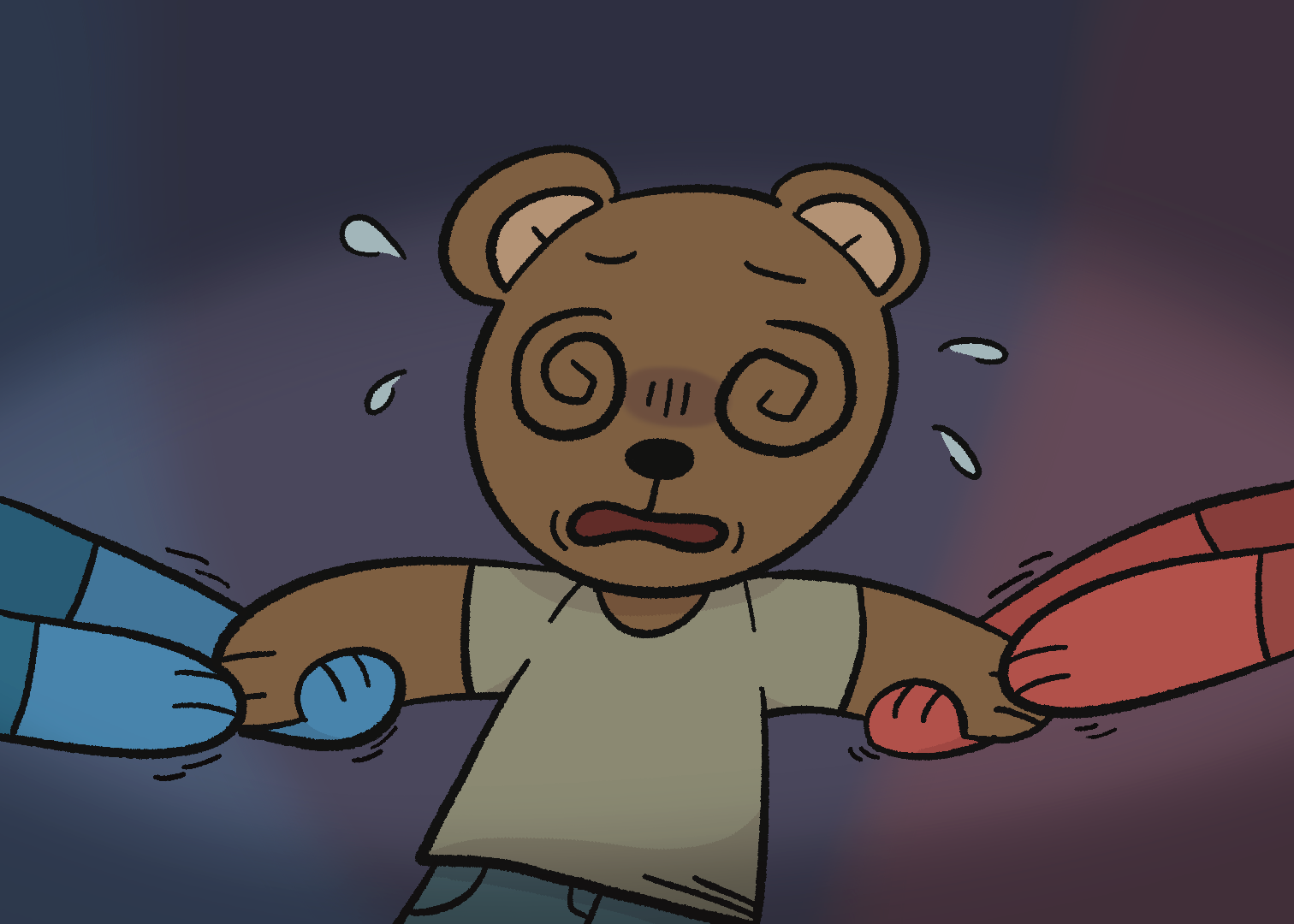
Instead of fostering a shared space where students might listen, reflect and even challenge one another, the schedule encourages partition. Students are not simply choosing what to attend; they are choosing where to belong, even if only for an evening.
This is how confirmation bias quietly takes root — not through malice, but through structure. When events that represent differing perspectives are segmented in time and audience, they risk becoming echo chambers rather than invitations.
Students are likely to attend the event that aligns with what they already agree with, leave affirmed in those beliefs and rarely encounter the tension that produces genuine understanding.
To be clear, we do not support one of these events over the other. Each represents a dimension of campus life that deserves space: political engagement, civic dialogue and spiritual reflection. The issue is not the presence of these events, but their separation.
Baylor, as a Christian university, has long articulated a commitment not only to truth but also to community — a community that is meant to hold difference without dissolving into division. That vision is difficult to realize when opportunities for engagement are arranged in ways that subtly discourage overlap.
Consider the alternative. What might it look like if students attended All Are Neighbors, then walked together to the Quadrangle for prayer and, from there, continued on to the Turning Point USA event? What conversations might emerge not in isolation, but in movement — in the shared experience of listening, reflecting and then listening again?
The prayer gathering, in particular, offers a rare kind of common ground.
It is not bound to a political platform or ideological framework, but instead invites students into a posture that precedes argument: humility. At 6 p.m., students will gather not to persuade, but to seek.
In a moment where voices often compete to be the loudest, prayer asks something different — to be still, listen and remember that conviction need not come at the expense of charity.
If Baylor is serious about cultivating both conviction and compassion, then the challenge is not merely to host diverse events, but to weave them together in a way that encourages encounter rather than avoidance.
Wednesday presents that opportunity, even within its imperfect structure.
Students should resist the instinct to choose one space at the exclusion of others. Make the effort to attend all three events, not because you agree with everything you will hear, but because understanding is not formed in comfort alone.
Unity is not the absence of difference; it is the decision to remain present within it.
The schedule may divide the evening, but it does not have to divide the student body.