By Zainab Richardson | Staff Writer
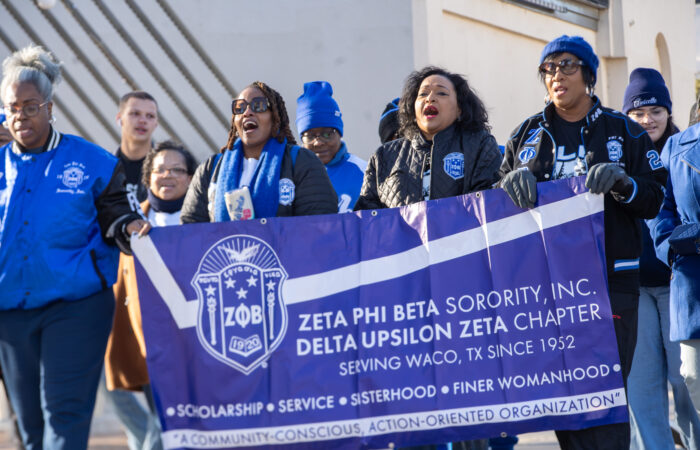
During a time when being Black or a woman was challenging, the Nu Iota chapter of Zeta Phi Beta changed Baylor’s Greek life forever. It paved the way for other Divine Nine organizations when it became the university’s first multicultural sorority to be chartered on campus in 1972.
Being the first didn’t just come with a great legacy; it also brought pressure to represent the Black community and womanhood positively. Houston graduate student and Zeta Phi Beta member Makayla Williams said her involvement with the sorority came with a heavy sense of responsibility.
“I think wanting to produce quality events, having to establish a network, all of those things come with responsibility,” Williams said. “We wanted to have respect from our peers, and setting the pace comes with knowing that you are creating a legacy and setting the tone for all the other organizations that are coming behind you.”
But legacy isn’t built on intention alone. It is forged when obstacles threaten to shut down the organization before it even fully grows. For Zeta Phi Beta, those moments came earlier on.
“We did kind of run into some tensions with peers and trying to gain institutional support,” Williams said. “During that time period, we did have some tensions when it just came to namesake.”
But the trials only further stabilized the organization’s legacy. Today, current members proudly carry the weight of that legacy, helping pave the way for other D9 organizations. Charlotte, N.C., junior and chapter president Annabella Banjo said her membership is a constant reminder of the principles that she was built on.
“It’s being yourself, making sure you’re intentional with every action that you do because our chapter was created intentionally at Baylor to help and provide a community and lead a safe space,” Banjo said.
Although they no longer face the exact problems of their predecessors, they still face their own unique challenges. Banjo said a current challenge is maintaining connections with other organizations.
“Whenever you do your full handover, your relationships kind of have to start anew,” Banjo said. “So that’s kind of been the most challenging part. Yes, we all know that we exist, but can we all show up for one another?”