By Abram Farrington | Staff Writer
Through ease, accuracy and subtle surprise, TikTok leads the race in short-video addiction with its design, causing users to feel detached from their daily lives.
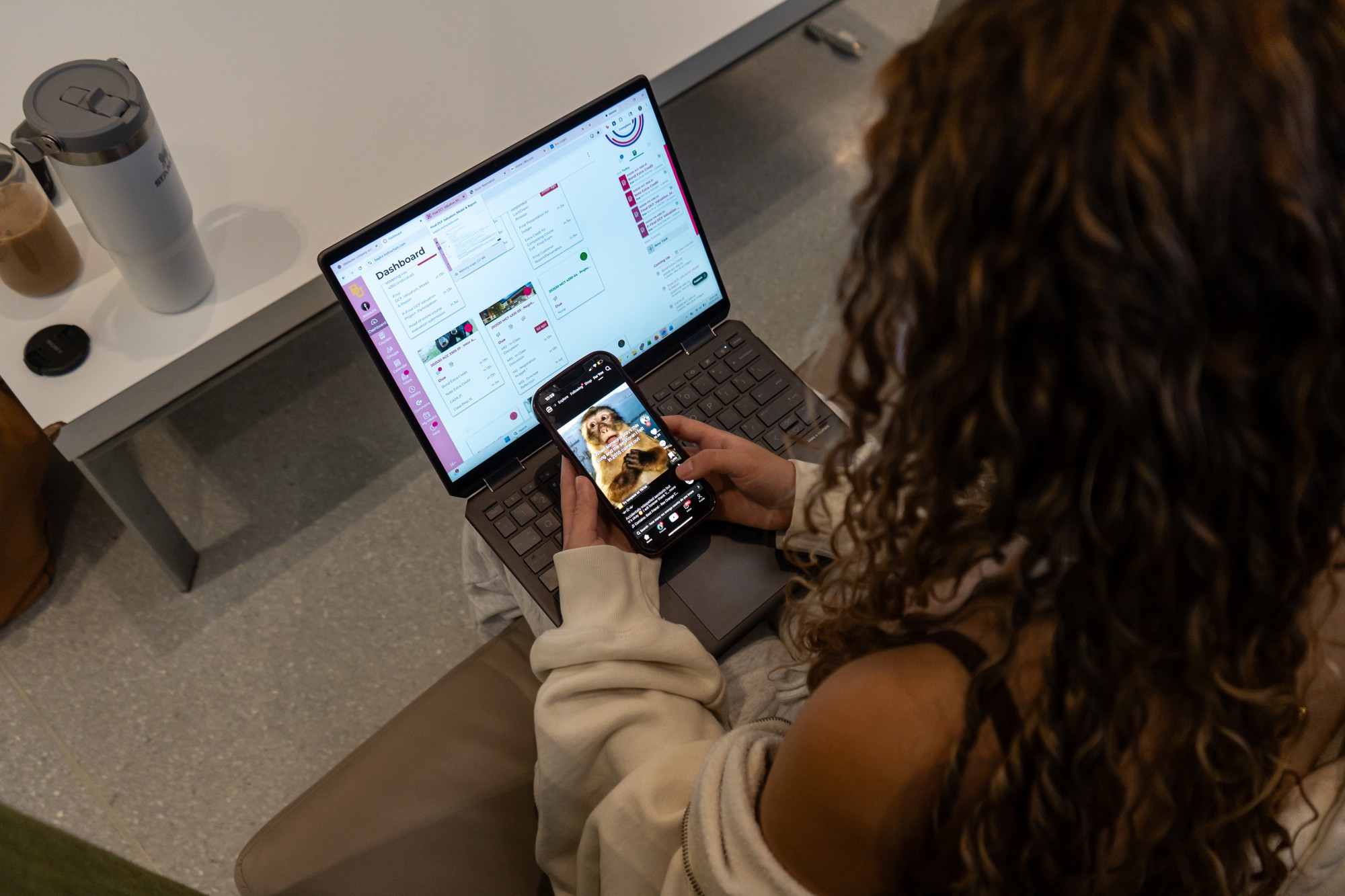
With the current digital age, social media usage continues to rise and seep into college campuses. The short-video format has been revealed to be the most addictive and equally the most harmful. Out of all the apps, TikTok takes the throne.
Baylor marketing professors and social media researchers Dr. James Roberts and Dr. Meredith David sought to discover why TikTok is so addictive. They found that the secret lies within the intricate design that keeps scrollers allured. Their full collaborative paper was published in the journal “Cyberpsychology, Behavior, and Social Networking.”
Roberts found TikTok’s addiction comes from its design to keep users hooked. The app has efficient technological affordances, or the things technology can do for you. Roberts said the app is strong in three general areas: its recommendation accuracy, easy use and the most unique quality, serendipity — a simple surprise outside the personalized algorithm.
“Why is TikTok more addictive?” Roberts said. “Well, it’s easier to use, and if you’re ever getting bored, serendipity comes into the algorithm to keep you scrolling.”
Likewise, David said TikTok’s affordability builds on itself and proves effective compared to other social media apps.
“It’s the combination of all three that keeps people scrolling,” David said. “But the prerequisite is effortlessness. Without that ease of use, the other two wouldn’t matter as much.”
TikTok is proven better because it’s easier to use than other short video social media apps. Alongside ease, the serendipity element keeps people on the app and makes them more addicted.
“After viewing as few as two hundred TikTok videos, you’re addicted to it,” Roberts said. “That’s an hour of scrolling.”
Within an hour of scrolling on the app, users are already addicted and hypnotized by a highly personalized algorithm.
Roberts found that addiction affects the well-being of students and users.
“It’s a worldwide phenomenon that’s not helping us,” Roberts said. “We feel connected and a part of a bigger group when it’s actually separating us from people.”
TikTok, along with other social media apps, aims to connect users with the community and build a virtual social realm, when in reality, it does the contrary.
“It has a negative psychological effect,” Roberts said. “Fear, rejection and anxiety are all common motivators behind the app.”
Roberts discovered that increased usage actually fuels loneliness and anxiety. This synonymously splits relationships and causes users to feel even more detached — creating an endless cycle that affects users’ well-being.
David said that focusing on social media causes people to miss out on meaningful connections.
“The opportunity cost is huge,” David said. “The more time we spend scrolling, the less time we have for the activities that build real connection and meaning.”
The price of TikTok addiction is hidden behind the entertainment it provides. Not only does it affect well-being, but TikTok also affects self-control. Roberts found that the reliance on the app translates to daily life.
“It’s a bigger issue than school or work,” Roberts said. “It’s encompassing a diet of quick serotonin and quick entertainment. This has made it more difficult for us to have self-control.”
The effects of TikTok go beyond the scrolls and into real life. Roberts found that classroom attention span is lowered along with relational engagement.
Baylor students recognize the threat TikTok poses to mental well-being. Houston junior Jessica Robert said TikTok has numerous effects on well-being and attention spans in the classroom.
“Because the videos are so short and we watch so many of them, it makes sense that your attention span gets shorter and shorter,” Robert said.
Robert said she sees the effect social media has on the classrooms. Similarly, Houston junior Kate Mire avoids TikTok because of its negative effects.
“TikTok is the antithesis of rest, and it makes us think we are resting, but it’s not making us feel rejuvenated at all,” Mire said.