



By Juliana Vasquez | Staff Writer
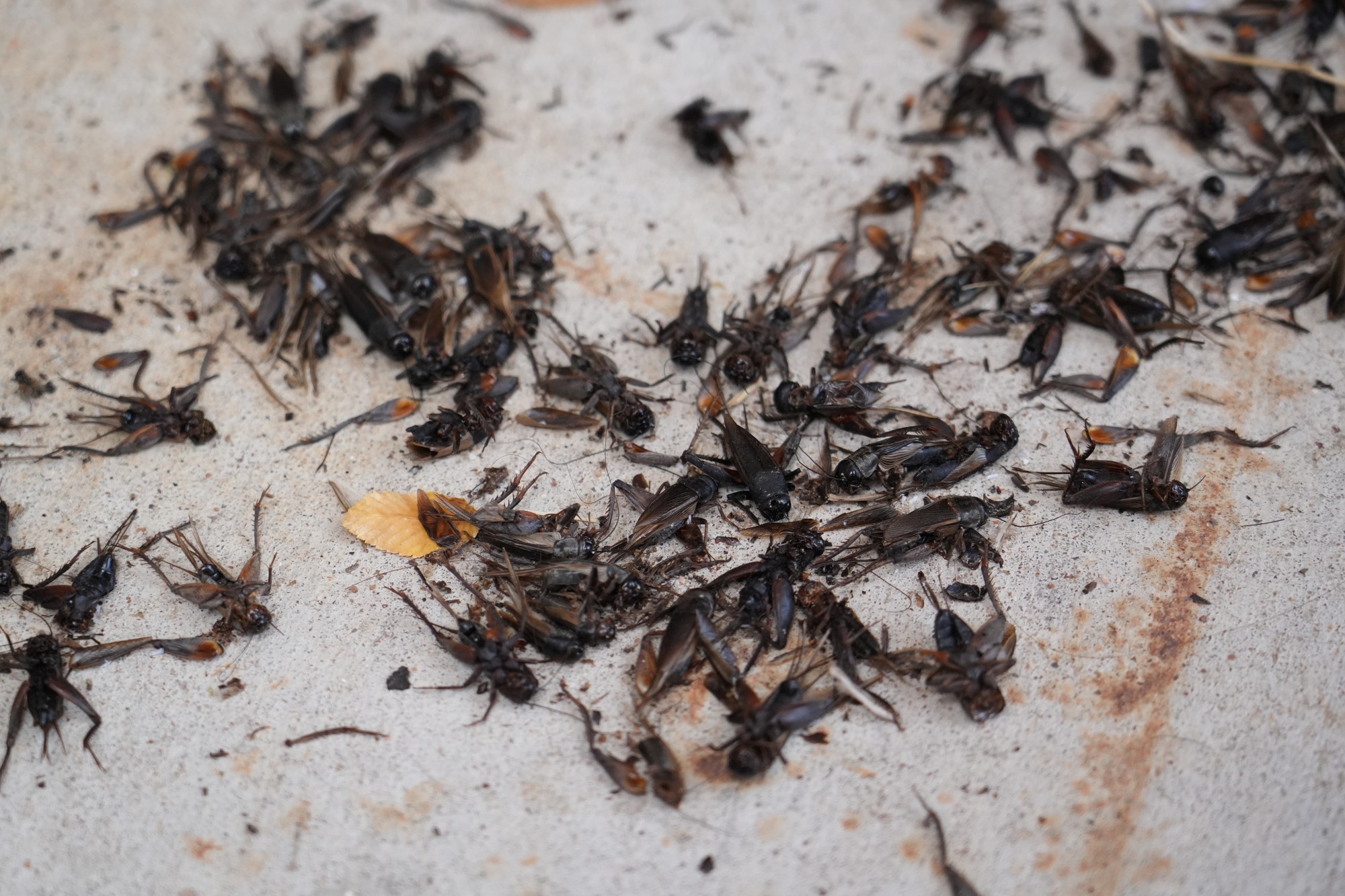
Last fall Baylor was bombarded by a swarm of crickets that seemed to get into every nook and cranny on campus. Returning students remember the sea of cricket corpses that lined the path between Penland and the tennis courts.
Dr. Jeff Back, a lab instrument specialist at the Center for Reservoir and Aquatic System Research, said the Baylor Sciences Building, where his office is located, was hit by cricket season last fall.
“Usually, you see aggregations of them around in entryways to buildings and stuff that has lights,” Back said. “That’s how you know it’s cricket season. And then they’re all getting into the BSB … you see them on the floor.”
Back said the cricket population has on-and-off seasons that are strongly impacted by weather.
“Typically, what drives huge population explosions of these crickets is drought through the summertime and then a very wet fall,” Back said. “We haven’t had rain until recently, like the last few weeks.”
According to the Texas A&M AgriLife Extension, cricket season, when crickets are most abundant in the wild, generally falls between August and September, particularly when those months are rainy.
Back noted the cricket population is highly dependent on the temperature and amount of rainfall that occurs each year.
“If you don’t have those right combinations … you have a smaller population size than you would if you had optimal conditions,” Back said.
With weather changes occurring annually, though, predicting which year crickets will or will not swarm Baylor is difficult, Back said.
“The cricket population size cycles with a good year and bad year, depending on rainfall and temperature,” Back said.
A good year for the crickets would be a mild winter and wet summer, with a bad year being a harsh winter and dry summer.
Spring sophomore Nehemiah Huff said he hated the crickets last fall and that they were annoying.
“I played a lot of beach volleyball and pickleball last year, and they got in my bag, sometimes in my mouth,” Huff said. “It was bad. They got everywhere.”
This semester, however, that swarm of crickets decided to spare Baylor’s campus, leaving observers to wonder where they went.
Students like Huff didn’t miss the crickets this fall, although there is still a fearful echoing of their return next fall.
“I did notice [they were gone], and I was very grateful,” Huff said.
Depending on the weather this upcoming winter and soon summer, one can only guess whether or not the crickets will return, with last year’s swarm being the product of almost perfect conditions.
“It’s a result of just near-optimal conditions for the survivability of the insects throughout its life cycle,” Back said. “And so lots of eggs hatch, lots of immature survive to adulthood, and, voila, you have cricket apocalypse.”
