Travis Taylor | Lariat Photographer
Reporter
Eric Ames is a curator for the Baylor Library Digital Collections and works in the Riley Digitization Center at the garden-level of Moody Memorial Library. Ames and the Digitization Projects Group are responsible for the online digital copies of the hundreds of thousands of historical documents in Baylor’s special collections. This semester, Ames has taught a new graduate level course called “Technology and Outreach for Museums and Libraries” that involved 15 graduate students learning how to build, digitize and advertise their own exhibits.
Q: Why was this course taught?
A: What we wanted to do was give the graduate students in the Museum Studies program a chance to get some hands on experience with digitization of materials from the special collections libraries and on campus, meaning that we wanted them to take paper objects and scan them on our scanners and turn them into an online collection. That is something that the field is really moving toward now. Museums of pretty much every size are scanning their archives now. Libraries, of course, have been doing this for a while and institutions will start soon. So the graduate program over at Museum Studies is really interested in making sure that students have the skills that they need to compete in the job market.
Q: What were the students’ exhibits about, exactly?
A: There were three teams of five students and they all worked within the time period of World War I. This first team created theirs around the newspapers in Waco and how they reported on the Religious aspects of the war. They wanted to explore the war’s and the military’s effect on religion in Waco. There were quite a few newspapers in Waco then and every newspaper had it’s own angle. Of course there were national press releases, but this group looked for the local stories that focused on the goings-on in the churches. The second group worked with the sheet music collection to explore the war in popular culture. Sheet music was really popular during the time, you could buy a piece of sheet music for a nickel, take it home and sing it with your family. There were lots of pieces that were put out during this time about the war. Some were pro-American, some were anti-German; Interesting takes on the culture of the time. The third group explored the military in Waco during World War I. There were two military bases here that opened in 1917, one was an airfield and one was an army camp. They used photos and materials from the Texas Collection primarily to tell the story of what that all looked like. So they were all given their own theme, and they picked what they wanted to scan and wrote the information on it and the introductions to their exhibit.
Q: Per piece, how long would you say it took for these students to archive the pieces for their collections?
A: For the whole process, from picking the physical piece, to scanning it, to describing it, and then putting it in the system, I would say a good half-hour per piece. At one point, we brought down hundreds of volumes of newspapers and they combed through them all to find what worked best in their collections, they’d take them to a scanner and scan the page, edit it down, then describe it. So for each piece, half an hour per item.
A: It is a lot of work. The hard part was picking materials to support their idea, you know “What is our main theme and what does the piece say about our collection?”
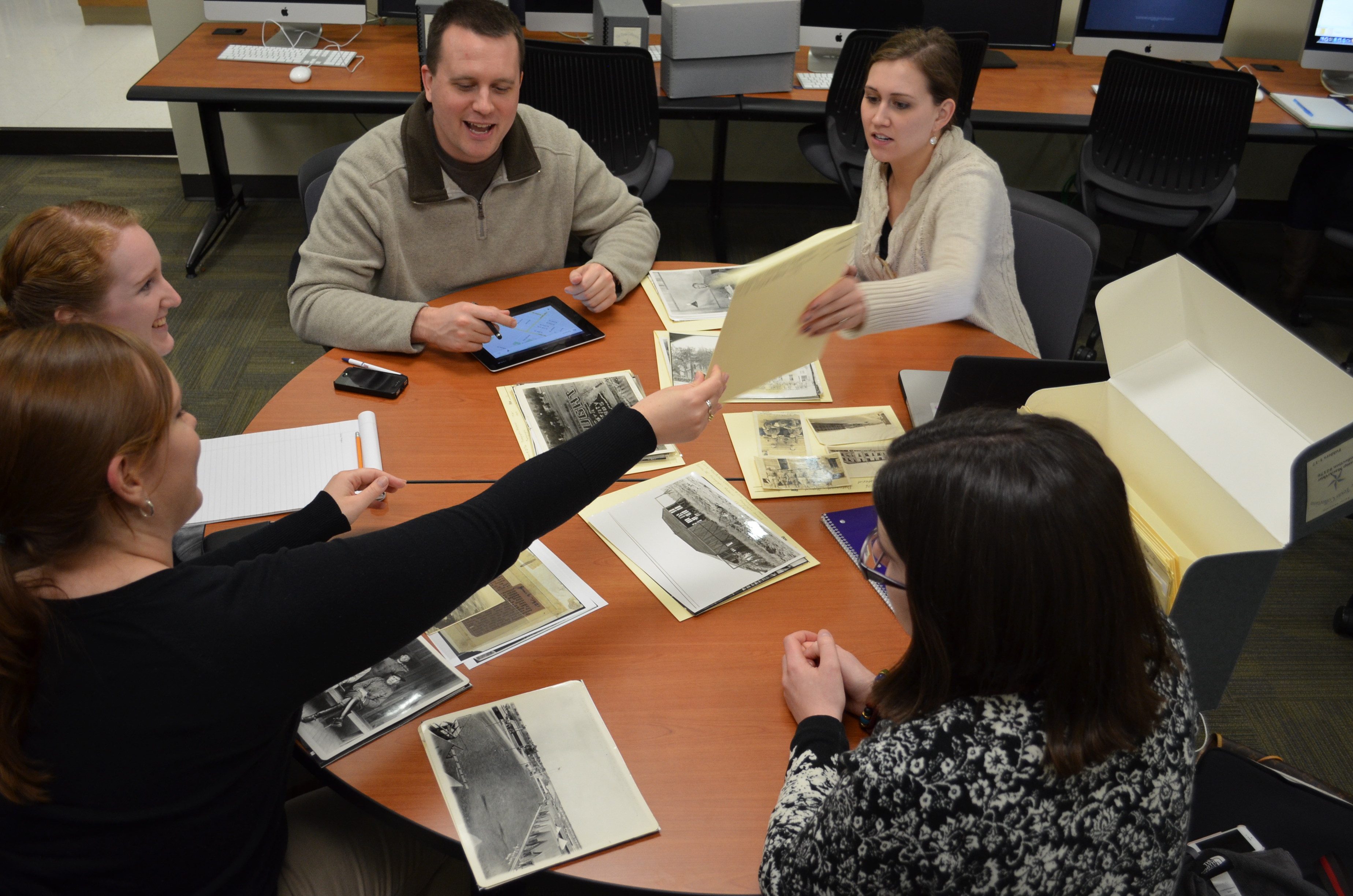
We let them have full access to the Riley Center downstairs, the scanning suite that we have here at Baylor, and they spent a lot of time moving around, putting things on the machines, sitting at workstations to describe the items. It was a multi-stage process with three groups of five students each. It was a real logistical puzzle sometimes to make sure that they all got in and were able to get all that they needed done, but they did it, and I’m very excited about the results.
Q: Did you have to do any background checks on the students before gave them full access to all of the libraries’ collections?
A: No, I didn’t, but I did have them read and sign some guidelines that we have the students who work for us read letting them know that they are working with materials, computers, and software that belong to Baylor. You know, “some of the material may have sensitive information in it, so don’t tweet about it before asking someone first.” It really wasn’t an issue this time around, though.
Q: Did they ever get in the way of the people working in the Riley Digitization Center?
A: No, they really didn’t. We were really fortunate that we have a lot of workstations already in the center. I worked with our Digitization Coordinator, Allyson Riley, to make sure that my students wouldn’t take up a machine that someone else was scheduled to use. We did a lot of careful scheduling and it actually worked out really well. At times, the Riley Center was packed, but there was never a point that we didn’t get the other work in the center done.
Q: What was it like teaching a brand new course, especially one that’s so intense?
A: That’s a good word for it, “intense.” It was great and I really enjoyed the challenge. It was a nice time for the digital projects group to step up from our job of digitizing lots of materials and hundreds of online collections, with thousands of items, to asking ourselves, “How can we integrate ourselves to the academic side of Baylor?” It was the right time to try and pull all of it together. There were days when 15 graduate students all wanted attention on how to take care of their part of the project and I felt pulled in a lot of different directions, but it turned out great and I think we gave them an experience that only a partnership with the libraries could give them. Our group was thrilled to have them down there and they brought a lot of energy and great questions.
Q: Where can people find the students’ exhibits, are they physically in the library?
A: The students’ collections are put together in one exhibit called “The Great War” and are actually only online at digitalcollections.baylor.edu, but on Wednesday my students will be presenting their final marketing plans for their collections at 1 pm. in the theater at Armstrong Browning Library. It’s open to the faculty, students and the public. It will involve me talking about the background of the course and what the students did and then the students will be presenting their marketing plans.