By Tripp Henderson | Staff Writer
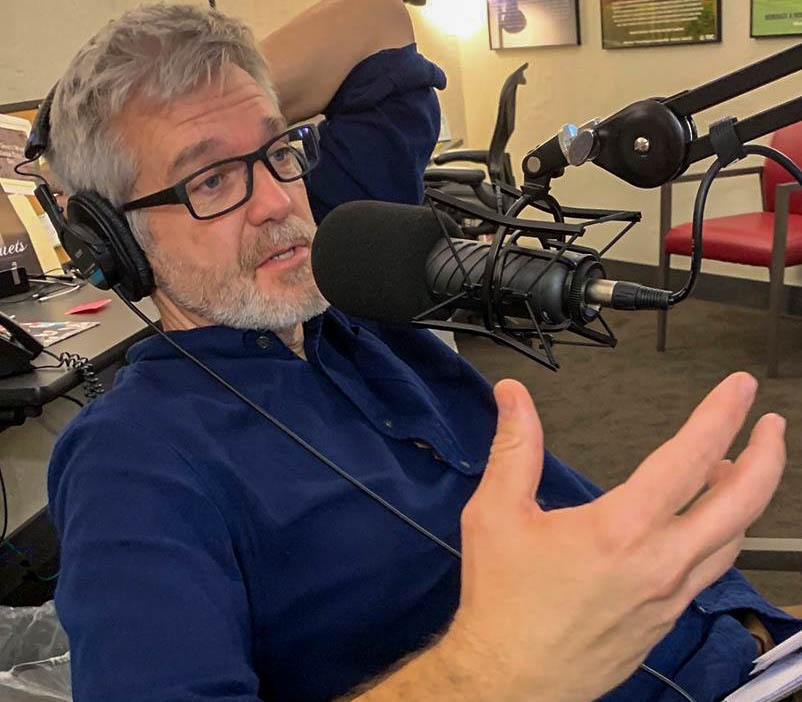
From goatmen and ghosts to witches in Cameron Park, the Waco History podcast shares some of the spookiest lore of the city’s past. But according to the podcast founder, these stories aren’t just for a thrill; rather, they are deeply intertwined with Waco’s identity and uniqueness.
Dr. Stephen Sloan, the podcast’s founder and main host, said he thinks ghost lore “is part of what makes Waco unique.”
The podcast complements the Waco History app, which the website says is a joint venture between the Institute for Oral History and the Texas Collection. Professor Steven Sielaff, an original guest on the podcast and Senior Editor & Collections Manager at the institute, said the show was originally made to expand the audience base and the form of oral history.
“It’s another way to kind of capture it and give people a chance to learn about Waco’s history,” Sielaff said.
While the podcast covers Waco’s history broadly, several episodes specifically highlight ghost stories. Sielaff said one benefit of haunted episodes is that they allow entertainment and education to intersect, which helps keep listeners engaged.
“How can we get people interested in things that typically are only of interest of historians,” Sielaff said. “Well, you tie history in with the paranormal.”
Sloan said that he thinks people like to let their imaginations run wild, and ghost stories let them do that. While humans are comfortable being civilized and in control, something about the mysterious and unknown is intriguing.
“I think there’s something in us that enjoys being frightened or the elevated emotion that comes with being scared,” Sloan said. “… I think there’s something fundamentally human about that.”
While listeners may find entertainment in supernatural tales, they are often built on real places, events or people. Sloan said lore often comes from actual historical events and adds “a layer of meaning or intrigue” to a place.
“A lot of it’s folklore more than historical, but it’s an important way that [the] identities of places are remembered and shaped,” Sloan said.
While many of the spooky stories covered in the podcast date back to the 20th century and even the late 19th century, they remain prominent even now. Cameron Park has its fair share of tales, including Lovers Leap and the witch of Cameron Park, both of which people still talk about today and are often associated with the park’s identity.
Sloan noted that supernatural stories factor into how people experience or view destinations and shape how they identify or relate to that place, regardless of their legitimacy.
In his classroom, Sloan said he asks his students whether reality itself is more important or how reality is perceived. The class concluded that reality itself was more important, but Sloan said that the “perceived way in which we imagine the history of a place or the meaning of a place is really a powerful thing.”
“Folklore and imagination and all those sorts of things shape and play into that understanding of how we perceive a place,” Sloan said.
Sielaff added that sometimes the story’s content matters less than what people can learn from how communities interact with it.
“Sometimes it doesn’t matter exactly what is actually in the story,” Sielaff said. “It matters more why that story persists and what the community is getting out of continuing to tell that story or continuing to believe in elements of that story.”
In a digital age, when society is becoming more trend-oriented, haunted tales can actually prevent that, Sloan said. He added that these types of stories “make a place in an age where everybody, maybe every place, is becoming the same place.”