By Anne Wall | Reporter
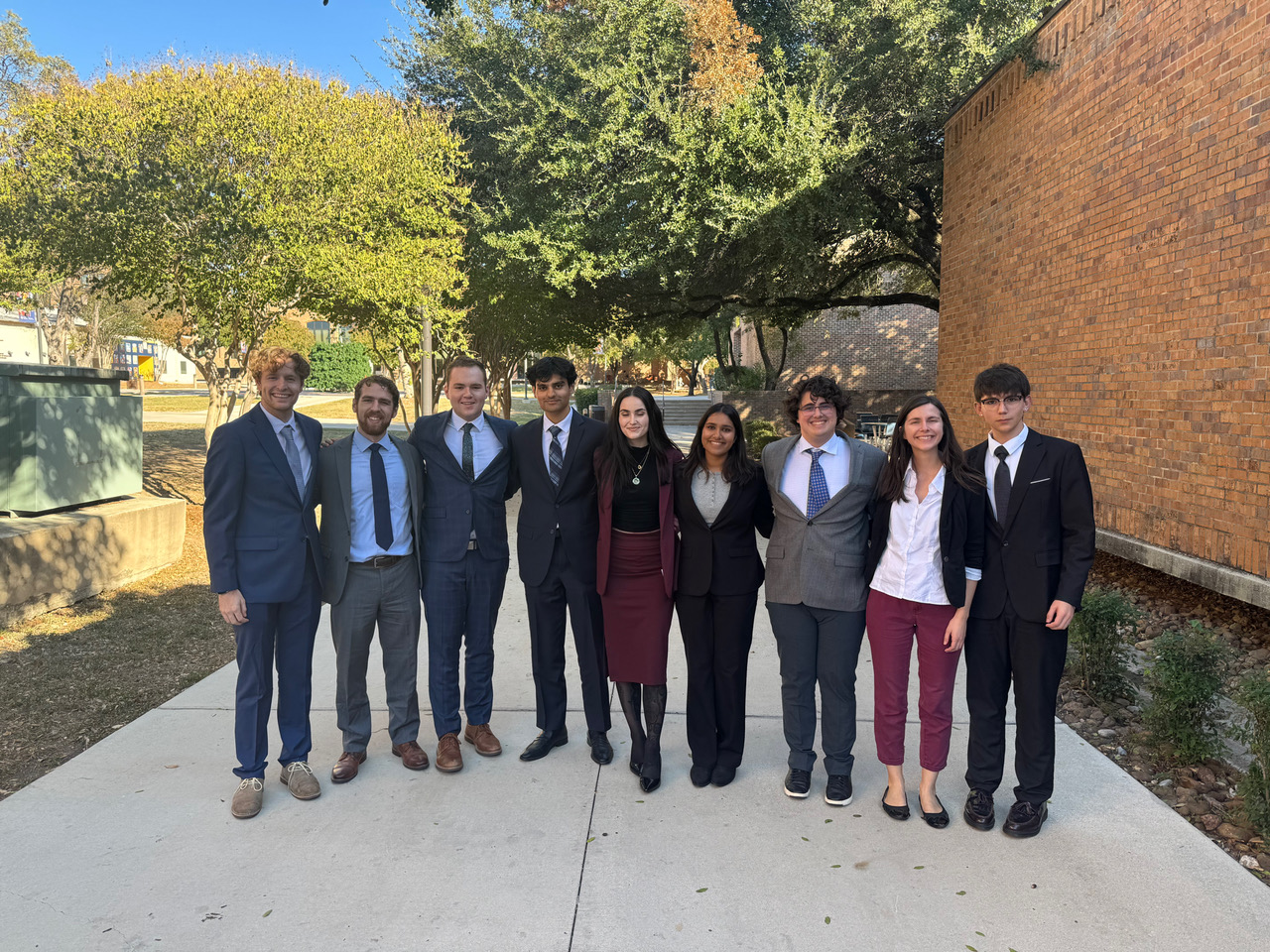
Students in Baylor’s Ethics Society are preparing for an upcoming regional Ethics Bowl competition on Nov. 14 in San Antonio.
To better prepare teams for competitions in 2026-27, the university has started offering class credit this year as part of Ethics Society members’ preparation.
“Last year when we competed, there was no class, and people weren’t getting credit for it,” Ethics Bowl Captain and Boise, Idaho, sophomore Blessy Bellamkonda said. “So this year we made it into a class with the help of grad students.”
Waco sophomore Iris Willoughby, who has been a tattoo artist since she graduated high school in 2017, once spoke with a client involved in the Ethics Society, the Ethics Bowl and the Bioethics Bowl.
“I didn’t know that was a thing at Baylor, and I’m really interested in bioethics, so the next semester I applied to Baylor and got in,” Willoughby said. “I actually came to Baylor to compete in the Ethics Bowl and Bioethics Bowl.”
Las Vegas junior Shajee Khan, the executive chair of the Ethics Society and founder of Baylor’s Ethics Bowl team, helped the inaugural team reach nationals at its first competition. Khan is preparing two teams and hopes to take them both to nationals again.
The Ethics Bowl teams prepare to keep composure in front of the audience, judges and opposing team, but not in the style of a formal debate.
“The point of Ethics Bowl is to advance the conversation,” Khan said.
The scoring reflects the team’s overall understanding of the posed question, and requires competitors to understand their opponents’ lines of thinking and apply ethical frameworks.
“They’re judging us on whether we’re willing to acknowledge that there’s good points that are different from our own,” Khan said.
Despite competing against two other teams for the first time, the university’s support for the Ethics Bowl team has fueled its continued growth.
All of the class time, weekly Thursday practices and hours practicing culminate in the team receiving a question and deliberating for only two minutes before engaging in the scored discussion.
“You get the question, then you get two minutes to prep, so with this kind of competition you have to be kept up with most current events and the most possible questions,” Bellamkonda said.
The team members are not guaranteed to agree with one another. However, Willoughby said differing opinions have value.
“You can’t bank on everybody viewing something the same way because that’s just not how life is,” Willoughby said. “You can follow suit and let them come in with the hard-hitting answers. Every team needs at least one devil.”
Khan said the closeness of the Ethics Bowl team, shown by them often getting dinners together outside of class and meetings, has made their practices more successful.
“A team isn’t going to compete well if the team doesn’t know each other well and the team doesn’t mesh with each other well,” Khan said.
The Ethics Bowl team hopes to make it to nationals in St. Louis next March, and the Ethics Society is also looking forward to its auditions and a new team for the Bioethics Bowl in the spring.