By Giselle Lee | Staff Writer
As political disagreements continue to shape conversations across the country, Baylor’s Department of Intercultural Engagement is creating opportunities for students to discuss differing viewpoints through its Dinner and Discourse events.
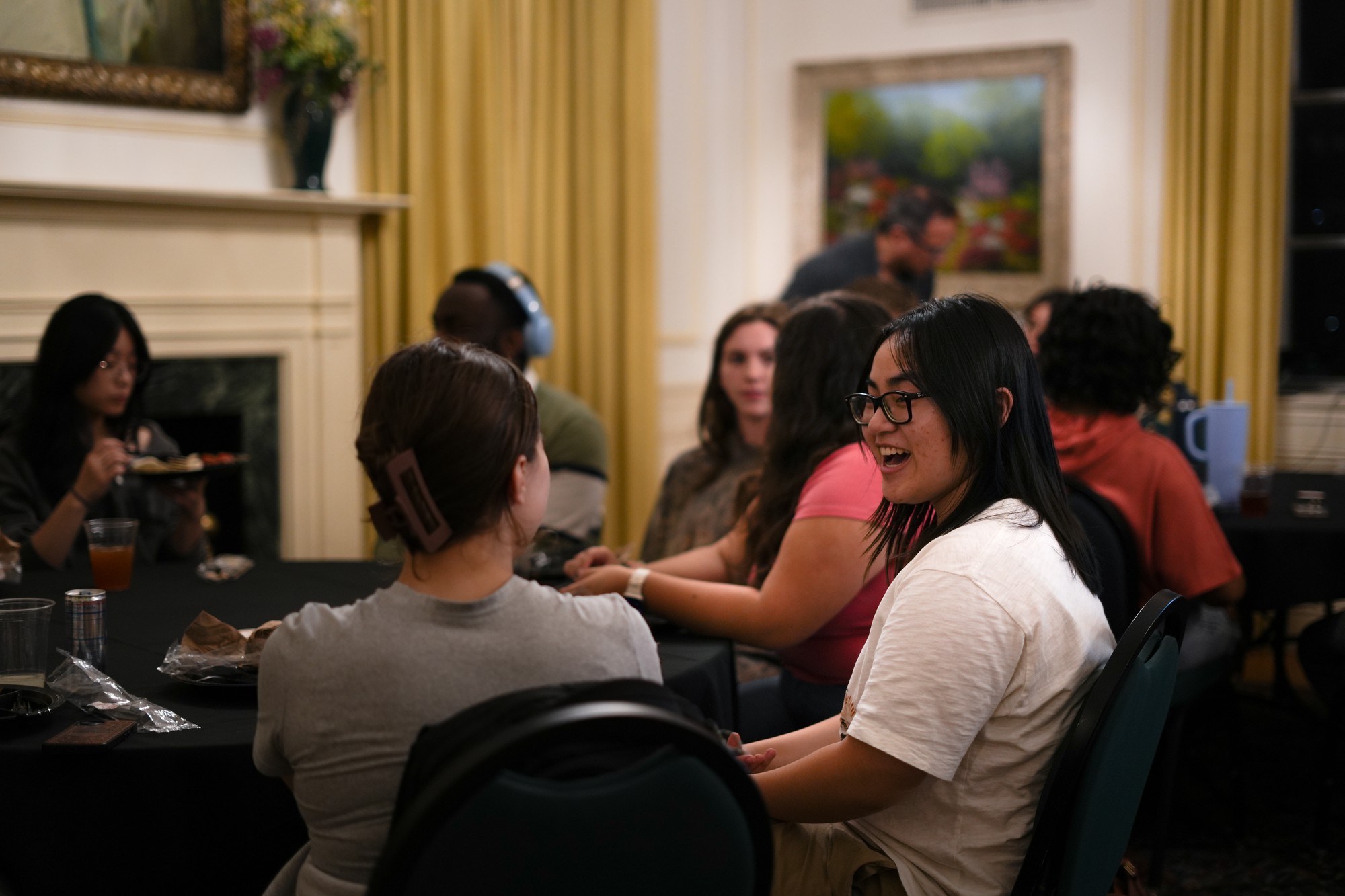
Dinner and Discourse brings students and members of the broader Baylor community together to practice bridge-building skills by discussing a predetermined topic through various methods, navigating differences over shared meals.
The Department of Intercultural Engagement now organizes one internal and one external event each semester, rather than holding the program monthly.
Andre Baesa, lead coordinator of Intercultural Engagement and Student Life Initiatives, said organizing Dinner and Discourse was a collaborative effort with Dr. Kevin Villegas, Dean of Intercultural Engagement and Division of Student Life Initiatives, in exploring how Baylor can become an institution where “students know how to disagree well.”
“We try to choose topics where there could be disagreement,” Baesa said. “Not to spark debates or moral grandstanding, but we try to pose topics where people can hear different perspectives, maybe more in an in-person setting rather than through social media or through online, so how can we have these topics, and then share what we believe from personal experiences.”
Baesa hoped students would take away a better understanding of civic engagement after discussing topics surrounding the upcoming midterm elections.
“I only talk about the midterms with people who I know will have the same viewpoint as me,” Baesa said. “That’s a lot easier than if I’m talking to someone and I know they voted for someone I voted against. What does it look like to have that conversation? Today’s event is really to encourage students to have these conversations across difference. I think it’s easy to get caught up in our echo chambers.”
Chiang Mai, Thailand, sophomore Jubilee Wong said conversations about partisan politics can be tricky at times, but believed there is room for growth, both generally and personally.
“Some people might not feel as comfortable being as vocal about their beliefs, and I do want to platform spaces for them too,” Wong said. “I found that oftentimes when I am staying quiet, someone else will speak up for the idea that I wanted to defend, and that’s encouraging because I don’t necessarily have to be the spokesperson.”
Aledo junior Seth Bullard said dialogue is necessary, especially on college campuses, to encourage students to participate in conversations and share their opinions.
“I think Baylor specifically sometimes struggles to have these conversations, because I don’t think we’re a super political campus, nor are we super involved in a lot of advocacy,” Bullard said. “Having events like this is important, because I think we need to break some of the stigma around not speaking up for what you believe.”
Bullard said sometimes students feel as though they are “walking on eggshells” when discussing subjective topics, as their opinions may be looked down upon, but he said a lot of common ground still remains.
“A lot of us are still facing a lot of the same issues, no matter where your different viewpoints are,” Bullard said. “I was impressed with people [being] able to recognize different points of view and are willing to contend with those [perspectives], which I thought was really encouraging, that no matter where you’re from, or no matter your background, or what you believe, people are still able to think of perspectives that are different than their own.”
Ahead of voting in Tuesday’s midterm elections, Wong said she hoped the Dinner and Discourse would enlighten students on the stakes for people across the nation.
“I hope it gives them perspectives on other sides and humanizes that for them … I hope that it opens up more opportunities to be friends with people, even if you are going to cancel out each other’s vote,” Wong said.
Baesa echoed the sentiment.
“These are opportunities for us to participate in whatever it means to be an American citizen,” Baesa said. “I hope [Dinner and Discourse] will help encourage students to get out and vote. I think for me it’s not as important who you vote for, I think it is important that we vote and that we exercise that right, that privilege to vote.”
As students head to the polls on Tuesday, Baesa encouraged students to have civil discussions with a “strong back” and “soft front.”
“Strong back [as in] being firm in what you believe, in this case who you voted for,” Baesa said. “Then soft front in the sense of hearing who someone else voted for, even if it is different from who you voted for, and then hearing why, and not to discourage or to debate with them, but just to understand them better.”