By Abby Rathburn | Staff Writer
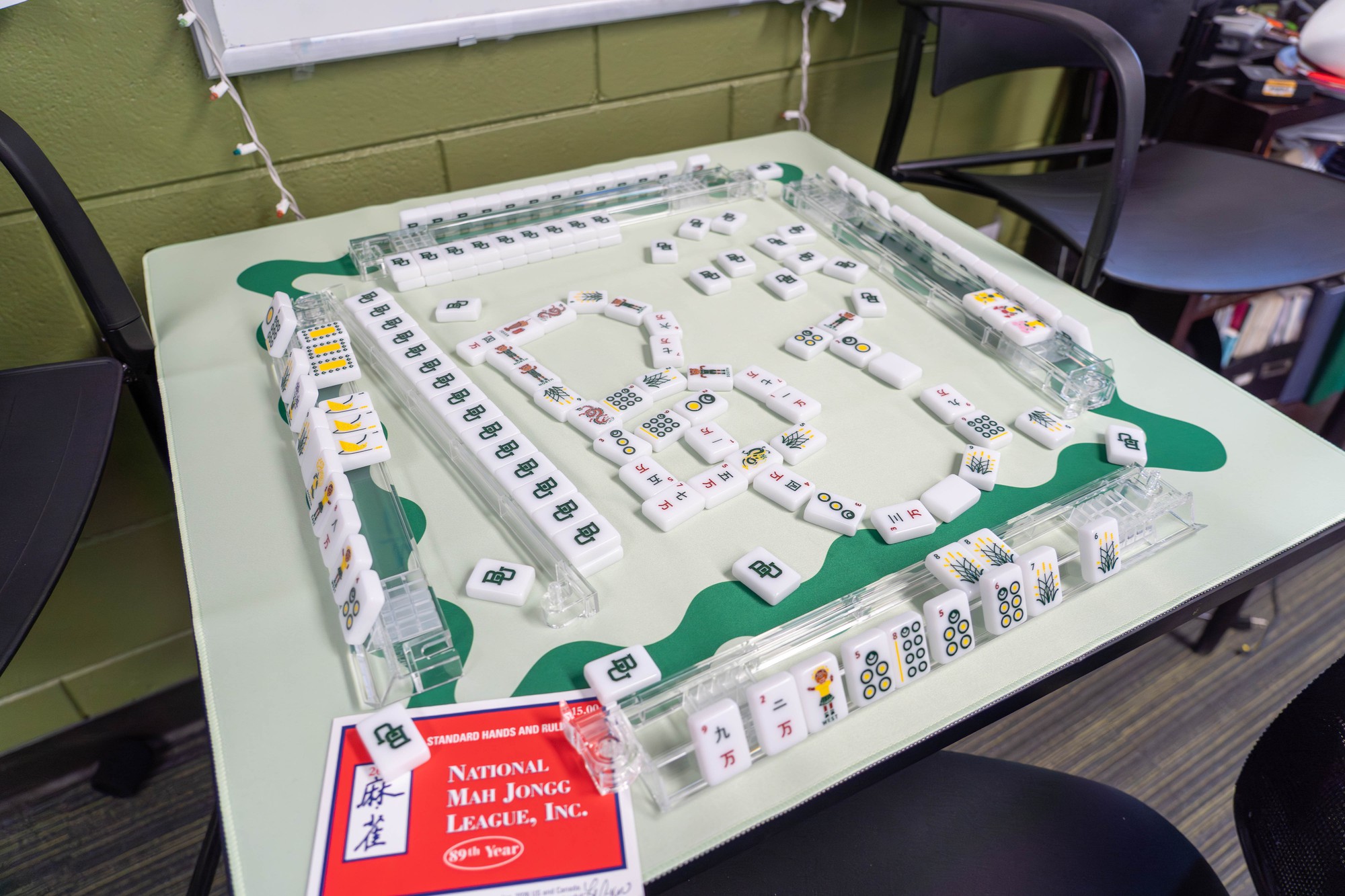
Often associated with older generations, Mahjong is gaining popularity with a new audience across the U.S., and Baylor students are no exception.
According to the Yelp Trend Tracker, searches for Mahjong clubs and classes spiked 4,467% between September 2025 and August 2026 compared with the previous 12 months. The game’s growing visibility may partly be due to appearances in popular culture, such as the 2018 film “Crazy Rich Asians.”
At Baylor, this trend has inspired students to start their own club. Baylor’s Mahjong club meets every Thursday for open play and beginner workshops, offering a study break amid the stress and hustle of day-to-day life.
“A lot of clubs at Baylor are geared more towards professional development, your future career, maybe just putting something on your resume, and I think it’s important to have a fun recreational club,” St. Louis junior and Vice President of External Affairs Emily Deyong said.
Frisco junior and President of Baylor’s Mahjong Club Bryn Frost said she received the club’s charter last semester, and this semester marks the start of its on-campus presence. The club’s early growth, following a notable recruitment of freshmen at Late Night, offered a local glimpse at a broader interest in Mahjong among younger players.
“Being able to play and hang out with people is always fun,” Midlothian freshman Sydney Barrientes said. “Obviously playing games by yourself can be fun, but I’m very much a people person, so being around other people and socializing makes it more fun.”
As life becomes increasingly digital, Baylor students are fighting back to find connection beyond their devices.
“Compared to video games, I feel like it’s a better way to be face to face and build in-person bonds,” Minneapolis freshman Wyatt Johnson said. “I like Mahjong because it’s a fun strategy game. … It gets you to use your logical thinking skills really well because you are trying to see, ‘How do I reach my goal?’ even with other people trying to get me to not reach my goal.”
Johnson is not alone in feeling this way; he reflects a broader concern, shared by many of his peers, about technology’s role in everyday life. According to Impact 360, 85% of Generation Z believes their generation spends too much time online.
Despite this desire for in-person connection and its recent popularity spike, Mahjong can still seem daunting to those unfamiliar with the game.
“I think if you just pay attention for 30 minutes, you can really get into it,” Frost said. “It can be intimidating at first, but once you get the hang of it, it’s just really fun, and you get better the more you play.”
Learning Mahjong also means understanding its different variations. Originating in China during the mid-to-late Qing Dynasty, Mahjong has spread nationwide, with more than 40 known variants, including American Mahjong — the version Baylor’s club plays.
To explore the game’s history and cultural significance further, Frost said the group partnered with the Chinese language club.
“We’re co-hosting an event, and they are doing a presentation on the history of Mahjong because it is kind of a dark history,” Frost said.
As younger players take an interest in Mahjong, Baylor’s Mahjong club is prioritizing introducing the game to newcomers while educating them on its significance to past, present and future generations.
“We want other people to learn how to play Mahjong because not that many people at Baylor play, so we want more people to try it and show up so they can get an idea,” Barrientes said.