


By Elliott Nace | Assistant News Editor
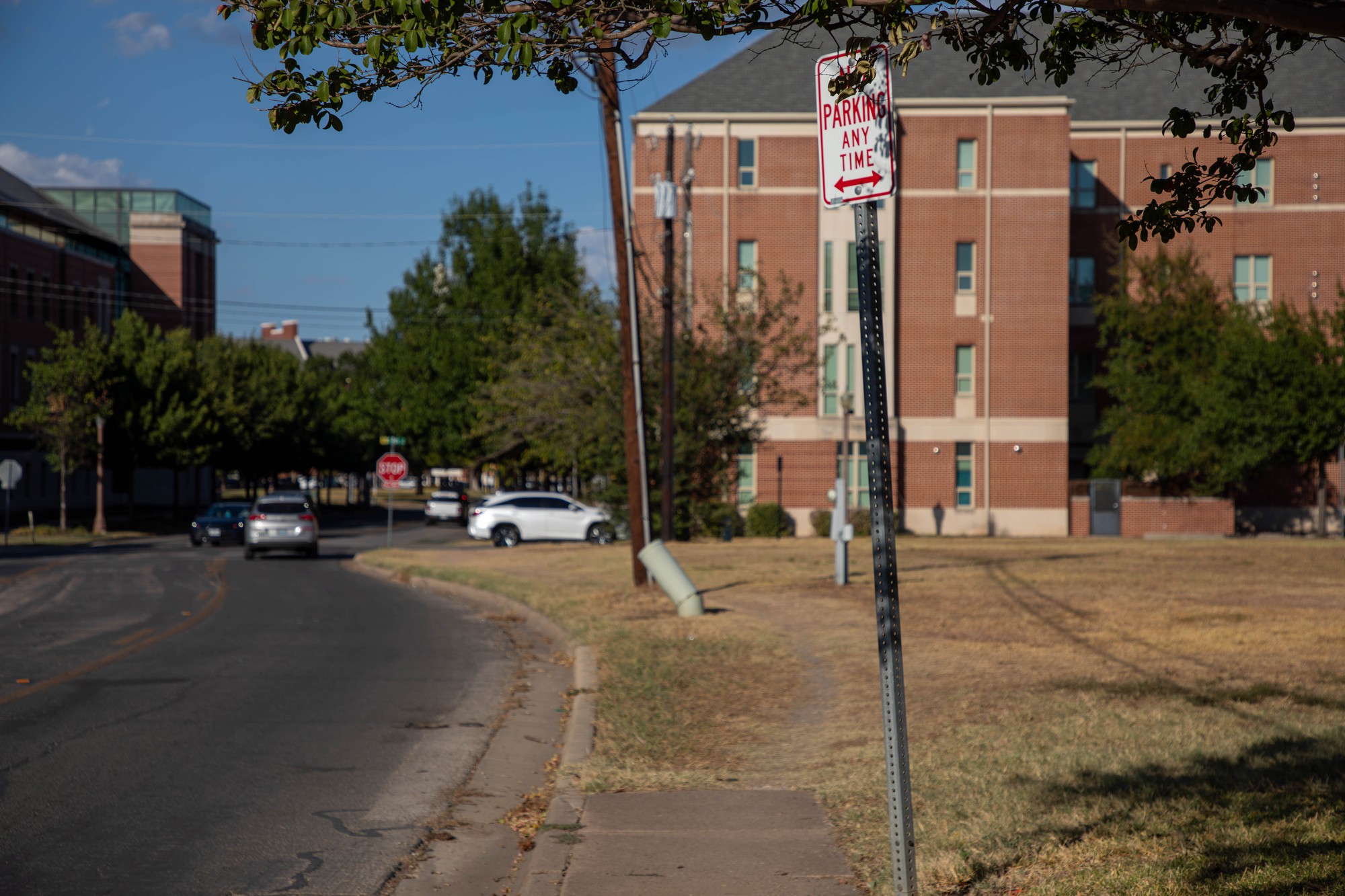
Students walking, scootering and biking along Bagby Avenue can expect changes to their commute as the City of Waco begins a $615,000 project to replace damaged sidewalks and curb ramps bordering parts of Baylor’s campus and nearby off-campus housing.
The project stretches along Bagby Avenue from 12th Street to Fourth Street and includes the replacement of approximately 13,450 square feet of sidewalk and curb ramps, according to an initial project license issued by the Texas Department of Licensing and Registration last April.
The contractor in charge is BGE, Inc. and the project, which began Sept. 14, is expected to be completed Jan. 8, 2027.
Fort Worth sophomore Annie Cureton, who walks past Teal Residential College and the Paul M. Foster Campus for Business and Innovation on her commute home, said the sidewalk “disappears” once she makes her way to Bagby Avenue.
“There’s a part where you’re just straight up walking on dirt, and there’s a hill right next to it,” Cureton said. “So if I have to pass someone else, I have to walk on a slope.”
Saensokh, Cambodia, sophomore Sikyung Jun leaves his apartment via Bagby Avenue on foot and bike. He said damage to the road and sidewalks near campus can make his commute home difficult, particularly after the sun sets.
“In the morning it’s fine, but during nights, right after studying at Moody Library and going back [from] class, I think somehow the sidewalks are broken,” Jun said. “There’s a lot of bumps, so I sometimes fall down due to the random stones or random bumps up.”
McKinney junior Ava Bassak, who frequently walks along 10th and 11th Street to head home, said some portions of her commute are missing sidewalks altogether.
“There [are] definitely parts where it’s just gravel and not sidewalks, which isn’t a huge deal,” Bassak said. “Wider sidewalks would be nice, especially when two people are trying to pass. Sometimes you kind of have to wait, but it’s not terrible.”
Scottsdale, Arizona, senior Owen Chipman questioned the need for construction around off-campus housing, even though some sidewalks are “kind of jacked up.”
“I mean, to a certain extent, you need to take care of your city and make sure it looks nice, Chipman said. “$600,000 sounds like a lot for a little bit of sidewalk, but I also don’t know how much concrete costs. I’m not a civil engineer.”
Kingwood senior Eva Delap said the construction wasn’t worth the cost, citing the need to fund causes such as animal preservation in Waco.
“[It] just feels like there’s bigger issues in life than the concrete on the pavement,” Delap said.
Bedford senior Kendall Aviles, a frequent driver who also walks to her classes from the construction area, said city resources should be diverted to projects further away from the highly developed “Baylor bubble.”
“The roads themselves are horrible … I know they’re fixing some of them, but some of the roads themselves are bad,” Aviles said.
Jun said he didn’t think repairs near campus should “require tons of money.”
“I don’t think it is very required, very essential stuff,” Jun said. “But still, at some point, [the city needs] to fix this stuff.”
Spring sophomore Mary Broussard said she was concerned about the disrepair of Waco’s roads, but also that city construction is an inconvenient necessity.
“I feel like it’s going to take a while for quick results,” Broussard said. “In the long run, it’s worth it, but I might have already graduated by the time [construction is finished]. But for future students, I think it’s a good use of the money.”
