By Reagan Hunter | Reporter
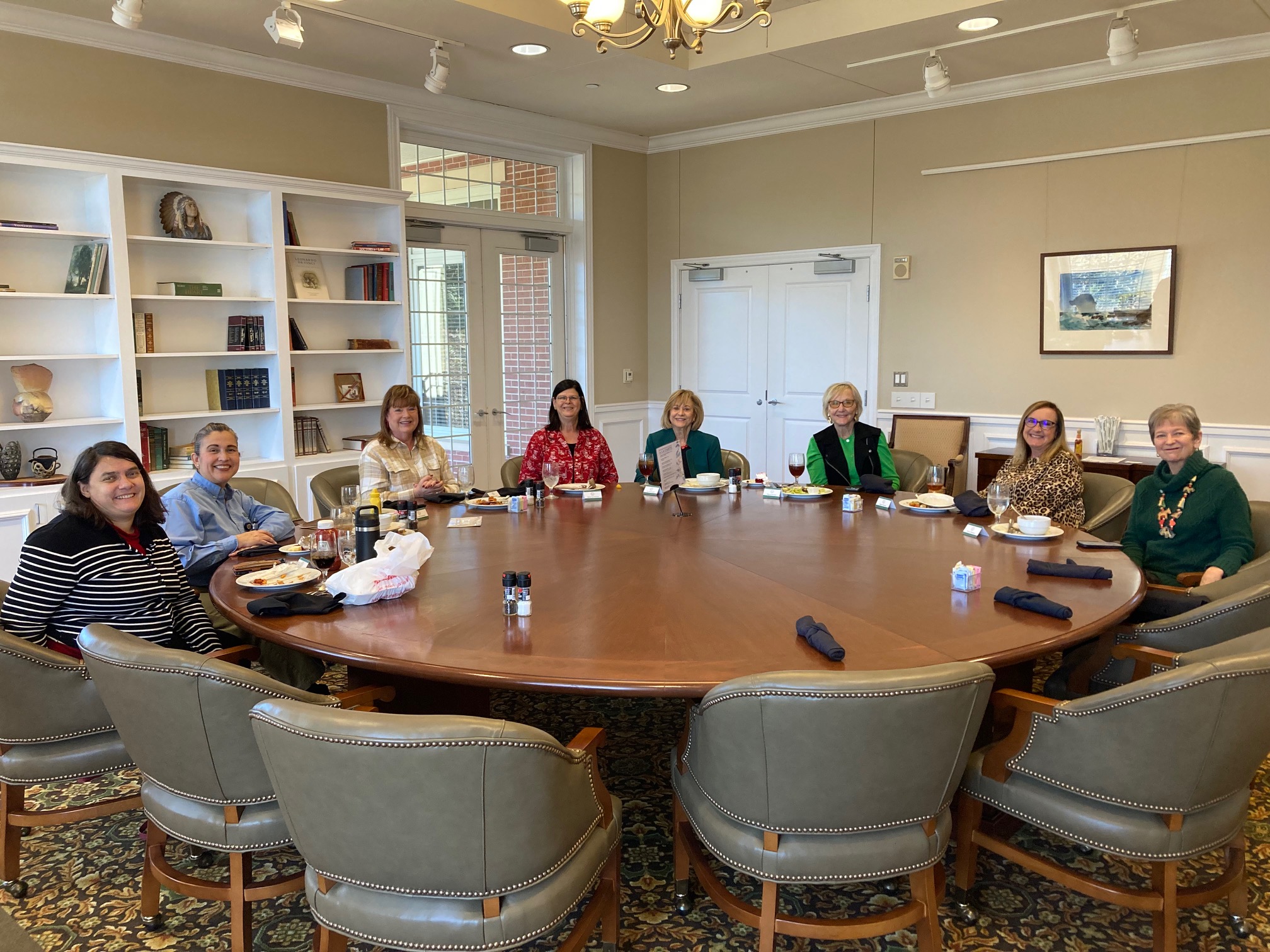
When seven Baylor women gathered in 1904 to form a literary and social club, they could hardly have imagined what their organization would look like 122 years later.
Now, the Baylor Round Table is getting bigger.
In March 2026, Baylor Round Table members voted to change the organization’s bylaws, removing gender restrictions from membership. The organization now welcomes eligible Baylor faculty and staff regardless of gender, as well as spouses, widows and widowers, retirees and visiting faculty and their spouses.
For an organization rooted in women’s history at Baylor, the change represents one of the latest steps in a much longer evolution.
Dr. Dana Lee Haines, immediate former president of Baylor Round Table, has witnessed part of that evolution firsthand. Haines has worked at Baylor for more than four decades.
“I finally became eligible to become a member of Baylor Round Table in 2004,” Haines said.
Christine Wilkins, a longtime Round Table member, joined the organization more than two decades before Haines. Wilkins said she is beginning her 43rd year as a member after arriving at Baylor with her husband, Ken, in August 1983.
“Within days I received an invitation to the Annual Round Table Membership Tea held at the home of President and Mrs. Herbert Reynolds,” Wilkins said. “I joined that day.”
Since then, Wilkins has served in numerous leadership positions, including treasurer and vice president, has chaired committees for events and has led the organization’s book club for more than 25 years.
Eligibility soon expanded beyond women in faculty and executive administrative positions. Haines recalled that the organization changed its bylaws around 2005 to allow women employed throughout the university to join, including those working in libraries and departmental offices.
Wilkins said then-President Alice Starr helped usher in the expansion of membership to all women employees and spouses of male employees.
“As our ranks grew, Round Table experienced a new vitality as new members shared their perspectives and talents,” Wilkins said.
Two decades later, Round Table has changed again.
Haines said that while leaders were reviewing the organization’s bylaws and membership structure, they received guidance from Baylor administrators about updating the bylaws to align with university requirements regarding single-sex organizations. Because bylaws changes require a formal process and vote, the gender provision was revisited the following year.
Members ultimately approved the updated bylaws in March.
“We did this statement to open up to the entire university — faculty, staff, spouses, widowers,” Haines said. “It’s no longer only women.”
For Wilkins, adding men represents another significant change in an organization she has watched evolve for more than four decades.
“This year, with the addition of men, we are experiencing an entirely new dimension in membership,” Wilkins said. “Time will tell if the nature of Round Table will change, but I expect that it will not.”
The organization’s own history acknowledges that evolution.
“Over the years, a variety of wide-ranging programs have given members the opportunity to learn more about Baylor and the community, while meeting new people from across campus,” The bylaws read. “Membership criteria have continued to expand over the years, and each expansion has brought new vitality to our organization.”
Yet opening membership does not mean abandoning the traditions that have made the organization distinctive.
Meetings in the early years eventually evolved into traditions that continue in different forms today, including the International Thanksgiving Dinner, spring luncheon and student scholarships.
For Haines, one recent scholarship story illustrates the connection between Round Table’s past and its future. She recalled a scholarship recipient who later became a Baylor employee, making the former student eligible to participate in the organization that once contributed to her education.
“You can’t get much more fulfilling than that,” Haines said.
Round Table has also adapted to a Baylor workforce that is no longer necessarily located in Waco by offering discounted membership for remote and hybrid employees, newcomers and retirees. Remote members can participate in activities such as a Zoom book club and online social gatherings.
Wilkins currently chairs the organization’s Remote Interest Groups, which connect Baylor employees across the country. For her, those connections continue what she has valued most throughout her decades in Round Table.
“Round Table has given me the gift of friendship,” Wilkins said. “I have met women from across campus and now from across the country.”
Haines similarly said those opportunities to meet people outside one’s normal circle are what have kept her involved for more than two decades.
“What’s beautiful about this organization is that you meet people from different departments,” Haines said.
Today, Baylor Round Table has more than 100 members and offers monthly programs, interest groups, cultural and educational events and service opportunities.
The organization will hold its annual Membership Tea Sept. 16 from 3 to 5 p.m. at Allbritton House.
Baylor Round Table’s founders created the organization at a university almost unrecognizable by today’s standards. They could not have anticipated Zoom book clubs, remote employees or a Baylor with thousands of faculty and staff.
But Wilkins believes the organization’s central purpose will remain even as its membership changes.
“Round Table will continue to be an organization that creates connections for friendship and support, offers avenues of service to the Baylor and Waco communities and provides opportunities for shared cultural, social and education experiences,” Wilkins said.