


By Abby Rathburn | Staff Writer
Baylor has healthcare, mental health and campus safety resources available for struggling students, but another major resource often lives just down the hall from them.
Residential chaplains are seminary students at George W. Truett Theological Seminary who choose to live alongside undergraduate students, dedicating 20 hours a week to providing spiritual support for the challenges of daily life.
“When they advertised that they’re looking for new chaplains, I just decided that this would be a great way for me to practically use what I’m learning in the classroom, but also doing what I love, which is to connect with people,” said Emma Kiaska, the South Russell Residence Hall chaplain and La Verne, Calif., first-year theology student.
By using some of the skills they learn in seminary classes, chaplains provide students with an outlet and a place to seek guidance. Dawson and Allen Residence Halls Chaplain and Russellville, Ark., second-year theology student Michael Butler said that what interested him about the position was the opportunity to impact freshmen’s lives.
“While I’m doing school, [I’m] also being able to pour into the lives of students as they’re going through four very transformational years in their lives,” Butler said.
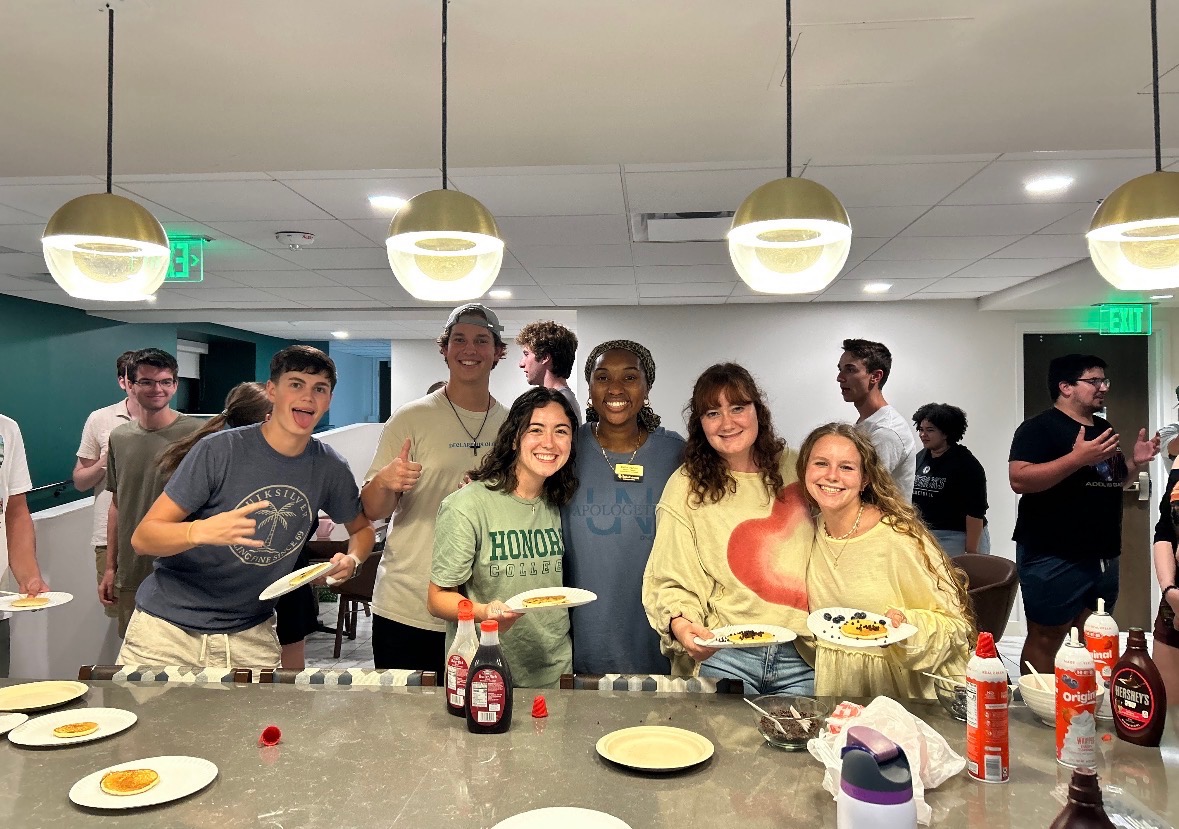
Many residential hall chaplains host events such as Bible studies, social events and chapels where they hope to form relationships with their residents. Kiaska said attending these events helps to form relationships and shows appreciation for what the residence chaplains do.
“Say hi if you see them around the hall and just build a relationship with them because you never know when you might really need your chaplain at a hard time, and I always think it’s better when you really know the person that wants to come alongside you and care for you in that moment,” Kiaska said.
While residential hall chaplains are a resource for undergraduates living in the resident halls, most students move off-campus after freshman year. James Corbin, a first-year theology student from Lorena, serves as the Hankamer School of Business embedded chaplain, providing a spiritual presence for students who can’t find it elsewhere.
“I don’t necessarily have the relationship that you would with a residential chaplain because there’s so many students over here to connect and interact with, and so I’m trying to build those connections and those relationships a lot quicker,” Corbin said.
Chaplains are not just for students who identify as Christian. Bobbie Oramalu, the Honors Residential College chaplain, and Celina, a first-year theology student, said they hope non-Christian students still feel loved and cared for by their chaplains.
“I think when having conversations with students of different faith backgrounds, the biggest thing is like that individual is a human being made in the image of God, and so my goal in those conversations is not to convert them,” Oramalu said. “My role is to literally just love them like a human being, love them like I would anyone else.”
Besides the benefits they provide to their own residents, many chaplains find that their faith has grown through serving as chaplains, teaching them to rely on God more in their roles.
“I think this role is helping me learn that sometimes, as ministers, we plant seeds, and sometimes we don’t see the fruit of those seeds until later on down the line, and so it may be that I lead a Bible study and may not see the fruit of that work or ministry until years later, so it’s taught me to trust that the Lord is working when I am not,” Oramalu said.

