By Abby Rathburn | Staff Writer
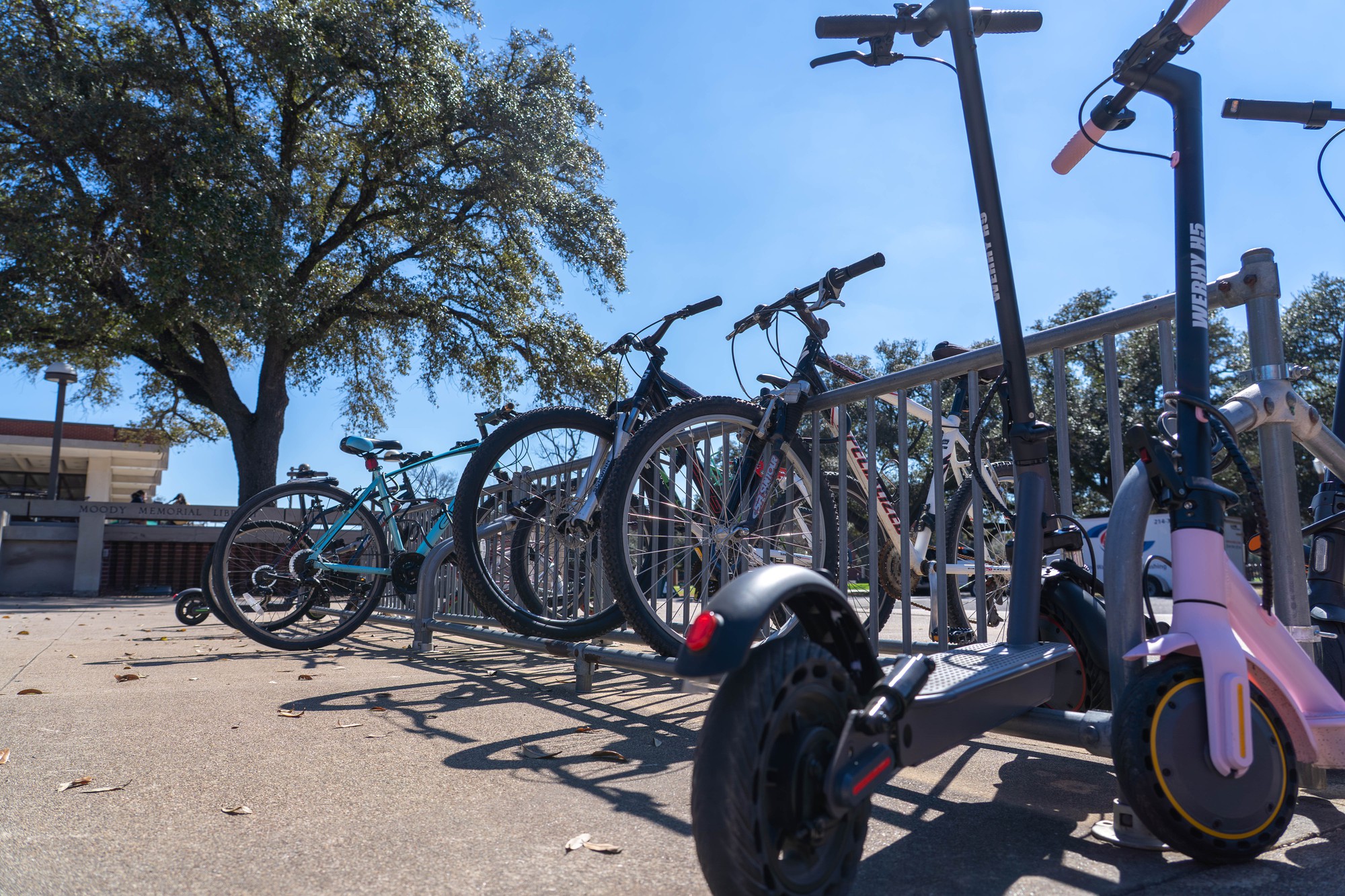
What started as a class project may become a reality. After receiving a steady stream of emails about electric scooter and bike thefts on campus, a group of students decided to take action.
University Architect David Bess approached Littleton, Colo., senior Elizabeth McGuire; El Paso senior Javier Terrazas; Round Rock senior Lily Hallum; and Scottsdale, Ariz., master’s candidate Scott Stanford in their advanced project management class to develop a solution to e-scooter and bike thefts on Baylor’s campus.
“We did some research on our own and came up with a new plan that we’ve posed to David that’s more of like a shed-type looking thing with [radio frequency identification], login so that students can register their scooters, and hopefully that will help prevent kind of the theft that’s been going on on campus,” Hallum said.
Although the majority of the work was completed independently, the students received some assistance from Clinical Assistant Professor John White, who maintained communication between the group and Bess. As part of the planning process, the students toured the construction of Kokernot Hall, a residence hall currently undergoing renovation.
The students also created a survey for the student body to communicate their own opinions on the problem. The goal is to gauge whether students would utilize a shed like the one the group designed.
“Our next step for our project was creating a survey and kind of asking students, ‘Would you use something like this?’” McGuire said. “[We asked] if they’d pay for it, if they’d utilize a charging feature.”
To be most efficient, they delegated tasks within the group, assigning each member a role in the project.
“Because I’m a grad student, they put me as the project manager for this one, so I feel like communicating with the group is pretty big,” Stanford said.
Each group member said they are grateful to be in this class because having gone through the process, they now have insight into all stages of project development from initial design and planning to real-world implementation.
“I think I also have more insight into what it takes to get stuff built on campus,” Hallum said. “Researching the requirements for Baylor and getting the project started has been really interesting.”
Similar to Hallum, McGuire also felt the reward of completing the project, stressing its long-term potential impact.
“If something similar to our plan or some change is implemented on campus in regards to the theft of the e-scooters and bikes and stuff, it’ll be cool years down the road to see if something that we came up with was able to help solve that,” McGuire said.