By Maggie Meegan | Reporter
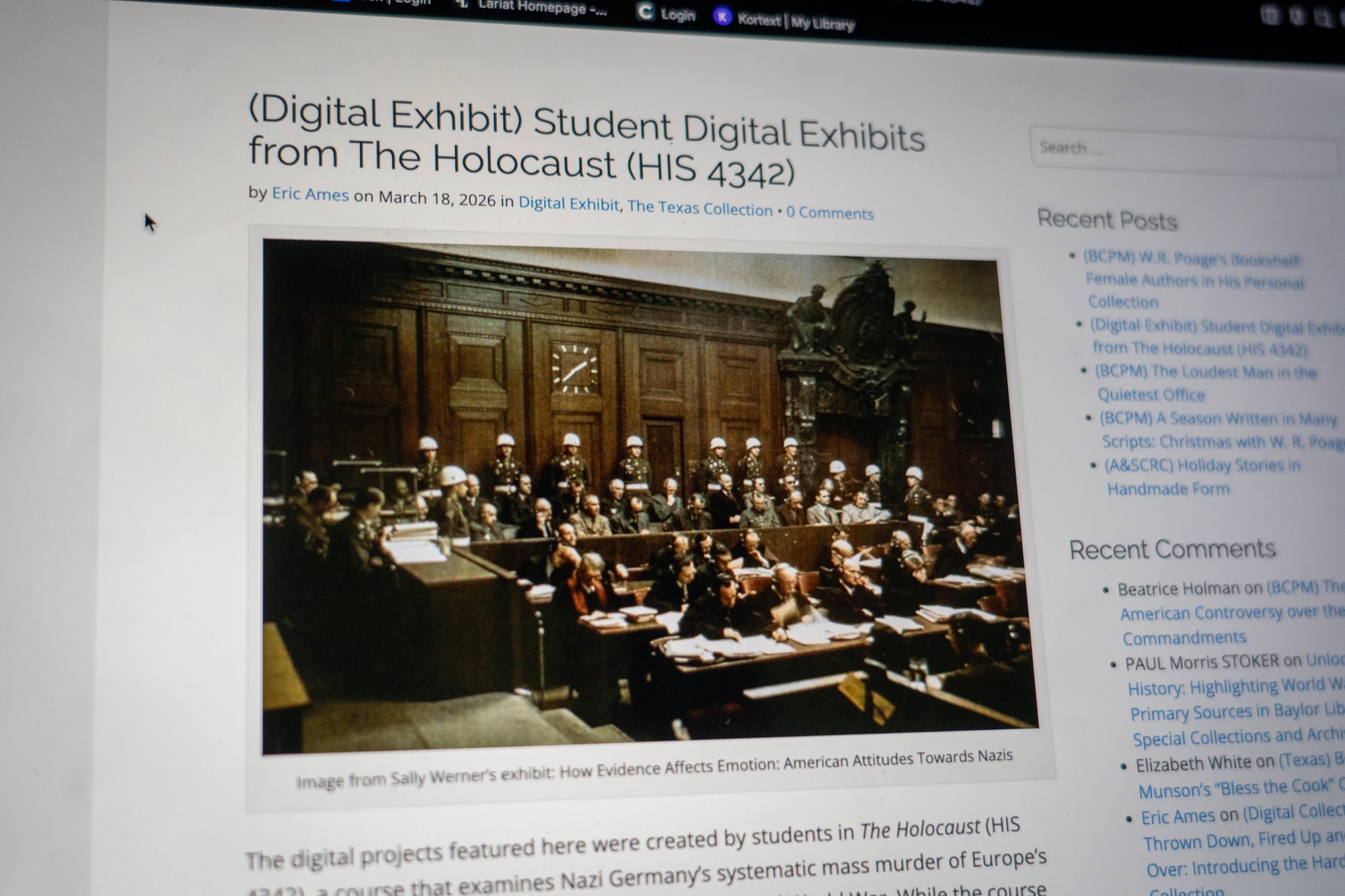
Several students took a Holocaust class offered in the history department last semester, and now their final projects are combining to create a digital museum exhibit.
It was Dr. Liana Kirillova, lecturer in history, who asked her students if their end-of-semester projects could be combined to create a digital holocaust exhibit through the history department.
With advances in technology, online exhibits are becoming more common.
Lone Tree, Colo., senior Lana Robison said the primary source she and her classmates researched to create their parts is right on Baylor’s campus.
“The main thing was we utilized resources from the Virgil Hoyt McClintock papers in The Texas Collection,” Robison said. “Those papers came from being a part of a prosecution team throughout Germany post World War II.”
According to Baylor’s Archival Repositories Database, the Virgil Hoyt McClintock files contain multiple types of media showing McClintock’s involvement in the judicial review of Nazi war crimes.
Spring junior Duchesse Ndulue, who also contributed to the digital exhibit, looked into how photography was used within the Virgil Hoyt McClintock archives during the Nazi trials following the Holocaust.
“A lot of the photos housed at the Texas Collection showed some persecutions, those on trial, and it explained a little bit about who they were and what they were doing,” Ndulue said. “But a few of the photos are actually extremely graphic images of the crimes committed by the officers.”
The creation of an online exhibit can be a double-edged sword, she said. For some, it’s useful to have information and scholarly-based resources available with a click on the internet rather than going to a museum, while others express the importance of supporting museums in person.
When it comes to creating and being a part of an online exhibit, Robison hopes that the future for museums isn’t complete digitization.
“They preserve so much history,” Robison said. “I just think museums help tell the story. It is a space where it’s safe to tell a story, especially with something like the Holocaust. It’s such a tragic event, and museums are there to preserve those memories.”
Ndulue felt differently. Online exhibits, she said, are growing in influence with people turning to technology for research and education.
“I personally think this could become a big thing because a lot of people now really do turn to technology and the internet for their information,” Ndulue said. “I think, of course, going to museums in person is equally as important because there is so much you can [physically] find in them.”
The digital exhibition can be found on the Baylor history department’s website.