By Ryan Vasquez ⎹ Reporter
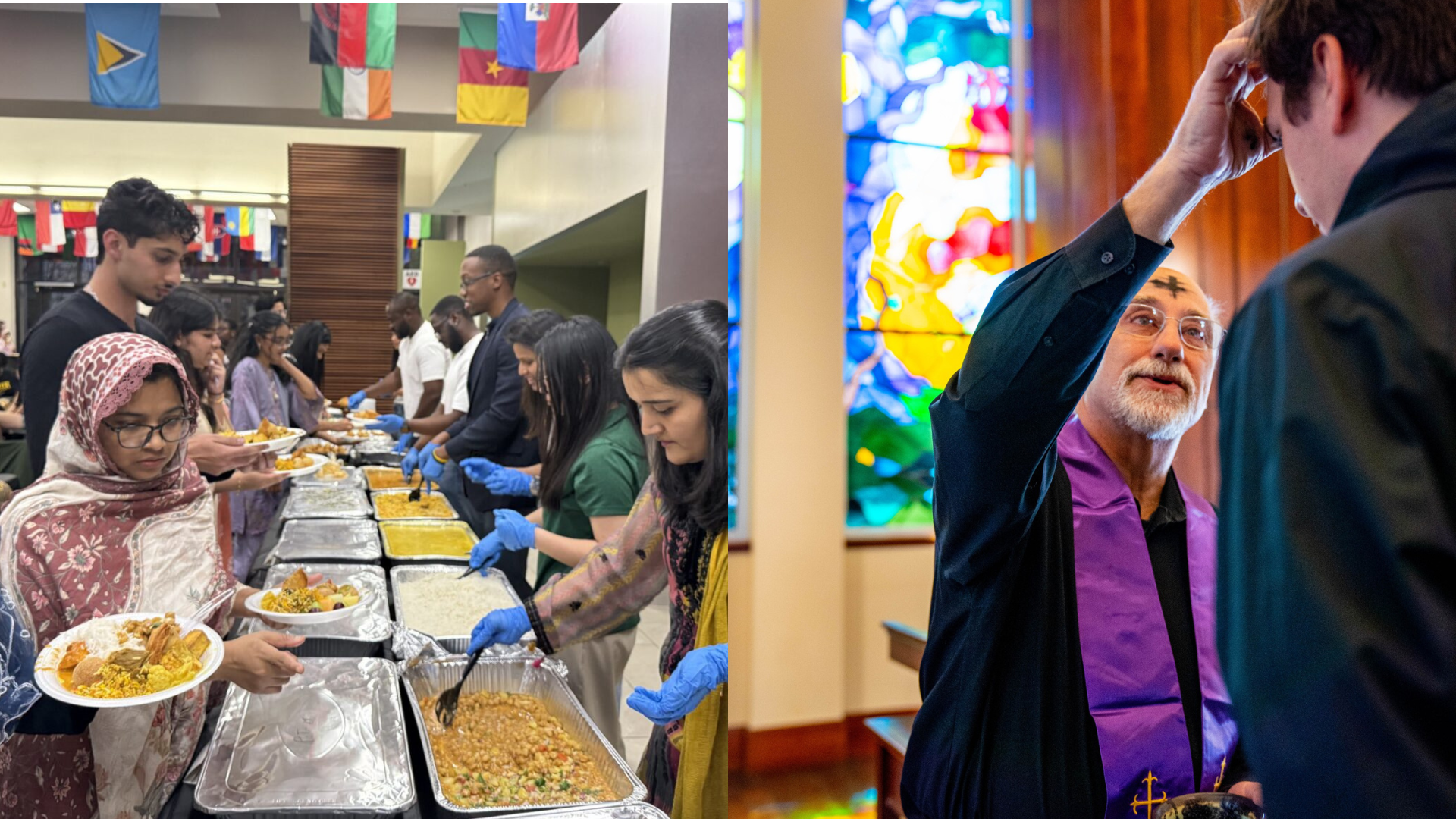
This year, both Lent and Ramadan occur during the same time period. Because Muslims follow a completely different calendar from Western and Orthodox Christianity, the overlap is a rare phenomenon.
While differing in religion and purpose, both involve fasting from or sacrificing something that’s a part of everyday life.
This year, Christians observe Lent from Feb. 18 to April 2, while Muslims observe Ramadan from Feb. 17 to March 19.
Lent is a 40-day preparation before Easter, which is the Christian holiday celebrating Jesus’ resurrection from the dead three days after being crucified by the Romans. Lent begins on Ash Wednesday and spans until Easter Sunday, and those 40 days represent Jesus’ time spent fasting in the wilderness.
For Lent, it is customary to fast from habits or extra luxuries, or choose to fast from meals entirely. Many practicing Christians give up sugar or screen time; however, practices vary.
Valencia, Calif., junior Victoria Davis said she gave up binge-watching for Lent.
“I’m only allowing myself to watch a maximum of one episode of things at a time and give days in between watches,” Davis said.
Her goal is to spend more time invested in her faith while cutting out television.
“To me and my faith journey, I had always relied on the excuse that I ‘didn’t have time’ to work toward getting closer to God,” Davis said. “I am giving up my binge-watching habit in order to make time to grow in relationship with God.”
Ramadan, the ninth month of the Islamic calendar, is a holy month of fasting and increased dedication to prayer and reading the Quran. The month celebrates the Prophet Muhammad and the first revelation of the Quran.
The practice of Ramadan incorporates one of the Five Pillars of Islam. Those observing eat a meal before sunrise, referred to as “suhoor,” and fast until a sunset meal referred to as “Iftar.” This process of fasting is called “sawm.”
Ryan Arnold, a senior from Westlake Village, Calif., discussed similarities between Lent and Ramadan while also pointing out key religious differences in the traditions.
“Fasting is a way to test discipline much like Lent,” Arnold said. “It also fosters a sense of community, as the daily fast is supposed to be broken with a large meal as a family.”
Arnold also discussed how different everyday life is during Ramadan and how it symbolizes sacrifice.
“Fasting affects daily life the most, as Muslims must choose to honor their religion for an entire month — this means putting aside earthly conveniences,” Arnold said. “As someone who exercises a lot, it can be hard to recover fully and to eat enough protein while fasting.”
Baylor is a Christian institution where many students participate in Lent, while Muslim students practice Ramadan. Although the traditions are separate, they remain highly individualized, especially for college students.
“I think people should know that giving up things for Lent should be very personal, and it is a great way to practice spiritual discipline in your life,” Davis said.