By Jackson Posey | Sports Editor
Aundre Branch’s bag is still packed.
The black traveling case has been sitting in the garage for 15 years, underneath a pile of other suitcases, covered in dust and filled with memories. It’s a final testimony to the sport that saved him.
“When I say it saved my life, that was my safe haven,” Branch said. “I was always with a basketball at all times because that was the only way I felt safe.”
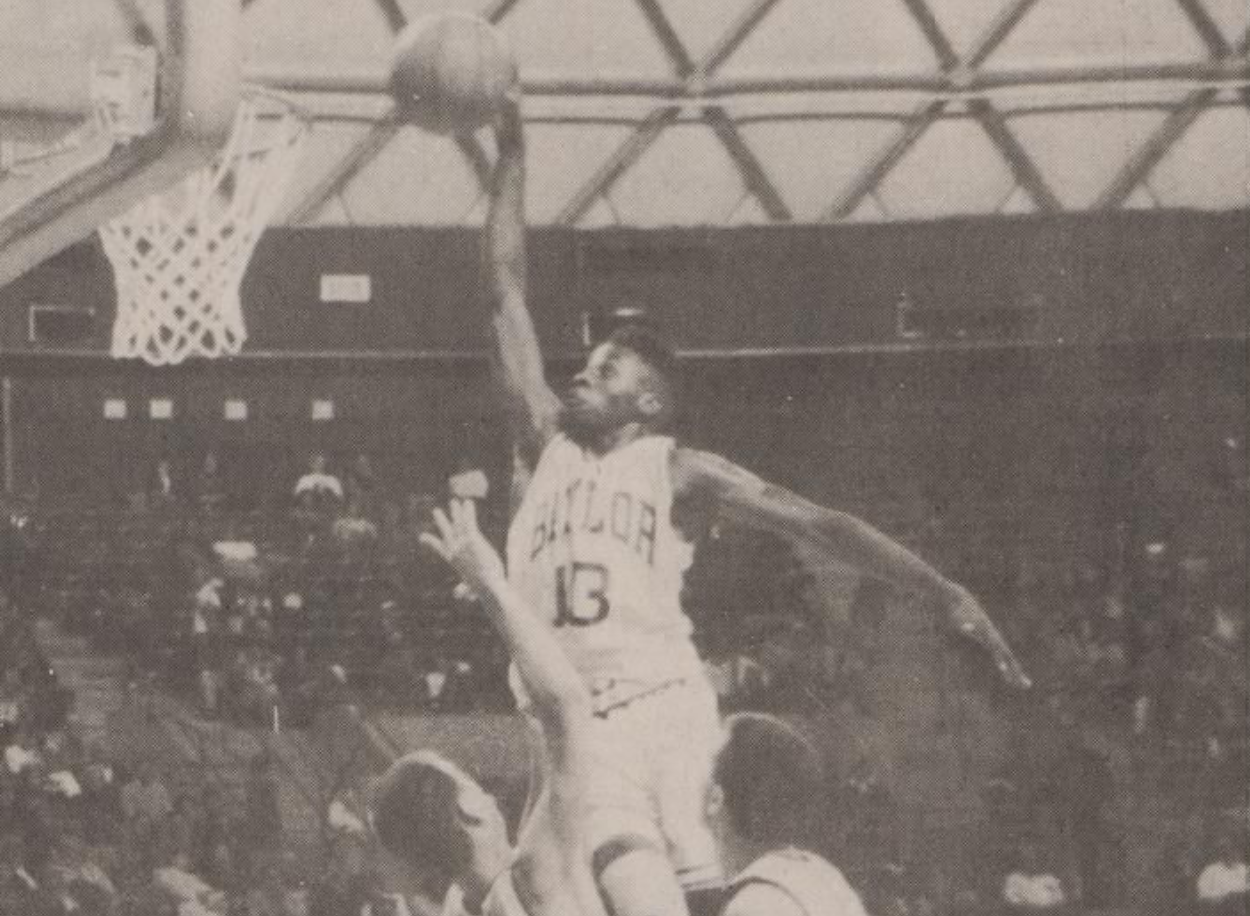
Branch, a Baylor Athletics Hall-of-Famer and former Harlem Globetrotter, eventually set several 3-point shooting records and became one of the most prolific scorers in Baylor history. It was a meteoric rise for a kid from inner-city Houston who just wanted to make it out.
“If it wasn’t for basketball, if it wasn’t for my supporting cast around me, if it wasn’t for the experiences that I’ve witnessed with my own two eyes, I probably would’ve fell victim to what was happening in my environment,” Branch said. “I was that close.”
When Branch’s parents divorced, he moved with his mother to Kingwood, a safer area in the suburbs of Houston. He starred for Kingwood High, a team whose duo of 7-footers drew plenty of college scouts and thrice took top-ranked Sugar Land Willowridge to overtime.
Baylor immediately stood out among several Division I offers, partially for the school’s academic reputation and the allure of early playing time. But Branch also loved the Waco of it all. The double appeal of staying close to home and living in a city that was then home to Paul Quinn College, a historically Black institution which has since moved to Dallas, was too much to pass up.
“I was like, man, this is home,” Branch said. “I came home and told my mama, I said, ‘Mama, I’m going to go to Baylor.’”
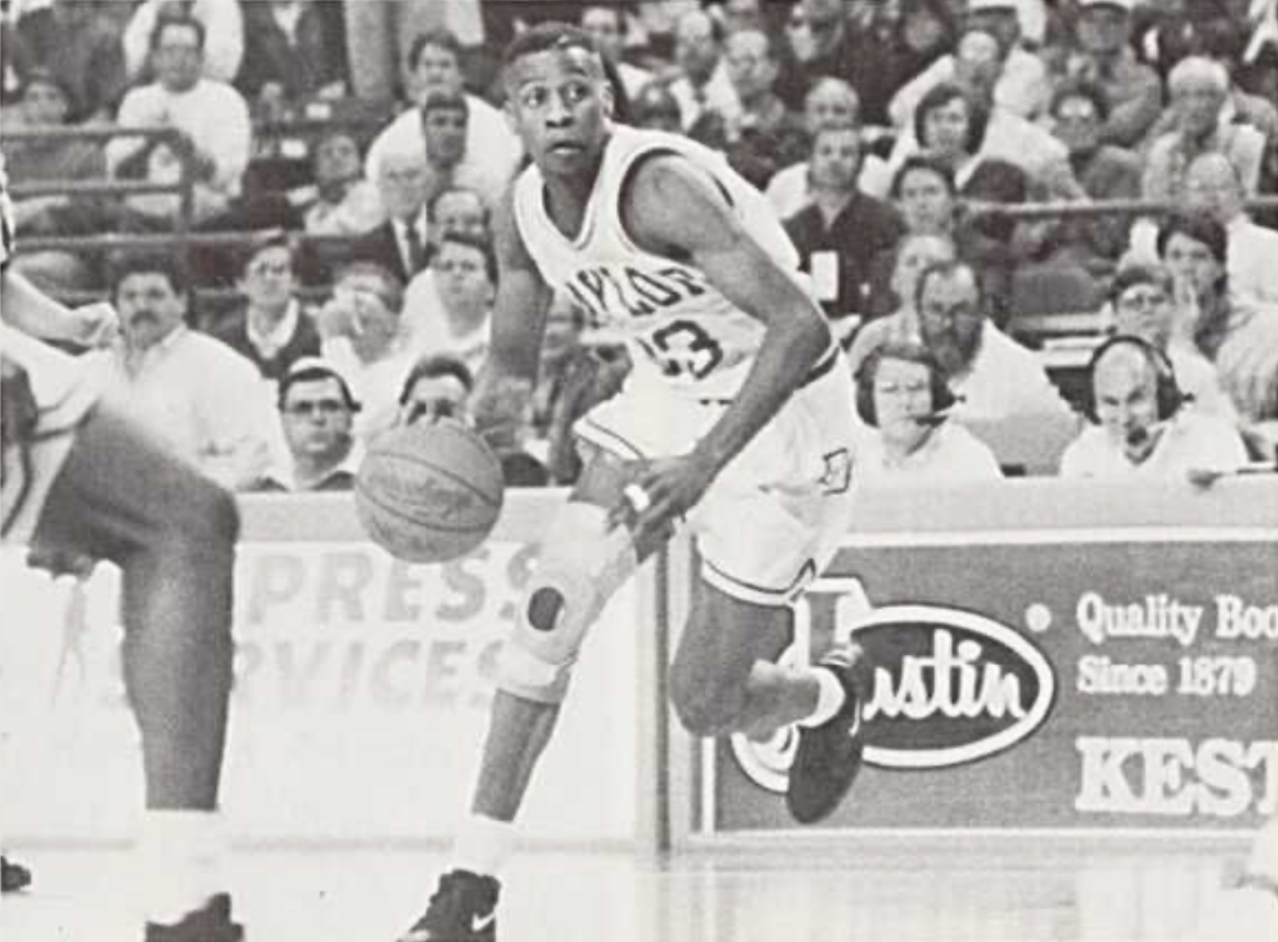
Branch immediately turned heads with his shooting ability. By the time he graduated, he’d set Baylor’s single-season and career records in 3-point shooting, as well as in career marks for 3-point percentage and attempts.
“He was an amazing shooter,” said Jerry Hill, a sports writer and assistant sports editor at the Waco Tribune-Herald during Branch’s tenure. “He could knock it down from anywhere, and that was his game.”
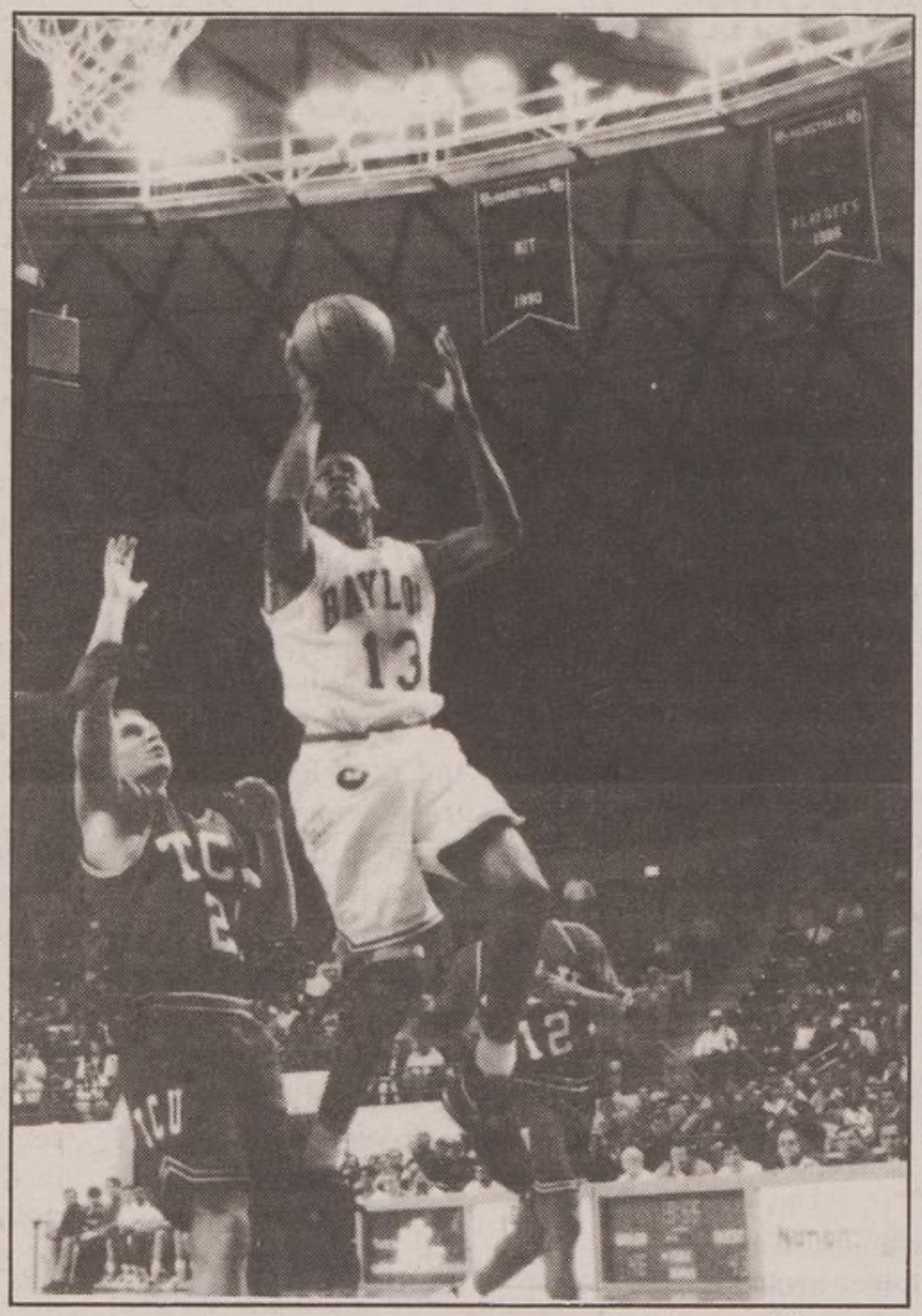
Those four years were a whirlwind. Baylor dismissed head coach Gene Iba after Branch’s freshman year, then fired his successor, Darrel Johnson, amid school and federal investigations into potential mail and wire fraud charges. (Johnson was later acquitted on all seven counts, while three assistants were found guilty of conspiracy.)
Branch decided not to transfer after the coaching staff promised the team wouldn’t be put on probation. Reality hit like a ton of bricks.
“I’ll never forget the day when they told us, right before the game, that we are on probation,” Branch said. “I looked at Nelson [Haggerty], I looked at all the coaches. I started getting undressed. I was going to go home. I didn’t want to play the game because I felt like I was betrayed.”
Prayer and tears brought Branch back to the court. Months later, they bookended his senior season. The Bears lost their 1995 finale to Texas A&M at the Ferrell Center, 87-78, ending the sharpshooter’s career with a third consecutive loss.
“Once the game was over, I just sat right there in the middle of the floor,” Branch said. “I went home in my uniform that day. That’s how hurt I was.”
Branch was a bright spot on a team with no hopes of a postseason berth. He earned All-Southwest Conference honors for the second straight season after posting a career-high 21.7 points per game.
“Thirty-plus years later, he’s still one of the best [shooters] the program’s ever had,” Hill said. “I think it helped [the program], just seeing guys like that stick it out and make it four years with three different head coaches.”
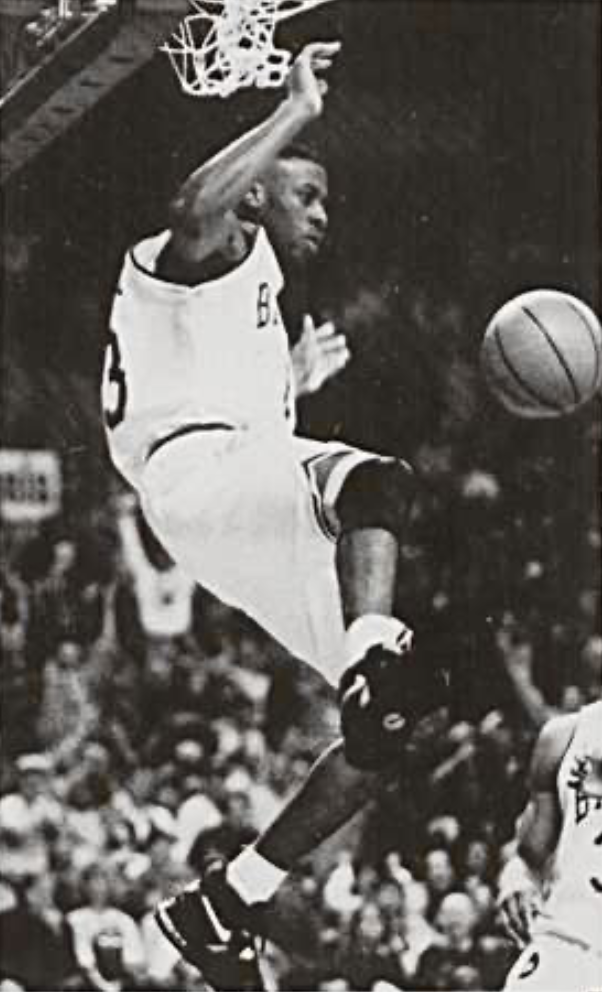
After several years of playing professionally overseas — and, occasionally, pickup ball with Moses Malone, Steve Francis and Sam Cassell at the Fondé Rec Center — Branch went on a tear in the Dominican Republic, winning over a dozen straight games and catching the eye of a Globetrotters coach. After practicing with Shawn Kemp one day, he met with the coach, haggled insurance and a 401(k) into the contract and signed on the dotted line.
For the first time, Aundre Branch was a Globetrotter — at least, on the outside. Inside, he still had the fire of a professional player.
“There’s certain parts in the game where we know that the showman that does all the talking, he’s going to come out and signal, OK, now it’s time to switch over to entertainment,” Branch said. “Well, I’m in the heat of battle. I’m ready to play. You score on me, I’m trying to score back.
“I’m sitting down on the bench, and one of my best friends, Michael “Wild Thing” Wilson … said, ‘Branch, man, calm down.’ I said, ‘Nah, I gotta get him! I want to get him!’ He said, ‘Branch, we got about 300 more games, you can get him tomorrow.’ (laughs) And that’s when the lightbulb came on.”
Branch quickly made an impression throughout the organization. He officially earned his nickname by sinking several deep shots in a scrimmage, prompting a coach to proclaim in a sing-song voice, “Oh, Hot Shot Branch.”
“Great guy,” said Zoltan Berencsi, senior producer for the Globetrotters. “He was a great shooter. We utilized him when we first initiated the four-point line, he was hitting fours for us. Just a lot of cool stuff with him.”

Branch went on to become a major PR figure for the Globetrotters, working with Habitat for Humanity after Hurricane Katrina and doing television interviews alongside Paris Hilton and Kevin Bacon. But to him, one story stands out above the others.
During his first year with the Globetrotters, Branch came back to Waco for the first time and spent most of the pregame playing with a young ballboy — dancing, laughing, joking around. After the game, the boy’s mother gave Branch a hug and thanked him. Her son had terminal cancer, she said. All he’d wanted to do was come to a Globetrotters game.
Three days later, Branch learned that the child had passed away.
“I broke down,” Branch said. “That’s what triggered me [to realize], you don’t get this type of interaction [elsewhere]. Don’t get me wrong, the NBA would have been a great thing as far as — of course the money would’ve been great, and you get to play on a high level and things like that, but there’s no higher level than the Globetrotters.
“I tell everybody, I didn’t get a chance to make a million dollars, but I definitely made a million friends.”
It’s been 15 years since he last put on the uniform. One day, Branch said he’ll open that black traveling case. He’ll go back in time and remember it all. Perhaps it’ll bring some closure. For now, though, he’s still holding out hope. He doesn’t want to let go.
“I still have dreams about still playing,” Branch said. “I still have dreams about when I played with the Globetrotters — I had a basketball and I could hear the Sweet Georgia Brown in my ears, playing. … I wish I could suit up one more time and shoot me a jump shot in Foster Pavilion one good time.”
There’s a saying among former players: “Once a ‘trotter, always a ‘trotter.” Branch still feels the connection. He’s traveled to 59 countries across six continents, braved war zones and met A-list celebrities, all while playing 300 games per year.
“There’s only one place I ain’t been, and that’s heaven, man,” Branch said. “It’s coming. Probably, when I get to heaven, I’ll get to spin the ball on God’s finger and tell him thank you.”