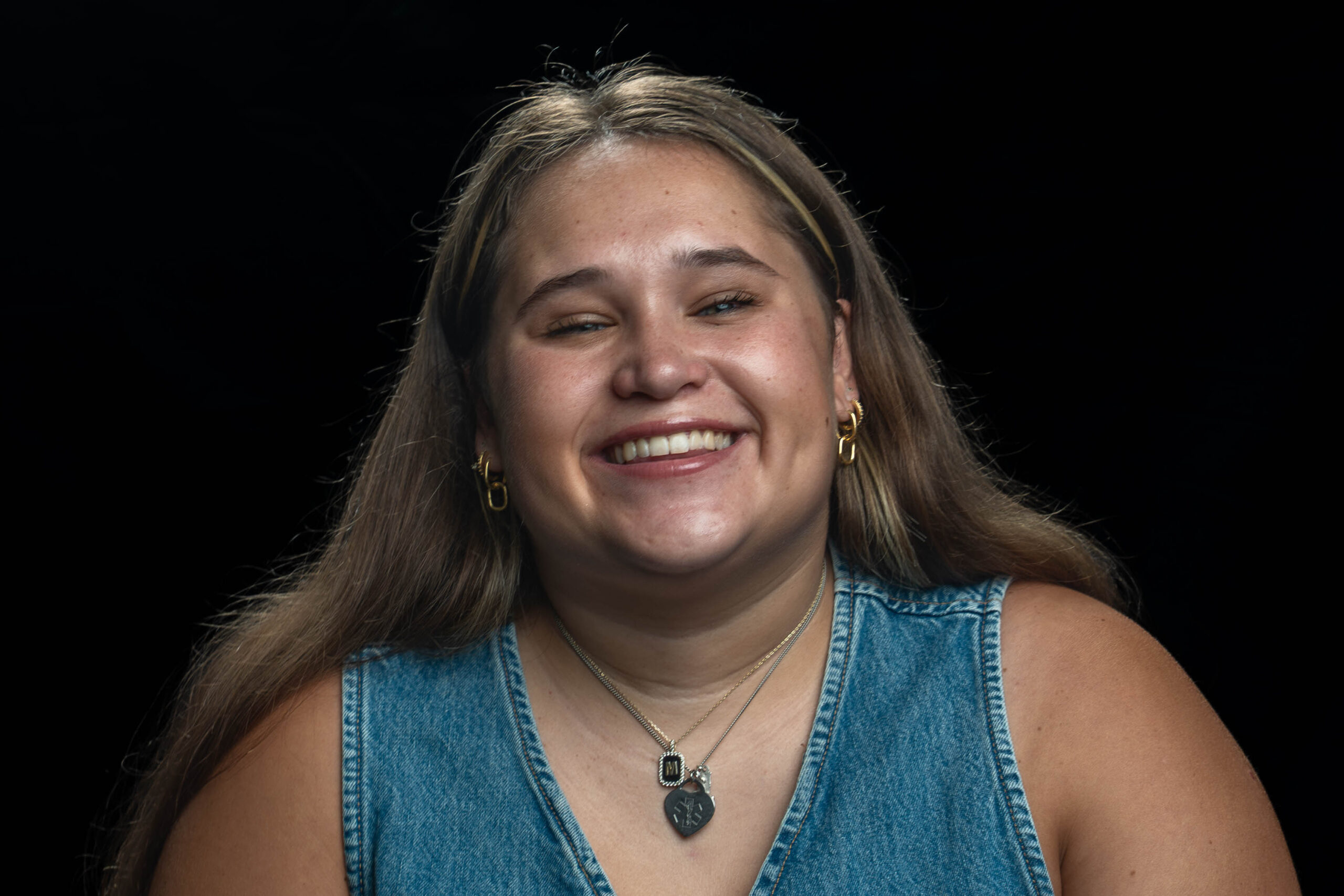
By Marissa Essenburg | Sports Writer
The ability to travel is a gift — a blessing that many people don’t get the chance to experience, or too often, take for granted. Whether it’s a plane ride 5,000 miles away or a road trip a few states over, travel has the power to shift your perspective and allows you to grow. Travel, in ways both subtle and life-changing, rewrites pieces of who you are.
For many of us, traveling comes down to a formula. A few weeks of saving, a booked flight and a group chat deciding who’s splitting the Airbnb or whose couch you might crash on.
But in an era where flights are cheaper, itineraries are curated for us and every destination has a “top 10” list, it feels like somewhere between booking the ticket and posting the photo, we forget what traveling is supposed to do — stretch our comfort zones. Travel is meant to humble us and remind us why we ever wanted to see the world in the first place.
The summer of 2024 changed my life and rewrote pieces of who I am. I had the opportunity to study abroad in London, and travel across Europe — and besides the statistics of Dallas sports teams, I don’t think there’s anything I’ve talked about more. That summer, I took two classes that changed how I see the world, in the same way I think my parents hoped our childhood trips would when my siblings and I were young.
“I want to go home a little bit different, a little less afraid, a little more thankful, a little better citizen of the planet,” best-selling travel writer Rick Steves wrote in “A Sense of Place.” A quote and a novel that evoked emotions in me like no nonfiction book had ever before.
Back then, those vacations felt like a break and a chance for our family to escape the chaos of a dual-working household with five kids. But as I’ve gotten older, I’ve realized there was more to it. We weren’t just traveling to get away; we were traveling to gain a deeper understanding of the world.
I’d be lying if I said I didn’t feel on top of the world every time my passport was stamped, or if I claimed I wasn’t one of those people posting a picture shortly after arriving on a beach in Central America, wandering the city streets of Dublin or standing beneath the lights of Times Square. I used to be — and sometimes still am — one of those “pics or it didn’t happen” people.
We’ve mastered the art of going everywhere, but not of being anywhere. We move fast, we post faster and somewhere in the scroll, we confuse visibility with understanding. We’re so focused on making our lives look awesome that we forget to live curiously.
But what I’ve learned from my parents, professors and those far wiser than I is that those familiar sayings, “stop and smell the roses” and “be where your feet are,” stick around for a reason. They remind us to slow down, to notice and actually to live in the moment. Learning and knowing this simple truth has made my world feel fuller, richer and far more abundant.
According to an American Express study, almost 50% of the people they surveyed say they are motivated to choose a destination because it will look good in photos or videos. This aligns with 48% of respondents stating that they want to visit destinations they can showcase on social media.
Before the days of cellphones and unplugged adventure, travel used to mean getting lost. Now it means finding a signal.
I say this not as someone above it by any means, but as someone learning through it. During my time abroad, I remember sitting alone on a bench in Copenhagen, waiting for my friend under the 75-degree sun, eating a street dog that probably cost too much and watching people talk, laugh and live in a language I didn’t understand. For one of the first times that summer, I didn’t reach for my phone. I just watched.
Later, as my friend and I wandered the city streets, I told her how in that moment a tear had slipped down my face as I smiled — at what, I’m not even sure. Maybe at the simplicity of it all.
That’s what I believe travel is supposed to do: make us emotional, uncomfortable, curious and more connected. Not just to a place, but to the people in it. To their stories. To their pace. To the realization that life doesn’t look the same everywhere, and it’s not supposed to, which is exactly why it’s beautiful.
In a world obsessed with documenting experience, we’ve lost the art of learning from it. But it’s not too late to relearn it. Maybe that means leaving the phone in your pocket for one sunset, or asking a local a question instead of just taking a photo with them. Perhaps it means accepting that not every moment is meant to be shared on a screen; some are intended to be kept private.
The best souvenirs don’t come home in our camera rolls. They come home in our hearts — as new ways of seeing, new reasons to be grateful and new pieces of who we are. Perhaps the next time we travel, we’ll choose presence over proof. Maybe we let a moment breathe before we try to capture it. Possibly, we allow ourselves to be students of the world again, not just visitors. The world is still willing to teach us — we just have to be willing to listen.