



By Hannah Webb | Focus Editor
WASHINGTON, D.C. — Under the shadow of the Capitol dome, the words, “We the People,” rippled down Pennsylvania Avenue — not from parchment, but from a 50-foot banner carried by individuals in yellow. Thousands filled the streets of the capital for the nationwide “No Kings” protest, a coordinated day of demonstrations centered on civic engagement and the role of citizens in American democracy.
Amid banners, flags and music, one element stood out: the growing presence of young people seeking to take part in shaping the nation’s future and the desire of the older generations for the younger ones to get involved.
“I went to the ‘No Kings‘ Rally in Richmond, Virginia, … I liked the community,” Tyler Cargill, a D.C. resident and former teacher, said. “I wanted to come to this one for sure — to just really see the community connect, come together for common causes.”
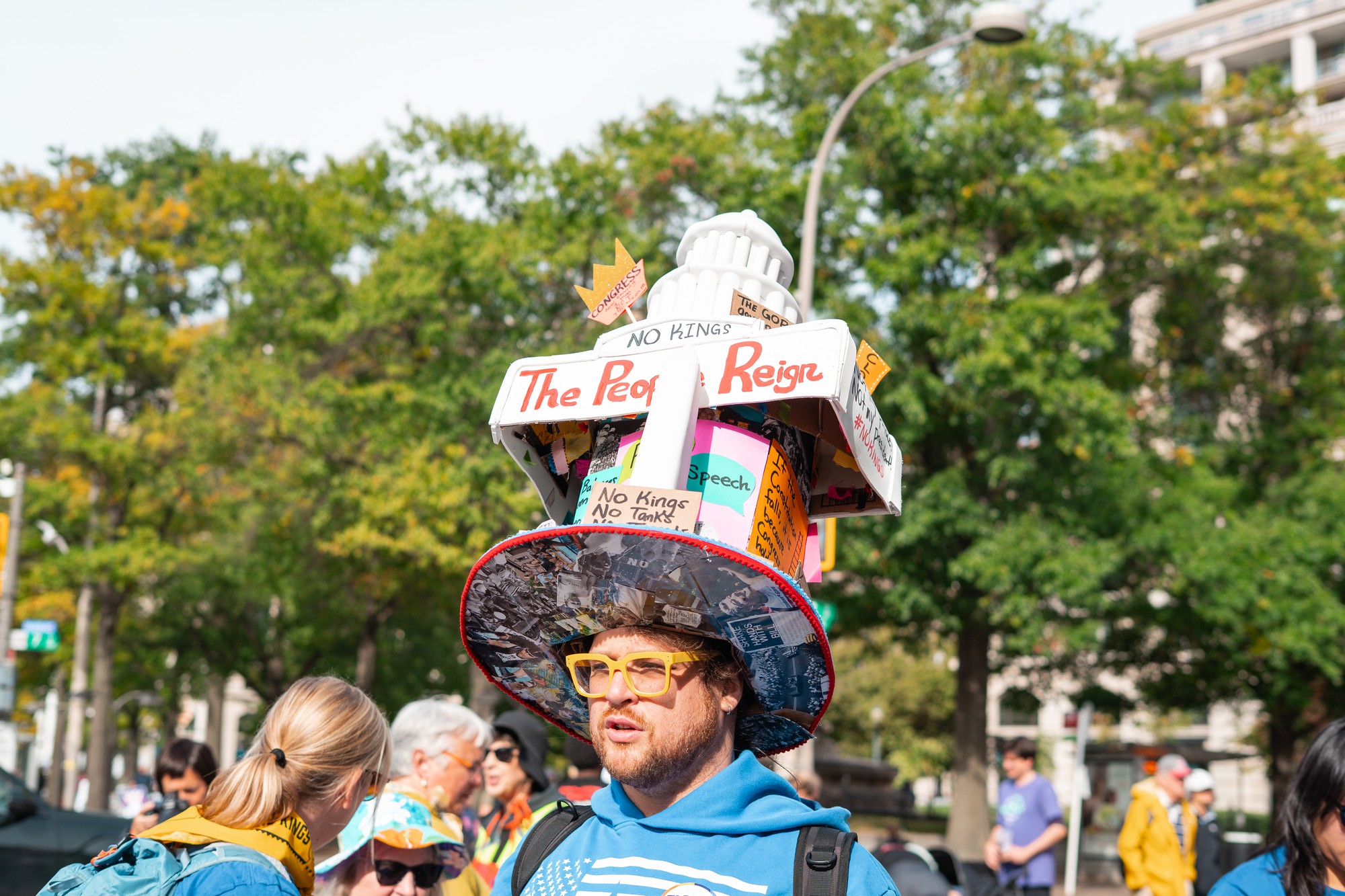
Cargill said he views events like this as opportunities to rebuild morale and connection among younger generations.
“There’s been a lot of just kind of feeling ran down,” he said. “Kind of hopelessness and listlessness. I think you just need to recharge.”
While the protest’s messages varied, a shared theme ran through them — a call for participation. Cargill, addressing younger audiences, offered practical advice.
“I would just say get registered,” he said. “Do what you can, but also take care of yourself. … There are certain people that can’t do certain things — maybe family obligations … if they’re financing your education, your life, whatever. Do what you can and stay safe.”
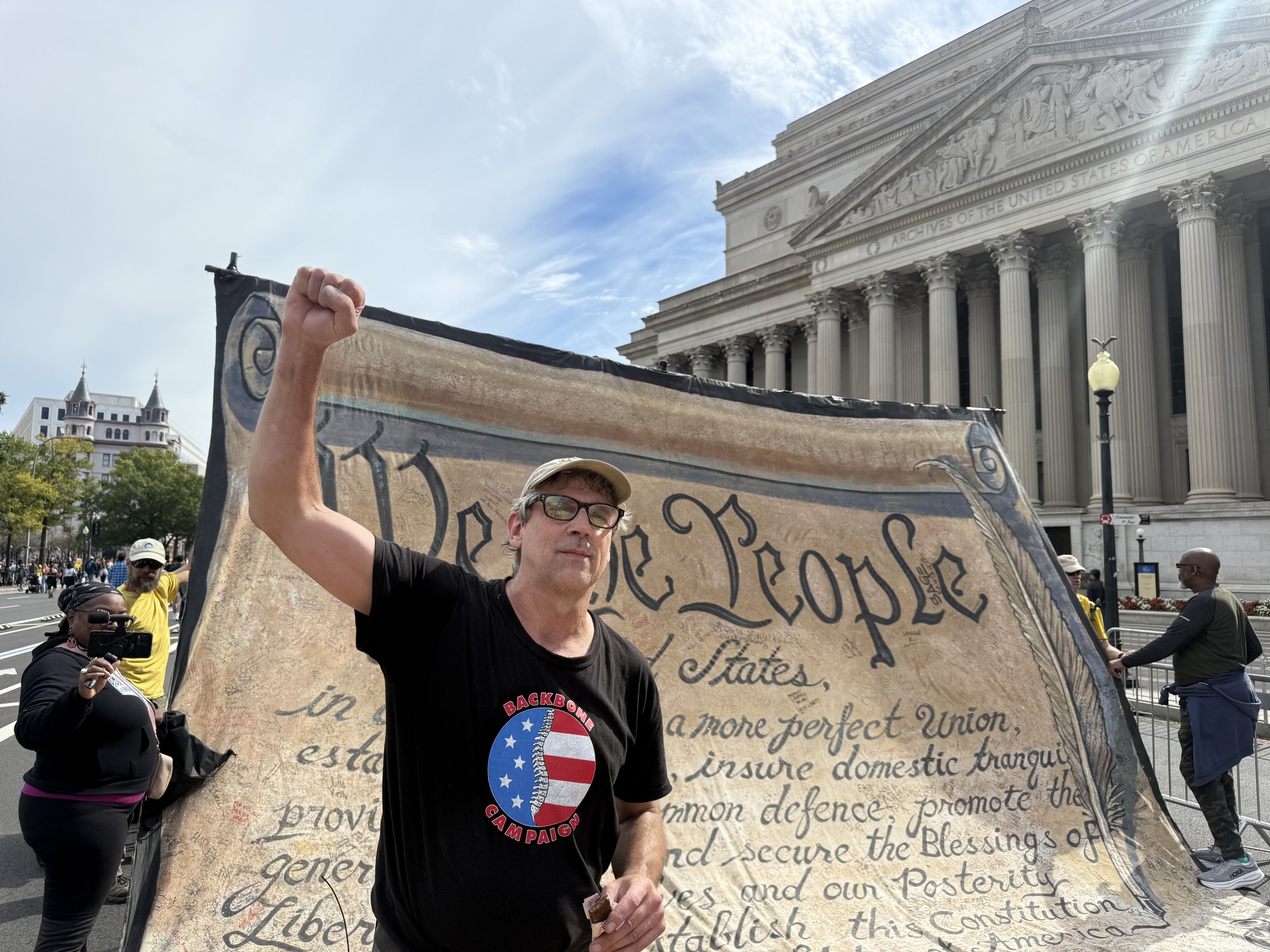
The D.C. march included a long banner headed by the Constitution’s preamble, carried by demonstrators as they walked down Pennsylvania Avenue. Thousands of signatures and handwritten messages covered its surface, including “Spread love, not hate,” “This is about all of us” and “Live, love, peace.”
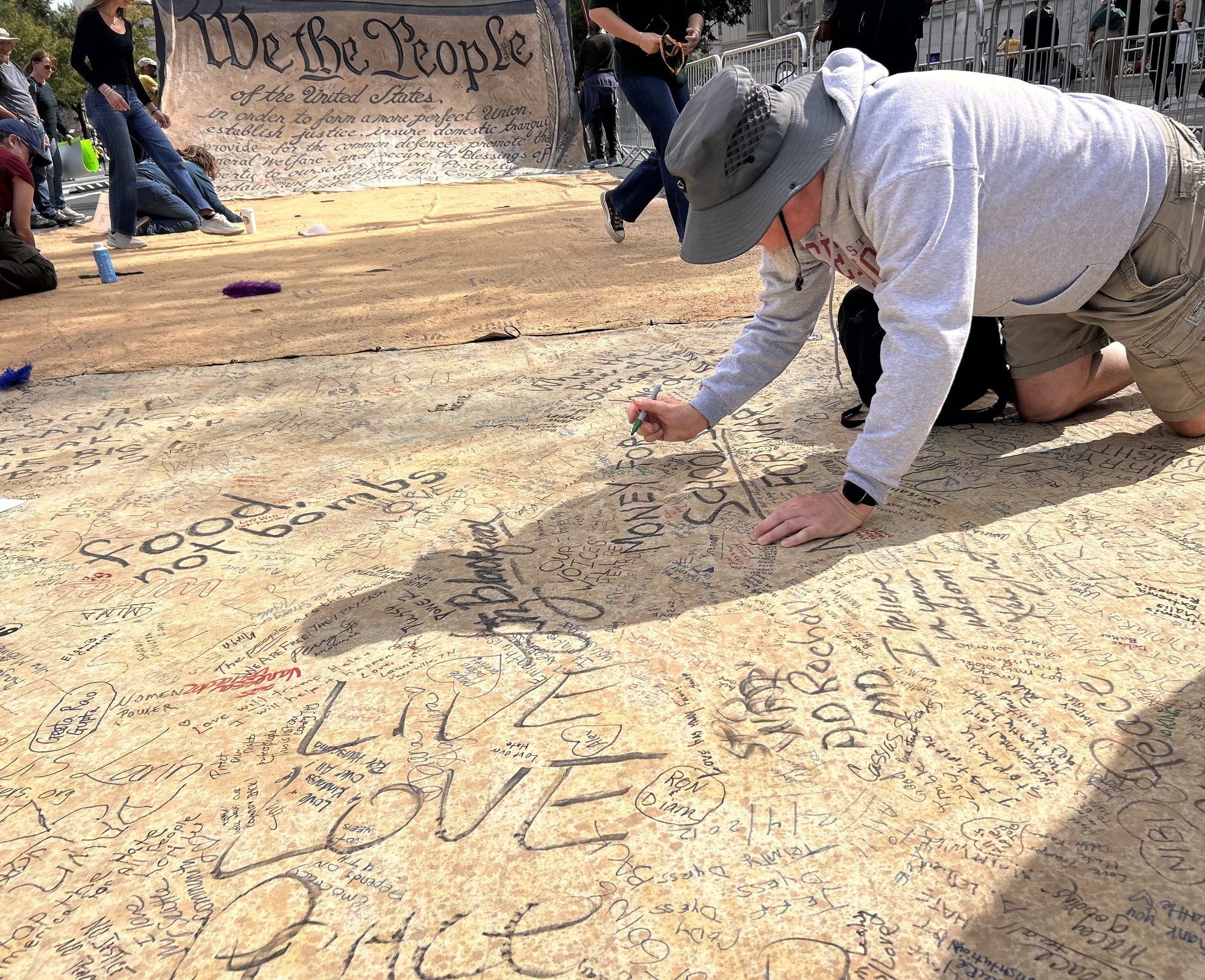
“This is a project of BackboneCampaign.org — a giant ‘We the People,’” Bill Moyer, executive director of the Backbone Campaign, said. “It’s a celebration of what joins us in this pursuit of a more perfect union.”
Moyer said the same banner design has traveled across the country, gathering signatures and personal notes along the way.
“It’s toured the country for many years,” he said. “What you see here today is only part of it. We recently built two more preambles — those are in Chicago and Seattle today at the protests there.”
Many demonstrators emphasized nonviolence and peaceful participation. Moyer noted the organization encourages what he called “positive populism,” focused on collaboration and accountability within a democratic system.
“It’s really important that people who can and have the privilege step out in front,” he said. “We hold on to the territory of freedom of speech and freedom of assembly — and we do it with messaging like ‘We the People,’ which represents what America is supposed to be.”
Dressed as a chained Statue of Liberty with a flag bandana covering his face, a man sat in silence. He described his costume as “street performance art,” intended to provoke reflection rather than confrontation.
“It’s very important for the youth to get engaged,” he said. “We don’t necessarily need them to get out on the street, though that would be great, but do something. Write your congresspeople, volunteer locally or just stay informed.”
Older participants echoed the same encouragement. George Blackwell and Brad Ingles, both veterans who once worked at the Pentagon, said they attended to support those who serve in silence.
“Support the soldiers and airmen and sailors that can’t have a voice because they support the Constitution,” Blackwell said.
Ingles called for the youth to use their right to protest.
“When there’s something like this, you become part of it — peacefully, but become part of it,” he said.
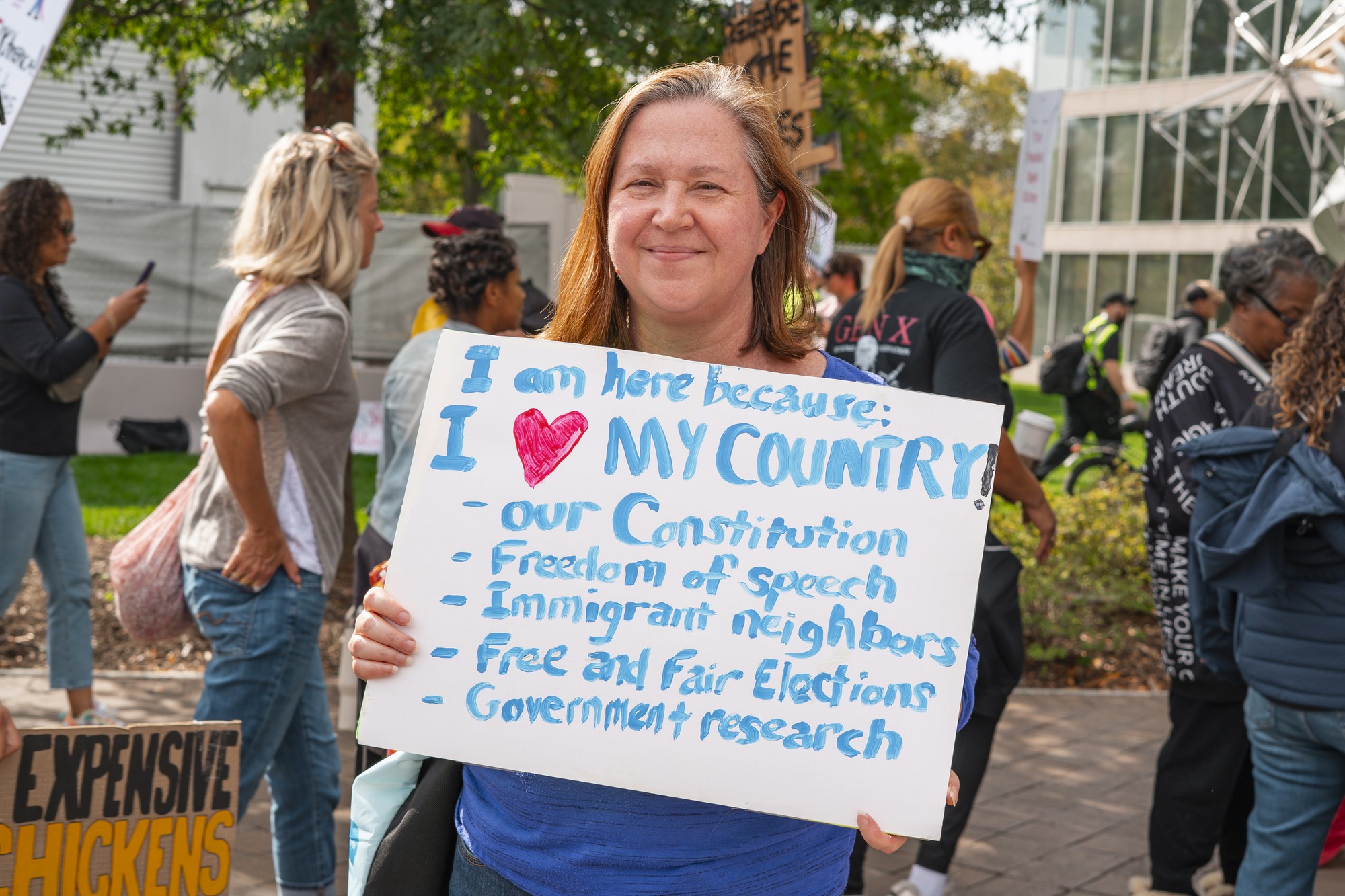
For Cynthia Tasaki, a D.C. resident and Baylor alumna, the gathering was a reminder of steady civic effort rather than quick change.
“There’s a lot to be unsure of in the world with AI and political changes, but it’s important to keep working your hardest,” she said. “I think everybody should vote, no matter what your political leaning is. Vote in the primaries. Vote in the main elections. It’s important.”
Though the day’s events varied in message and tone, participants shared a common goal — encouraging engagement at every level of citizenship.
For many of the younger attendees, that engagement begins with connection.
“Action is one thing, but community — that’s what keeps you going,” Cargill said.
The sentiment reflected the broader spirit of the day in Washington and beyond: citizens of all ages standing together under a banner that read not for or against any individual, but for the enduring idea that democracy works best when everyone takes part.
