


By Alexia Finney | Staff Writer
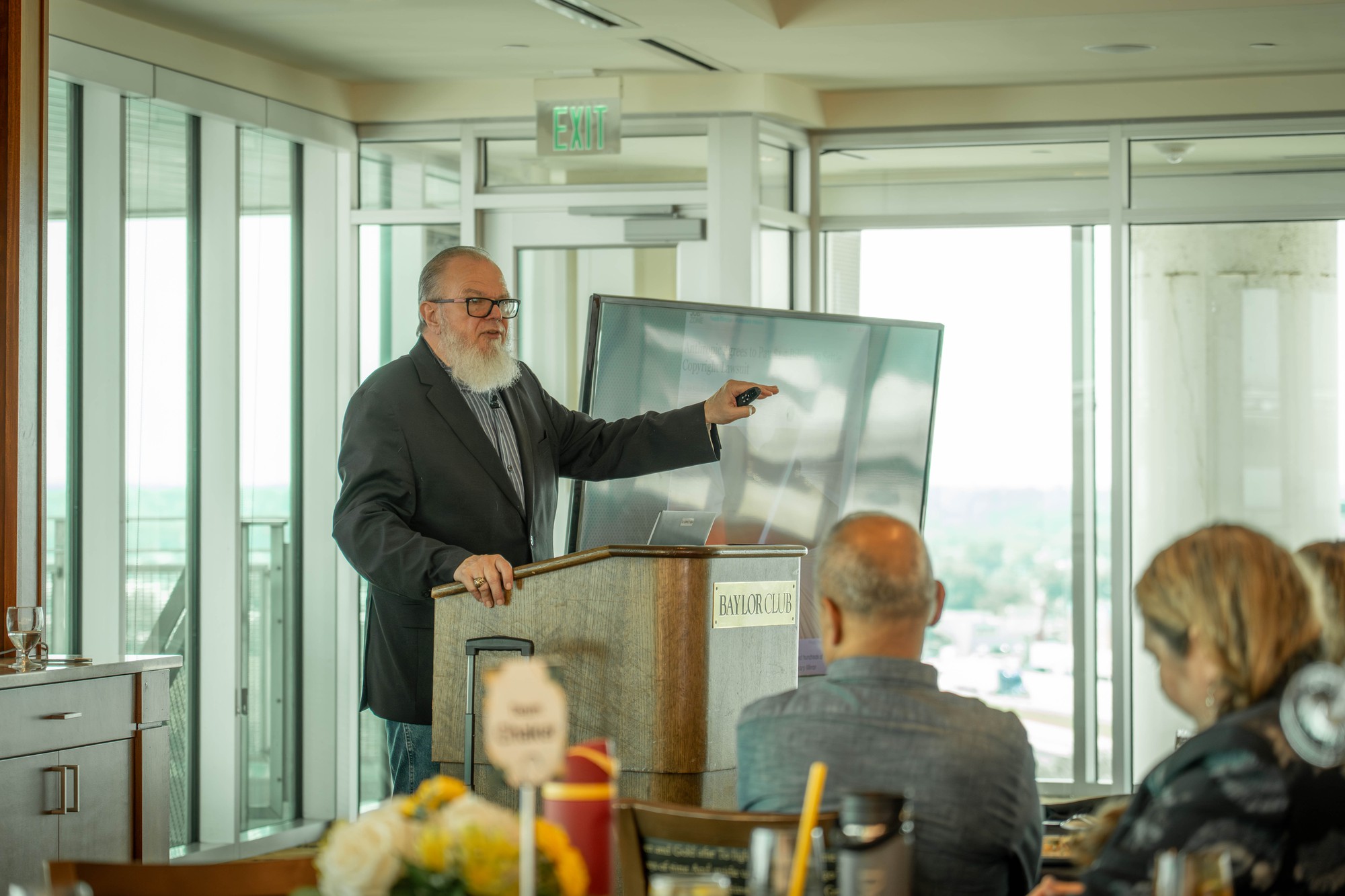
Baylor ProSales marked 40 years as a renowned sales program Friday, hosting a research symposium with 48 marketing and sales scholars from seven countries who gave input on how artificial intelligence will impact sales.
Because of AI’s market growth — projected to hit 4.8 trillion by 2033, according to UN Trade and Development — the anniversary symposium invited Baylor and other universities’ staff to research and present ideas on the ways AI will change business communication, strategy and employment rates.
Dr. Jorge Jaramillo, a marketing professor at the University of Texas at Arlington, said AI could improve sales interactions by increasing efficiency in repetitive tasks.
“AI will make several processes, particularly repetitive processes, more efficient,” he said. “Salespeople can leverage AI to better serve the customer and help the customer with problem-solving.”
Within marketing, Jaramillo said AI could bolster customer segmentation. Traditionally, marketers group customers into clusters manually, but AI could reduce the time spent analyzing and separating people by variables.
“You can do clustering by hand, but you can also use AI tools to create those clusters and models,” Jaramillo said.
In a broader historical context, Jaramillo said today’s AI is comparable to the Industrial Revolution, when machines created new roles and boosted productivity.
“History tells us that every technological innovation that increases human productivity eventually generates more jobs,” Jaramillo said. “Jobs changed, but humanity was better off.”
Dr. Son Lam, a marketing professor at the University of Georgia who researches sales management and relationship marketing, said AI has limitations that can be categorized into mechanical, thinking and feeling capabilities.
“AI hasn’t got to the part where they can empathize with human beings yet,” Lam said. “It will improve, but I don’t think it will replace human beings in that space.”
In addition, Lam said students need to remember that AI reflects the biases and limitations of its algorithms.
“AI at the end of the day depends on the algorithm, and the algorithm at the end of the day depends on human beings,” Lam said. “So the algorithm can be biased. AI is a tool. It can’t solve every problem you have. You need to know how to use it effectively and be aware of its shortcomings.”
At Baylor, students are already using AI to develop practical sales skills. Dr. Eric Swan, clinical associate professor of ProSales, said students use Humantic AI to suggest communication strategies for cold calls and emails based on personality type.
“It’s actually helping our students as they think about being strategic and thoughtful in their prospecting and outreach,” Swan said.
Although AI cannot replicate human input or creativity, it will play an increasingly important role in improving efficiency in sales.
“If you have AI, then you can be more efficient. You can spend less time on mundane things and you spend more time on creativity,” Lam said.
