

Close Menu
The Baylor Lariat
    Facebook X (Twitter) Instagram YouTube LinkedIn
    Trending
    • Board of Regents approves nearly $1 billion operating budget, new AI-centered master’s degree
    • Foster Pavilion to host rising country star Braxton Keith
    • Dog days: Q&A with Wacoan that built hot dog social media brand
    • Country legend Willie Nelson returns after 72 years for night of harmonies, hits
    • Students react to ‘very stressful’ Canvas outage ahead of finals
    • Canvas access to be restored, Friday finals moved to online Thursday
    • Baylor delays finals as nationwide Canvas outage impedes studying
    • SLIDESHOW: IM Claw Cup Championship
    • About us
      • Spring 2026 Staff Page
      • Copyright Information
    • Contact
      • Contact Information
      • Letters to the Editor
      • Subscribe to The Morning Buzz
      • Department of Student Media
    • Employment
    • PDF Archives
    • RSS Feeds
    Facebook X (Twitter) Instagram YouTube LinkedIn
    The Baylor LariatThe Baylor Lariat
    Subscribe to the Morning Buzz
    Sunday, June 7
    • News
      • State and National News
        • State
        • National
      • Politics
        • 2025 Inauguration Page
        • Election Page
      • Homecoming 2025
      • Baylor News
      • Waco Updates
      • Campus and Waco Crime
    • Arts & Life
      • Wedding Edition 2025
      • What to Do in Waco
      • Campus Culture
      • Indy and Belle
      • Leisure and Travel
        • Leisure
        • Travel
          • Baylor in Ireland
      • Student Spotlight
      • Local Scene
        • Small Businesses
        • Social Media
      • Arts and Entertainment
        • Art
        • Fashion
        • Food
        • Literature
        • Music
        • Film and Television
    • Opinion
      • Editorials
      • Points of View
      • Lariat Letters
    • Sports
      • Football
      • Basketball
        • March Madness 2026
        • Men’s Basketball
        • Women’s Basketball
      • Soccer
      • Baseball
      • Softball
      • Volleyball
      • Equestrian
      • Cross Country and Track & Field
      • Acrobatics & Tumbling
      • Tennis
      • Golf
      • Pro Sports
      • Sports Takes
      • Club Sports
    • Lariat TV News
    • Multimedia
      • Video Features
      • Podcasts
        • Don’t Feed the Bears
        • Bear Newscessities
      • Slideshows
    • Sing 2026
    • Lariat 125
    • Advertising
    The Baylor Lariat
    Home»Associated Press

    Study links Texas quakes to natural gas drilling

    Baylor LariatBy Baylor LariatApril 21, 2015 Associated Press No Comments3 Mins Read
    Share
    Facebook Twitter LinkedIn Pinterest Email
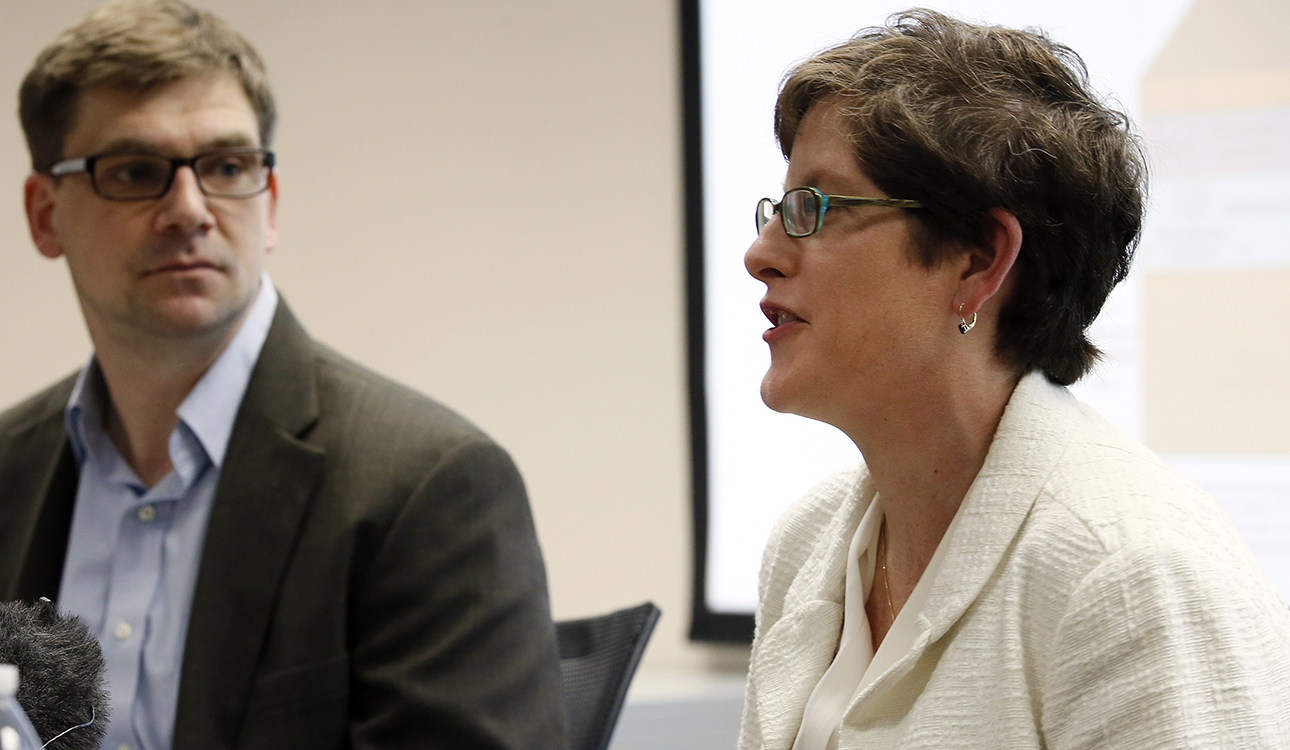
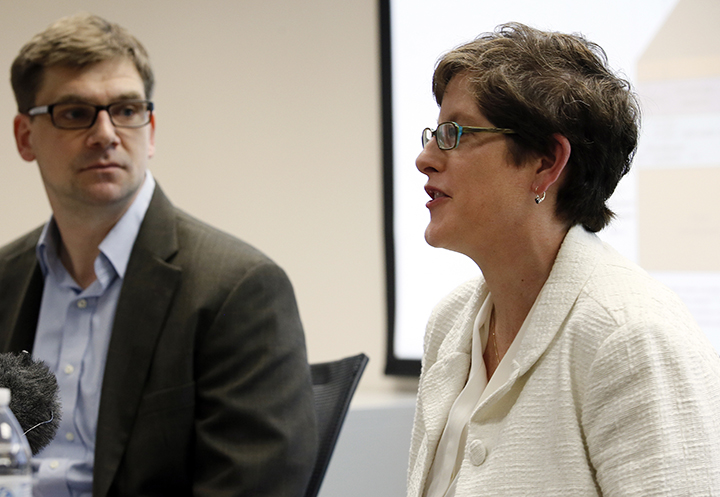
    SMU associate professors of geophysics Matthew Hornbach, left, and Heather DeShon respond to questions Tuesday regarding the cause of earthquakes in the Azle area, during a news conference in Dallas.  Associated Press
    SMU associate professors of geophysics Matthew Hornbach, left, and Heather DeShon respond to questions Tuesday regarding the cause of earthquakes in the Azle area, during a news conference in Dallas.
    Associated Press

    By Seth Borenstein
    AP Science Writer

    WASHINGTON — With real-time monitors, scientists have linked a swarm of small earthquakes west of Fort Worth to nearby natural gas wells and wastewater injection.

    In 84 days from November 2013 to January 2014, the area around Azle shook with 27 magnitude 2 or greater earthquakes, while scientists at Southern Methodist University and the U.S. Geological Survey monitored the shaking. It’s an area that had no recorded quakes for 150 years on faults that “have been inactive for hundreds of millions of years,” said SMU geophysicist Matthew Hornbach.

    When the volume of injections decreased significantly, so did the shaking.

    The scientists concluded that removing saltwater from the wells in the gas production process and then injecting that wastewater back underground “represent the most likely cause” for the swarm of quakes, according to a study published Tuesday in the journal Nature Communications.

    The scientists determined this based on where and when the earthquakes happened; computer models that track pressure changes; and company data from nearby wells. Hornbach said the timing and location of the quakes correlates better to the drilling and injection than any other possible reason.

    “There appears to be little doubt about the conclusion that the earthquakes were in fact induced,” USGS seismologist Susan Hough, who wasn’t part of the study team, said in an email. “There’s almost an abundance of smoking guns in this case.”

    This adds to other studies that linked injecting wastewater from energy wells to a tremendous jump in earthquakes in Oklahoma and southern Kansas, where there have been more than 950 magnitude 2 or higher quakes so far this year, according to the USGS.

    On Tuesday, the Oklahoma Geological Society said it is “very likely” that most of the earthquakes that have shaken the state in recent years have been triggered by the subsurface injection of wastewater from oil and natural gas drilling operations. The society released a statement following an investigation into dozens of earthquakes recorded in central and north-central Oklahoma.

    Unlike other research that linked quakes to the injection of wastewater, the SMU study also sees a secondary link in another part of the drilling process, when massive amounts of brine is taking out of the ground with the gas, said study co-author William Ellsworth of the USGS. Removing the saltwater changes the underground pressure, Hornbach said.

    But the deep injection of the wastes still is the principle culprit, Ellsworth said. The controversial method of hydraulic fracturing or fracking, even though that may be used in the drilling, is not physically causing the shakes, he said.

    The findings come amid heightened debate over oil and gas regulations, including efforts in some communities to ban drilling. In Texas, lawmakers are considering bills that would limit cities’ abilities to do so.

    The Texas Railroad Commission, the state’s oil and gas regulator, hired its first seismologist last year to investigate potential links between quakes and fracking after Azle residents asked the agency to halt oil and gas activities. The seismologist has not offered any conclusions.

    Meanwhile, SMU seismologists are still examining the cause of ongoing earthquakes in suburban Dallas. In February, researchers released preliminary results that showed a narrow fault line extending from Irving to West Texas. Researchers previously identified disposal wells as the source of seismic activity at the Dallas-Fort Worth International Airport.

    Baylor Lariat

    Keep Reading

    Board of Regents approves nearly $1 billion operating budget, new AI-centered master’s degree

    Foster Pavilion to host rising country star Braxton Keith

    Students react to ‘very stressful’ Canvas outage ahead of finals

    Canvas access to be restored, Friday finals moved to online Thursday

    Baylor delays finals as nationwide Canvas outage impedes studying

    Student research findings emphasize importance of deep friendships

    Add A Comment

    Comments are closed.

    Recent Posts
    • Board of Regents approves nearly $1 billion operating budget, new AI-centered master’s degree May 21, 2026
    • Foster Pavilion to host rising country star Braxton Keith May 20, 2026
    About

    The award-winning student newspaper of Baylor University since 1900.

    Articles, photos, and other works by staff of The Baylor Lariat are Copyright © Baylor® University. All rights reserved.

    Subscribe to the Morning Buzz

    Get the latest Lariat News by just Clicking Subscribe!

    Follow the Live Coverage
    Tweets by @bulariat

    Facebook X (Twitter) Instagram YouTube LinkedIn
    • Featured
    • News
    • Sports
    • Opinion
    • Arts and Life
    © 2026 ThemeSphere. Designed by ThemeSphere.

    Type above and press Enter to search. Press Esc to cancel.