

Close Menu
The Baylor Lariat
    Facebook X (Twitter) Instagram YouTube LinkedIn
    Trending
    • Hispanic concert in Foster Pavilion rescheduled due to World Cup Final
    • Board of Regents approves nearly $1 billion operating budget, new AI-centered master’s degree
    • Foster Pavilion to host rising country star Braxton Keith
    • Dog days: Q&A with Wacoan that built hot dog social media brand
    • Country legend Willie Nelson returns after 72 years for night of harmonies, hits
    • Students react to ‘very stressful’ Canvas outage ahead of finals
    • Canvas access to be restored, Friday finals moved to online Thursday
    • Baylor delays finals as nationwide Canvas outage impedes studying
    • About us
      • Spring 2026 Staff Page
      • Copyright Information
    • Contact
      • Contact Information
      • Letters to the Editor
      • Subscribe to The Morning Buzz
      • Department of Student Media
    • Employment
    • PDF Archives
    • RSS Feeds
    Facebook X (Twitter) Instagram YouTube LinkedIn
    The Baylor LariatThe Baylor Lariat
    Subscribe to the Morning Buzz
    Tuesday, June 23
    • News
      • State and National News
        • State
        • National
      • Politics
        • 2025 Inauguration Page
        • Election Page
      • Homecoming 2025
      • Baylor News
      • Waco Updates
      • Campus and Waco Crime
    • Arts & Life
      • Wedding Edition 2025
      • What to Do in Waco
      • Campus Culture
      • Indy and Belle
      • Leisure and Travel
        • Leisure
        • Travel
          • Baylor in Ireland
      • Student Spotlight
      • Local Scene
        • Small Businesses
        • Social Media
      • Arts and Entertainment
        • Art
        • Fashion
        • Food
        • Literature
        • Music
        • Film and Television
    • Opinion
      • Editorials
      • Points of View
      • Lariat Letters
    • Sports
      • Football
      • Basketball
        • March Madness 2026
        • Men’s Basketball
        • Women’s Basketball
      • Soccer
      • Baseball
      • Softball
      • Volleyball
      • Equestrian
      • Cross Country and Track & Field
      • Acrobatics & Tumbling
      • Tennis
      • Golf
      • Pro Sports
      • Sports Takes
      • Club Sports
    • Lariat TV News
    • Multimedia
      • Video Features
      • Podcasts
        • Don’t Feed the Bears
        • Bear Newscessities
      • Slideshows
    • Sing 2026
    • Lariat 125
    • Advertising
    The Baylor Lariat
    Home»News»International

    Persevering past roadblocks to build promising Ebola vaccine

    webmasterBy webmasterFebruary 9, 2015 International No Comments5 Mins Read
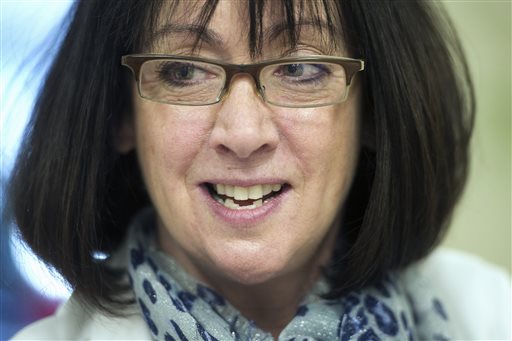
    In this photo taken Feb. 4, 2015, Dr. Nancy Sullivan, chief, Biodefense Research Section, National Institute of Allergy and Infectious Diseases, in her lab at the Vaccine Research Center at the National Institutes of Health in Bethesda, Md. It took 16 years of twists and turns. Over and over, Dr. Nancy Sullivan thought she'd finally gotten her Ebola vaccine right, only to see the next experiment fail. But it was those failures that Sullivan credits for helping her unravel enough mysteries of the immune system to finally bring an Ebola vaccine to large-scale testing in Africa. She just hopes it was in time to prove if the shots really work. (AP Photo/Cliff Owen)
    Share
    Facebook Twitter LinkedIn Pinterest Email
    In this photo taken Feb. 4, 2015, Dr. Nancy Sullivan, chief, Biodefense Research Section, National Institute of Allergy and Infectious Diseases, in her lab at the Vaccine Research Center at the National Institutes of Health in Bethesda, Md. It took 16 years of twists and turns. Over and over, Dr. Nancy Sullivan thought she'd finally gotten her Ebola vaccine right, only to see the next experiment fail. But it was those failures that Sullivan credits for helping her unravel enough mysteries of the immune system to finally bring an Ebola vaccine to large-scale testing in Africa. She just hopes it was in time to prove if the shots really work. (AP Photo/Cliff Owen)
    In this photo taken Feb. 4, 2015, Dr. Nancy Sullivan, chief, Biodefense Research Section, National Institute of Allergy and Infectious Diseases, in her lab at the Vaccine Research Center at the National Institutes of Health in Bethesda, Md. It took 16 years of twists and turns. Over and over, Dr. Nancy Sullivan thought she’d finally gotten her Ebola vaccine right, only to see the next experiment fail. But it was those failures that Sullivan credits for helping her unravel enough mysteries of the immune system to finally bring an Ebola vaccine to large-scale testing in Africa. She just hopes it was in time to prove if the shots really work. (AP Photo/Cliff Owen)

    By LAURAN NEERGAARD
    AP Medical Writer

    WASHINGTON (AP) — It took 16 years of twists and turns. Over and over, Dr. Nancy Sullivan thought she was close to an Ebola vaccine, only to see the next experiment fail.

    “A case of resuscitation more than once,” is how the National Institutes of Health researcher describes the journey.

    But it is those failures that Sullivan credits for finally leading her to a vaccine promising enough to test in parts of West Africa ravaged by Ebola. Last week, volunteers in Liberia’s capital began rolling up their sleeves for the first large-scale testing of two potential Ebola vaccines, the one Sullivan developed at NIH and a similar one created by Canada’s government.

    Sullivan just hopes it was in time to prove whether the shots really work.

    Ebola has claimed nearly 9,000 lives in West Africa over the past year, although new infections have dropped dramatically in recent months. It’s too soon to declare victory: Last week, new cases inched up for the first time this year, and health officials fear a resurgence if they don’t completely stamp out the disease before the upcoming rainy season.

    Waning cases make it more difficult to tell if a vaccine is protective, but the shots will be tested in multiple places and ways “hoping that one of those will give us real data,” said Dr. Bruce Aylward of the World Health Organization.

    Getting to that step is a story of nitty-gritty laboratory science, the kind that seldom makes headlines.

    “You don’t know what’s going to be important 15 years from now,” noted Sullivan, a cell biologist who kept hitting roadblocks as she tried to unravel enough mysteries of the immune system to create an Ebola vaccine.

    “You need a failure to know what immune responses aren’t helpful, as difficult as they were at the time,” she said.

    It all started in the late 1990s, when Sullivan, who had just earned her Ph.D. at Harvard, landed a new job at the University of Michigan. She wanted to study how Ebola infects cells, but her boss, Dr. Gary Nabel, gave her a bigger assignment: develop a vaccine capable of protecting monkeys.

    Back then, the average person probably knew of Ebola only from Richard Preston’s best-seller “The Hot Zone” or the movie “Outbreak.” Discovered in 1976, the virus cropped up every few years in remote parts of Africa, killed dozens to a few hundred people with horrifying swiftness and retreated back into the jungle again. Early vaccine attempts had failed.

    “The thinking was, this virus was too aggressive, it’s not possible to mount an immune response in sufficient time,” recalled Sullivan, who followed Nabel to NIH and now heads biodefense vaccine research there.

    Most vaccines spur production of immune system antibodies that block a virus from entering cells, but Sullivan didn’t think that would be enough for Ebola, a large virus that infects in an unusual way.

    Gene-based vaccines can induce additional virus fighters called T cells, so that’s what Sullivan created with pieces of Ebola genetic material. In July 1999, colleagues emailed that they’d given her vaccine to monkeys and measured a big immune reaction. Sullivan recently showed President Barack Obama the lab notebook where she’d scribbled her reaction: “Yahoo!”

    In November 2000, Sullivan and Nabel reported in the journal Nature that four vaccinated monkeys survived an otherwise lethal dose of Ebola.

    “For the first time, a vaccine protected monkeys against the lethal Ebola virus, raising doctors’ hopes of developing a means of inoculating people against the terrifying disease,” The Associated Press reported at the time.

    But her vaccine required multiple shots over several months, not useful during an outbreak. Sullivan scaled back, using a human cold virus, called an adenovirus, to carry the Ebola genetic material in one shot. Then she learned it wouldn’t work in people who’ve had that particular cold virus. Using rare human adenoviruses didn’t work at all; finally a chimpanzee cold virus did the trick.

    Along the way came multiple monkey studies to learn exactly what kind of T cells to target.

    “Lots of shoes have dropped,” she says of all the frustration.

    Sullivan had a few years’ head start but after the 2001 anthrax attack other laboratories scrambled to study Ebola and other possible bioterrorist agents. Soon after, the Public Health Agency of Canada reported creating its own Ebola vaccine using a livestock virus to carry the genetic material — the second vaccine currently being tested in that large study in Liberia.

    “Thank God we had some of these” under way, said Ebola expert Thomas Geisbert of the University of Texas Medical Branch at Galveston, an early collaborator on the Canadian vaccine who helped with some of Sullivan’s initial work and now researches treatments. “You can’t do that research in six months.”

    As the Liberian vaccine study gets under way, work hasn’t paused back in Sullivan’s lab. Her research in monkeys suggests long-lasting protection will require a special booster shot, something yet to begin Phase 1 safety testing in people. She goes to Congo, where Ebola first was discovered, about twice a year for research.

    “It isn’t the case where you discover something and instantly move it to humans,” Sullivan wants the public to understand. “There are lots of pitfalls.”


    webmaster

    Keep Reading

    Board of Regents approves nearly $1 billion operating budget, new AI-centered master’s degree

    Foster Pavilion to host rising country star Braxton Keith

    Students react to ‘very stressful’ Canvas outage ahead of finals

    Canvas access to be restored, Friday finals moved to online Thursday

    Baylor delays finals as nationwide Canvas outage impedes studying

    Student research findings emphasize importance of deep friendships

    Add A Comment

    Comments are closed.

    Recent Posts
    • Hispanic concert in Foster Pavilion rescheduled due to World Cup Final June 22, 2026
    • Board of Regents approves nearly $1 billion operating budget, new AI-centered master’s degree May 21, 2026
    About

    The award-winning student newspaper of Baylor University since 1900.

    Articles, photos, and other works by staff of The Baylor Lariat are Copyright © Baylor® University. All rights reserved.

    Subscribe to the Morning Buzz

    Get the latest Lariat News by just Clicking Subscribe!

    Follow the Live Coverage
    Tweets by @bulariat

    Facebook X (Twitter) Instagram YouTube LinkedIn
    • Featured
    • News
    • Sports
    • Opinion
    • Arts and Life
    © 2026 ThemeSphere. Designed by ThemeSphere.

    Type above and press Enter to search. Press Esc to cancel.