By Mark Sherman
Associated Press
WASHINGTON — The Supreme Court’s decision to hear a new case from Michigan on the politically charged issue of affirmative action offers an intriguing hint that the justices will not use a separate challenge already pending from Texas for a broad ruling bringing an end to the consideration of race in college admissions.
To be sure, the two cases involve different legal issues. The University of Texas dispute, with arguments already completed and a ruling possible soon, centers on the use of race to fill some slots in the school’s freshman classes. The Michigan case asks whether a voter-approved ban on affirmative action in college admissions can itself violate the Constitution.
But the broadest possible outcome in the current Texas case — overruling the court’s 2003 decision that allows race as a factor in college admissions — would mean an end to affirmative action in higher education and render the new Michigan lawsuit irrelevant.
If the justices are planning to overrule that earlier decision, “then I would think they would hold this case,” the new one, and order lower courts to review it based on the Texas decision, said Erwin Chemerinsky, dean of the law school at the University of California at Irvine. He is representing students and faculty members in the Michigan case.
At the October argument in Fisher v. University of Texas, the court’s conservative justices sounded as if they were ready to impose new limits on the use of race in college admissions. More than five months have passed without a decision, which is not unusual in the court’s most contentious cases.
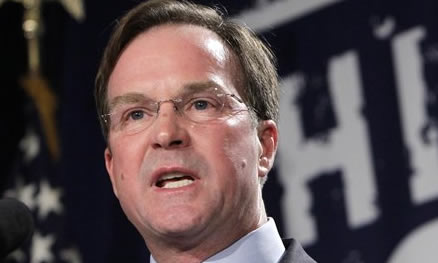
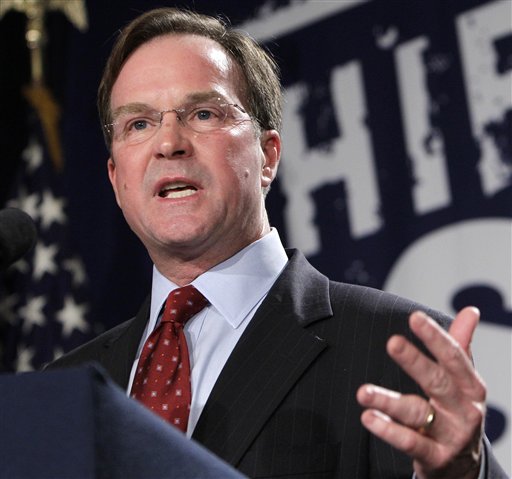
The appeal in the Michigan case comes from state Attorney General Bill Schuette, following a ruling from the sharply divided 6th U.S. Circuit Court of Appeals in Cincinnati. The appeals court, by an 8-7 vote, found fault with the 2006 constitutional amendment to outlaw “preferential treatment” on the basis of race and other factors in college admissions. The provision also applies to affirmative action in public employment and government contracting, but those issues are not being challenged.
The appeals court said the constitutional amendment is illegal under Supreme Court rulings from the late 1960s and early 1980s that prohibit placing special burdens on minority groups that want to bring about changes in laws and policies. The court said that forcing opponents of the ban to mount their own long, expensive campaign through the ballot box to protect affirmative action amounts to different, and unequal, treatment.
That burden “undermines the Equal Protection Clause’s guarantee that all citizens ought to have equal access to the tools of political change,” the appeals court said. By way of example, the court said that children of university alumni remain free to lobby lawmakers and university officials to adopt policies to take family ties into account in admissions.
Schuette said the notion that a measure that forbids discrimination on the basis of race can be unconstitutional is legal nonsense.
“Entrance to our great colleges and universities must be based upon merit, and I remain optimistic moving forward in our fight for equality, fairness and rule of law at our nation’s highest court,” Schuette said Monday.
The American Civil Liberties Union’s Dennis Parker said the constitutional ban discriminates against students of color.
“Michigan’s proposal aims to unfairly keep students from encouraging universities to consider race as one factor in admissions but does not do the same for those who are trying to get the school to acknowledge other factors, such as legacy or athletic achievement,” said Parker, director of the ACLU’s Racial Justice Program
Both the Michigan and Texas cases trace their roots to the same Supreme Court decision in 2003 — Grutter v. Bollinger — that upheld the use of race by colleges and universities in their quest for diverse student bodies.
The ruling came in a lawsuit involving the University of Michigan law school.
In response to the court’s 5-4 decision in that case, affirmative action opponents worked to put a ballot measure in front of voters that would outlaw the consideration of race. Similar laws are in place in Arizona, California, Florida, Nebraska, New Hampshire, Oklahoma and Washington, Arizona Attorney General Thomas Horne said in a legal briefing supporting Michigan.
In November 2006, 58 percent of Michigan voters approved the measure. Civil rights groups sued to block the provision the day after the vote.
At the University of Texas, roughly three-fourths of incoming freshmen are Texans who graduated in the top 10 percent of their high school classes. They are automatically admitted under a plan that was designed to increase diversity without taking race into account. After the high court decision in 2003, Texas added the consideration of race among many factors to fill remaining slots.
A white Texan, Abigail Fisher, sued the university after she was denied a spot in 2008.
The justices could rule in Fisher’s favor without upsetting their 2003 decision, especially because Texas already has achieved a measure of diversity through the so-called top 10 plan, which is race-neutral.
In the event they are unable to come to a resolution in the Texas case, the justices also could use the new matter to, in essence, re-argue the pros and cons of affirmative action. The court could rule in the Texas case, order new arguments or decide it is deadlocked 4 to 4 as early as Tuesday, or as late as the end of June.
Justice Elena Kagan is sitting out the Texas case, and also is not taking part in the new one.
It also is possible that the two cases are divorced from one another in the justices’ minds. Gail Heriot, an affirmative action opponent, said she doesn’t see a strong link between the cases.
“Fisher is a tough case. It asks whether a state may choose to engage in race discrimination in college admissions for what it regards as a good cause (even if many people disagree). Schuette asks only whether a state may choose instead to treat its citizens equally regardless of race, color, sex, or ethnicity. To me, the answer to the latter question is obvious,” said Heriot, who serves on the U.S. Civil Rights Commission and also teaches law at the University of San Diego.
The Michigan case is Schuette v. Coalition to Defend Affirmative Action, 12-682.