

Close Menu
The Baylor Lariat
    Facebook X (Twitter) Instagram YouTube LinkedIn
    Trending
    • No. 20 Baylor volleyball’s reverse sweep effort falls short against No. 8 Arizona State
    • Baylor’s 2nd-half offense stalls in 20-10 loss to No. 12 Texas Tech
    • Sports Take: Baylor proved it can compete with the best — it just can’t finish
    • SLIDESHOW: Baylor vs. Texas Tech
    • No. 2 seed Baylor bounces back with 1st round win over Lamar 3-0
    • Baylor’s upset bid fails against No. 4 USC despite hot start
    • No. 20 Baylor volleyball sneaks past Iowa State in gutsy 5-set win
    • Former Baylor Chi Alpha minister pleads no contest to sexual abuse charges
    • About us
      • Fall 2026 Staff Page
      • Copyright Information
    • Contact
      • Contact Information
      • Letters to the Editor
      • Subscribe to The Morning Buzz
      • Department of Student Media
    • Employment
    • PDF Archives
    • RSS Feeds
    Donate
    The Baylor LariatThe Baylor Lariat
    Subscribe to the Morning Buzz
    Friday, November 27
    • News
      • State and National News
        • State
        • National
      • Politics
        • 2025 Inauguration Page
      • Baylor News
      • Waco Updates
      • Campus and Waco Crime
    • Arts & Life
      • Wedding Edition 2025
      • What to Do in Waco
      • Campus Culture
      • Indy and Belle
      • Leisure and Travel
        • Leisure
        • Travel
          • Baylor in Ireland
      • Student Spotlight
      • Local Scene
        • Small Businesses
        • Social Media
      • Arts and Entertainment
        • Art
        • Fashion
        • Food
        • Literature
        • Music
        • Film and Television
    • Opinion
      • Editorials
      • Points of View
      • Lariat Letters
    • Sports
      • Football
      • Basketball
        • March Madness 2026
        • Men’s Basketball
        • Women’s Basketball
      • Soccer
      • Baseball
      • Softball
      • Volleyball
      • Equestrian
      • Cross Country and Track & Field
      • Acrobatics & Tumbling
      • Tennis
      • Golf
      • Pro Sports
      • Sports Takes
      • Club Sports
    • Lariat TV News
    • Multimedia
      • Video Features
      • Podcasts
        • Don’t Feed the Bears
        • Bear Newscessities
      • Slideshows
      • Online Packages
        • Homecoming 2025
        • Lariat 125
        • Sing 2026
        • Welcome Back 2026
        • 2026 Election
    • Homecoming 2026
    • Advertising
    The Baylor Lariat
    Home»News»National

    California pledges changes to help protect drinking water

    webmasterBy webmasterFebruary 9, 2015 National No Comments4 Mins Read
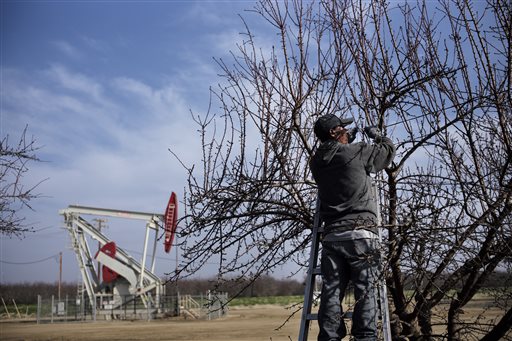
    A farmworker ties almond tree branches with strings as a pumpjack operates near the orchard, Friday, Jan. 16, 2015, in Shafter, Calif. California regulators authorized oil companies more than 2,500 times to inject wastewater and other production-related fluids into federally protected aquifers potentially suitable for drinking and watering crops in the nation’s agricultural center, state records show. (AP Photo/Jae C. Hong)
    Share
    Facebook Twitter LinkedIn Pinterest Email
    A farmworker ties almond tree branches with strings as a pumpjack operates near the orchard, Friday, Jan. 16, 2015, in Shafter, Calif. California regulators authorized oil companies more than 2,500 times to inject wastewater and other production-related fluids into federally protected aquifers potentially suitable for drinking and watering crops in the nation’s agricultural center, state records show. (AP Photo/Jae C. Hong)
    A farmworker ties almond tree branches with strings as a pumpjack operates near the orchard, Friday, Jan. 16, 2015, in Shafter, Calif. California regulators authorized oil companies more than 2,500 times to inject wastewater and other production-related fluids into federally protected aquifers potentially suitable for drinking and watering crops in the nation’s agricultural center, state records show. (AP Photo/Jae C. Hong)

    By ELLEN KNICKMEYER
    Associated Press

    SAN FRANCISCO — California has proposed closing by October up to 140 oilfield wells that state regulators had allowed to inject into federally protected drinking water aquifers, state officials said Monday.

    The deadline is part of a broad plan the state sent the U.S. Environmental Protection Agency last week for bringing state regulation of oil and gas operations back into compliance with federal safe-drinking water requirements. State authorities made the plan public Monday.

    An ongoing state review mandated by the EPA found more than 2,500 oil and gas injection wells that the state authorized into aquifers that were supposed to be protected as current or potential sources of water for drinking and watering crops.

    An Associated Press analysis found hundreds of the now-challenged state permits for oilfield injection into protected aquifers have been granted since 2011, despite the state’s drought and growing warnings from the EPA about lax state protection of water aquifers in areas of oil and gas operations.

    Steve Bohlen, head of the state Department of Conservation’s oil and gas division, told reporters Monday that the proposed regulatory changes were “long overdue.”

    EPA spokeswoman Nahal Mogharabi said Monday that federal authorities would review the new state plan over coming weeks. “EPA will then work with the State to ensure that the plan contains actions that will bring their program into compliance with the Safe Drinking Water Act,” Mogharabi said. She referred to landmark 1974 legislation that sought to protect underground drinking-water sources from oil and gas operations.

    Bohlen said 140 of those 2,500 injection wells were of primary concern to the state now because they were actively injecting oil-field fluids into aquifers with especially good water quality.

    State water officials currently are reviewing those 140 oil-field wells to see which are near water wells and to assess any contamination of water aquifers from the oil and gas operations, Bohlen said.

    Part of the state plan released Monday would set an Oct. 15 deadline to stop injection into those water aquifers deemed most vital to protect them from contamination. State officials also could shut down oil field wells sooner if they are deemed to jeopardize nearby water wells, authorities said. This summer, the state ordered oil companies to stop using at least nine oil field wells that altogether had more than 100 water wells nearby.

    The U.S. EPA had given the state until Friday to detail how it would deal with current injection into protected water aquifers and stop future permitting of risky injection.

    While some of the fluids and materials that oil companies inject underground as part of normal production is simply water, some can contain high levels of salt or other material that can render water unfit for drinking or irrigating crops.

    California is the nation’s third-largest oil-producing state, and oil companies say the kind of injection wells under scrutiny are vital to the state’s oil production.

    Tupper Hull, a spokesman for the Western State Petroleum Association, said the oil-industry group feared state regulators would not be able to meet all the deadlines they were setting for compliance with federal water standards.

    If that happens, oil producers “would be put into the untenable position of having to shut in wells or reduce production,” Hull said.

    Andrew Grinberg, a spokesman for the Clean Water Action environmental group, called the state-permitted injection into drinking-water aquifers a “massive failure” of the Safe Drinking Water Act.

    Bohlen, appointed as the state’s chief oil and gas regulator last summer, said the improperly authorized oil-field operations were a “problem that needs our close attention and an urgent path forward.”

    The plan submitted by the state outlines plans and timelines for dealing with current risks. The proposal also recommends regulatory changes for oversight of oil and gas operations and water aquifers.

    An AP analysis of state records showed 46 percent of those 2,553 oil-field injection wells were approved or began injection after 2011, despite the state’s drought and what were then increasing federal warnings that California was not doing enough to protect potential underground water sources from contamination by oil fields.

    California regulators said they believe that the actual percentage is lower than state records show, but they added they do not know how much lower.

    webmaster

    Keep Reading

    Former Baylor Chi Alpha minister pleads no contest to sexual abuse charges

    Student Senate approves up to $60,000 for Rosenbalm Fountain renovation

    From wooden bleachers to growing campus, 130 years of Baylor family ties endure

    Bridging the gap: Why food matters to different cultures

    Walking in shoes of others: Dougherty takes learning beyond the classroom

    Local pastor connects Thanksgiving tradition, Christian hospitality

    Add A Comment

    Comments are closed.

    Recent Posts
    • No. 20 Baylor volleyball’s reverse sweep effort falls short against No. 8 Arizona State November 23, 2026
    • Baylor’s 2nd-half offense stalls in 20-10 loss to No. 12 Texas Tech November 21, 2026
    About

    The award-winning student newspaper of Baylor University since 1900.

    Articles, photos, and other works by staff of The Baylor Lariat are Copyright © Baylor® University. All rights reserved.

    Subscribe to the Morning Buzz

    Get the latest Lariat News by just Clicking Subscribe!

    Follow the Live Coverage
    Tweets by @bulariat

    Facebook X (Twitter) Instagram YouTube LinkedIn
    • Featured
    • News
    • Sports
    • Opinion
    • Arts and Life
    © 2026 ThemeSphere. Designed by ThemeSphere.

    Type above and press Enter to search. Press Esc to cancel.