By Joana Karoshi | Staff Writer
Baylor Student Government debated allocating up to $20,000 to the university’s Makerspace during its Thursday meeting, as library budget cuts and increased student use have strained the facility’s supply budget. The amendment passed 33-6.
The proposed legislation allocated $18,000 for Makerspace supplies and $2,000 for workshops organized by Makers at BU, a student organization. Senators also discussed reducing the allocation by removing funding for some materials, including crafting and painting supplies.
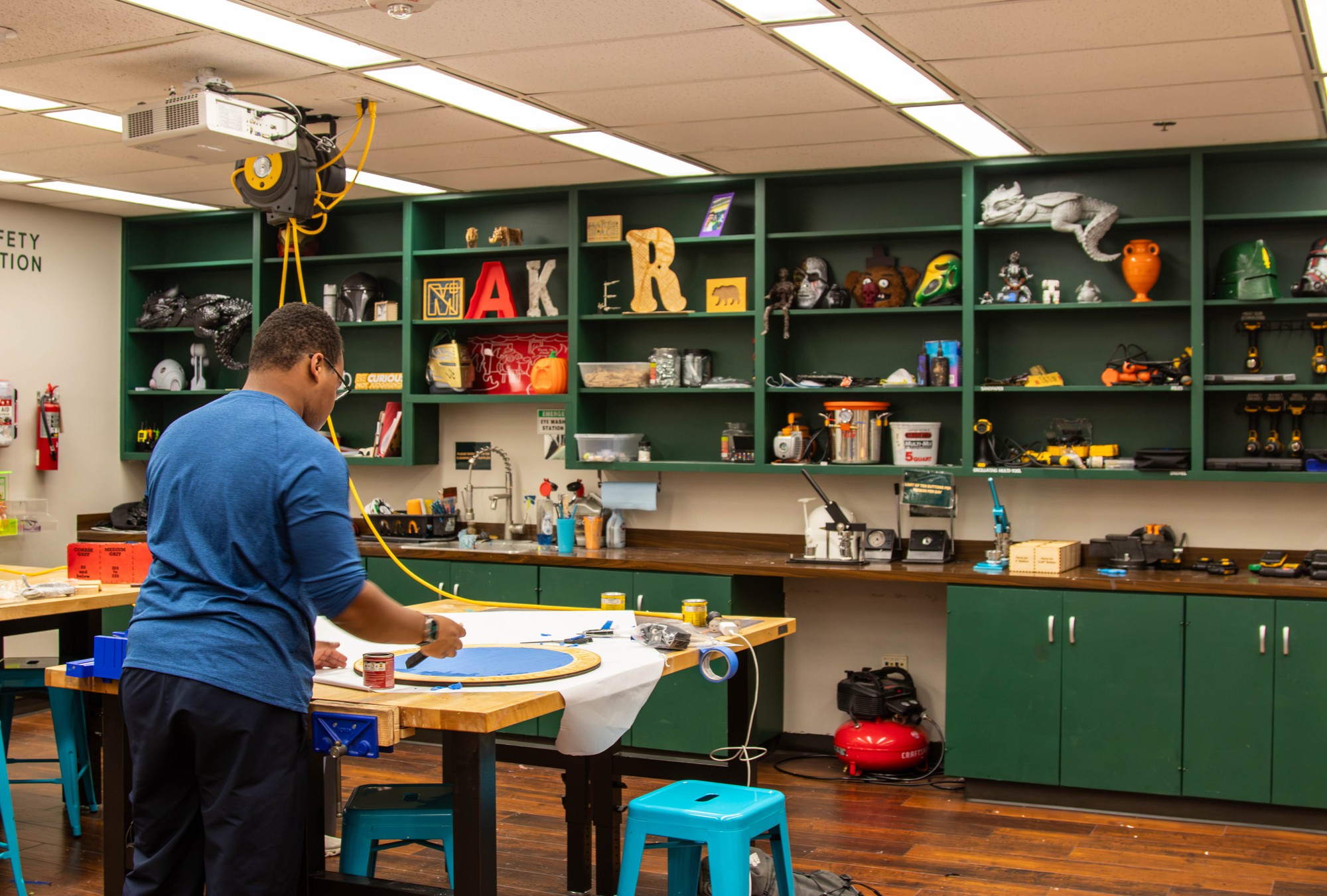
“Maker spaces are shared spaces that are used for both academic and personal enrichment,” Dr. Brett Harper, who oversees the Makerspace and Studios in Moody Memorial Library, told senators.
Harper said the facility hosted approximately 125 in-person classes during the previous academic year and served students from different academic departments. According to Harper, 356 prints were made in the spring of 2026, along with 62 class sessions. This semester, the lab made 648 prints across 57 class sessions.
The space supports engineering assignments, occupational therapy training, paleontology research and picture-based communication aids created by speech pathology students for children with communication challenges.
The Makerspace is also used more often outside scheduled classes. Harper said the facility recorded about 3,600 visits during the previous spring semester outside class and business hours, compared with about 5,400 visits recorded during this semester.
“The library was hit very hard by the budget cuts,” Harper said.
He noted that Baylor Libraries experienced an approximately 12% budget cut across the board.
The debate came amid broader financial pressures at Baylor. In a Nov. 9 budget update, President Linda Livingstone said the university projected an approximately $30 million deficit by the end of fiscal year 2027.
“More specifically, we have made the difficult decision … delay large capital and equipment purchases,” Livingstone wrote.
Harper said about 80% of the library’s annual budget is committed to multiyear contracts for journals and other periodicals the university requires. That leaves limited funding for operating expenses, including Makerspace supplies.
The university’s Alumni Board previously donated $10,000 toward Makerspace supplies. Harper said the donation was helpful, but the facility’s growth and demand for materials exceeded its initial estimates for the current academic year.
Harper said the Makerspace aims to keep academic projects free for students. Currently, charges apply to certain 3D-printing and laser-cutting materials used for personal projects.
“Those are only for non-academic projects,” he said.
The proposed funding would help the facility continue providing materials for academic work while keeping costs low for students pursuing personal projects. Harper said he is pursuing grants and other funding opportunities, although those would offer longer-term solutions rather than immediately address the supply shortage.
“We’re asking for you to partner with us beyond this one year,” Harper told senators.
Senators debated whether Student Government should use its funds to support a university facility while other student organizations also seek funding in the spring. Some questioned whether supporting university operations should fall under Student Government’s responsibility, while others emphasized the Makerspace’s value to students across campus.
San Jose, California, sophomore Conner Gordon first began using the Makerspace in the fall of 2025 after a fellow student showed him projects made in the space. Gordon initially visited about twice a week, primarily to work on projects involving spray paint. He said many students remain unaware that the facility exists until someone introduces them to it.
“Wait, we have a Makerspace?” Gordon recalled students asking when he recommended the facility. Since then, he said, some of those students have begun visiting regularly.
Gordon has used the space for both coursework and personal projects. For a class assignment, he created a silver chest plate inspired by the video game “Dark Souls” to accompany an analysis of how the real world influenced the game’s fictional setting. Outside class, he made a full suit of armor for the Honors Residential College’s annual Humans vs. Zombies game.
The Makerspace has also allowed Gordon to pursue projects that might otherwise be too expensive. Students can access subsidized 3D printing at 2 cents per gram, Gordon said. He said the lower cost has let him print more materials than he could afford on his own.
“I would not still be working on 3D-printed projects if it was more expensive,” Gordon said. “I don’t have that kind of budget in my personal finances.”
Gordon said reduced funding could force the Makerspace to raise prices, limit available materials and reduce access to equipment.
“We would definitely have a lot fewer people coming in,” Gordon said. “We would probably have the same amount of academic interest coming in, but we’d have fewer people coming in just to work on their own projects.”
He also said further cuts could affect the facility’s ability to provide materials for academic projects for free. Because those projects are supported through university funding, reduced resources could limit how many requests the Makerspace can accommodate.
Beyond materials and equipment, Gordon said budget reductions could shift staff time away from helping students create projects and toward processing payments.
“We would be more focused on helping students make the payment rather than helping them,” Gordon said.