By Kamryn Anthis | Staff Writer
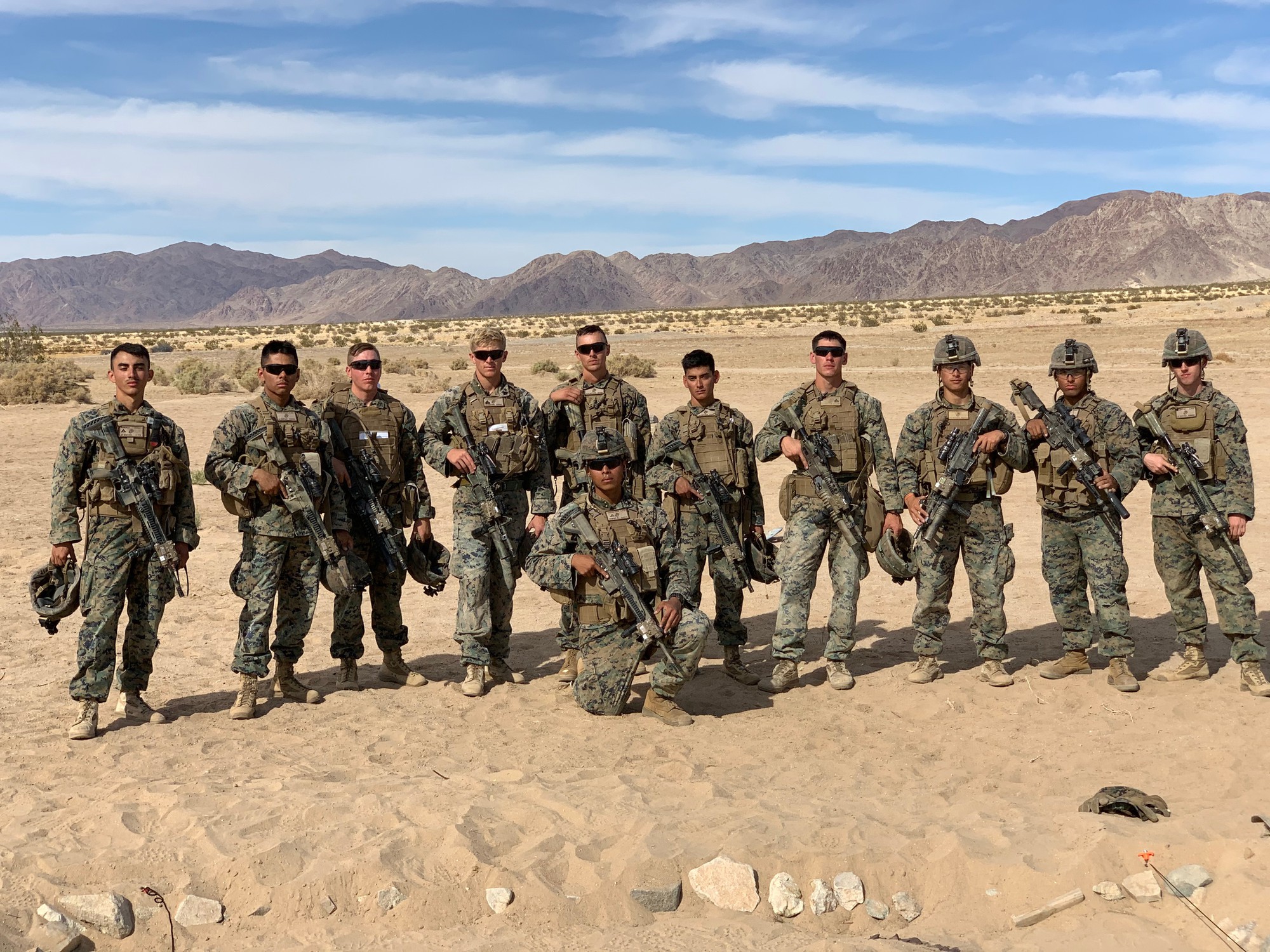
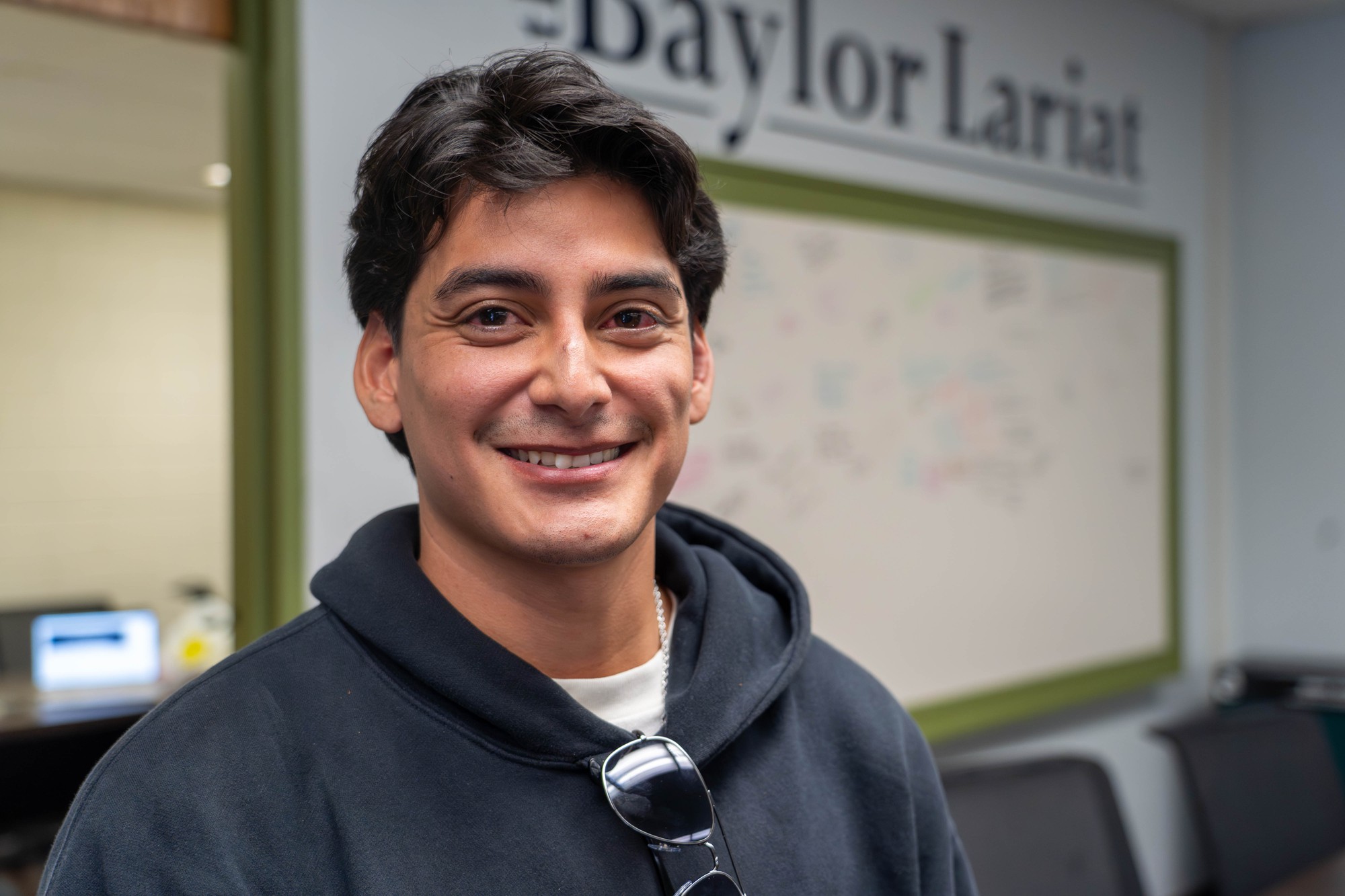
John Flores, a senior originally from Los Angeles, tested out of high school at 17 and enlisted in the United States Marine Corps. From 20-mile hikes with 80-pound weights and simulated helicopter crashes, Flores experienced the physical and mental demands of military service while forming friendships and making memories along the way.
Flores served in the infantry, the Marines’ front-line ground combat force. His time was divided between days on base and weeks in the field completing training exercises. Driven by a desire to do something special, Flores said he enlisted to become one of the “few and proud.”
During his four years of service, Flores was stationed in Guam, Okinawa and Camp Pendleton in California. Though he remained motivated, he acknowledged that “the majority of the time did suck.”
“I knew that I wanted to be there, which made it easier to push past all my doubts,” Flores said. “There’s a phrase that’s used a lot: ’embrace the suck.’ I kind of took that to heart, and I made the best of what I had. I think bad times create good memories. So I have a lot of memories, just cold and miserable out with all my friends.”
When reflecting on his service, Flores said he was most proud of making it through the physical demands.
“There were a lot of times when it was very, very physically demanding,” Flores said. “And I’m not a big guy, just pushing through and proving to myself that I can hang in with them.”
Celeste Flores, John’s sister, said she saw the changes the military had on his character, and how the Marines “gave him more purpose.”
“Before going into the Marines, he was kind of lost,” Celeste said. “Whatever they taught him out there made him more disciplined for sure. I feel like he matured a lot in the military. He went in when he was 17, so he was still a kid. … He had a lot more drive when he came out; he knew what he wanted to do.”
After four years of service, the physical toll on his body led Flores to pursue a less demanding career. Now studying cybersecurity at Baylor, he sees the field as another way to protect people.
“I never planned to go to college,” Flores said. “It wasn’t until after I got out that I realized that I had bad knees, bad back, bad hips … as much as I didn’t want to do a desk job, I feel like that was more practical for me at this point. I wanted to join the military because I do like protecting, in a sense. And cybersecurity, that’s a good thing to do.”
Now in his second year at Baylor, Flores said his military experience and time living away from home have shaped his transition to college.
“I think it’s definitely different in multiple ways, because I’m older than a lot of these students here,” Flores said. “I definitely had a lot more life experience and experience living away from home, and a lot of people aren’t used to that. I was kind of used to being away from family, in a sense, and I was also used to traveling.”
After enjoying his own transition to Baylor, Flores decided to help other students adjust by becoming a Welcome Week leader.
“I really liked Welcome Week … and that made me want to become a Welcome Week leader,” Flores said.
For Flores, mental discipline was just as important as physical strength during his time in the Marines. He credited his mindset with helping him push through difficult training and leadership challenges.
“A lot of people didn’t have the mental strength — not the physical strength, but the mental strength — to do a lot of the things,” he said. “There is discipline to it, but more, it’s a desire to be there because after a time people get fed up with all the stuff that goes on, because leadership’s not always the greatest, and we have to listen to them.”
Flores also recalled enjoying parts of boot camp, which he described as an experience that involved more than physical training.
“I think boot camp was kind of fun,” Flores said. “Obviously, it had its ups and downs … it was definitely a different experience. But I felt like I was already kind of mentally prepared for it before that. It’s more of a mental thing than anything. One thing I didn’t expect is that there are a lot more classes in boot camp than you’d expect. We went to classes every day and learned about Marine Corps history, the rank system, all sorts of stuff like that.”
After boot camp, Flores spent his years training and preparing. Flores said he worked to make the most of the situations he was put in during his time in the Marines.
“I have more fun when things are bad,” Flores said. “So it’s more of a mental game than anything. Obviously it was still physically demanding to some extent, but there were a lot of funny experiences.”
One of Flores’ most memorable experiences came during a volunteer-only deployment to Guam, which he earned through a competitive selection process.
“There were about 200 of us that volunteered, and only 20 of us got to go,” Flores said. “They did it based on our PFT and CFT scores … like fitness tests. I always did pretty well on those. So I got to go, and we got detached from the Marine Corps and attached to the Navy. We did some training down in Coronado, which is where the Navy SEALs trained. We got some pretty cool training done there, like simulators and stuff. … The Navy gave us 2 vans and basically free rein.”
As Veterans Day approaches, Flores reflected on the challenges veterans can face when returning to civilian life. He said some of his fellow service members struggle to reconcile their experiences with what they expected military service to be.
“A lot of times there’s just sort of imposter syndrome,” Flores said. “I think it’s like, ‘What did we do?’ I never saw combat, even though I signed up for the potential to see combat; I never saw it. And a lot of people feel that way, so it’s weird.”