By Kamryn Anthis | Staff Writer
In an age of constant content flowing straight to pockets, misinformation is inevitable. Between rumors of mental insanity and artificial intelligence deepfakes, voters must be cautious about what they believe as the November election draws near.
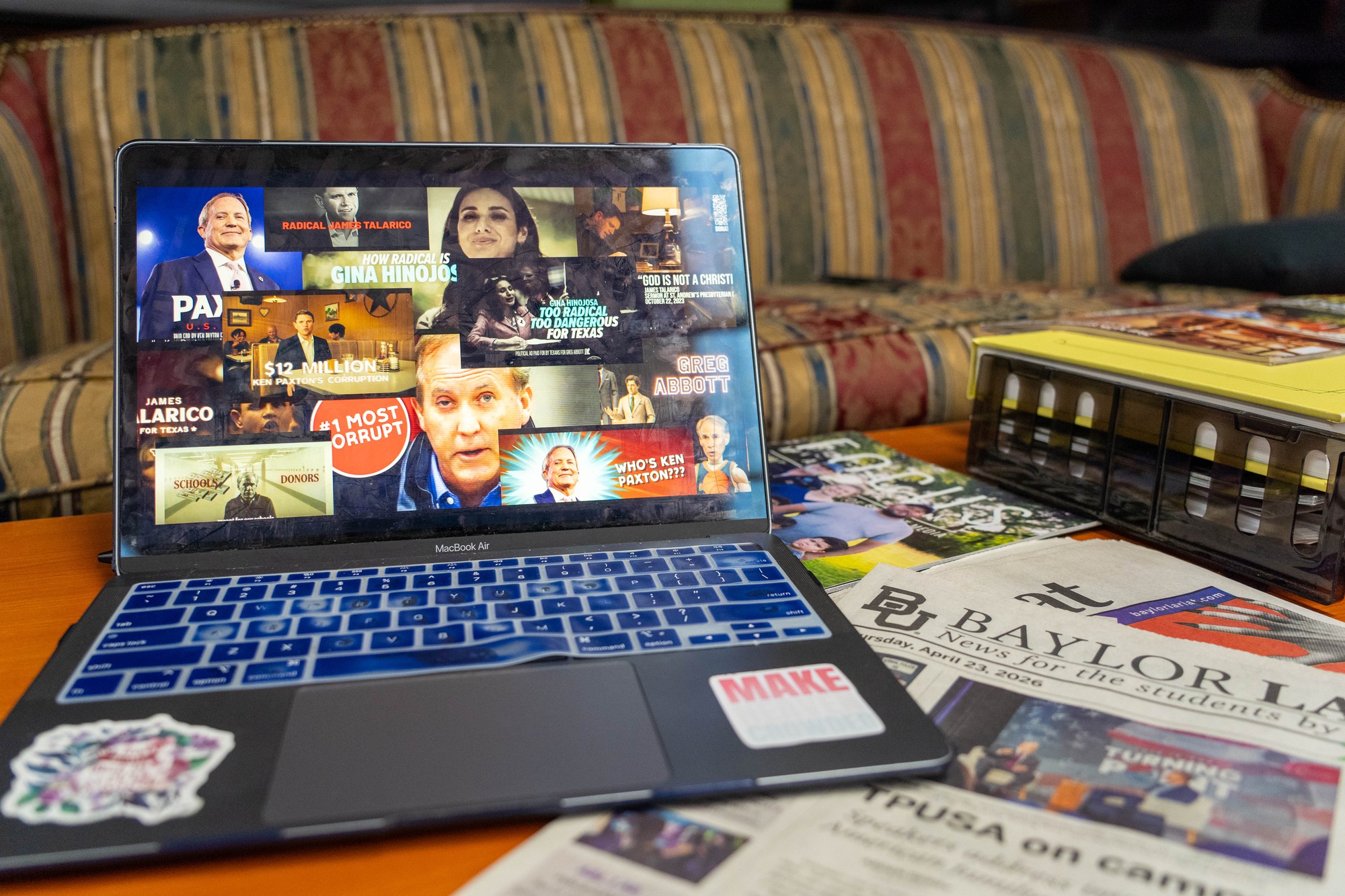
Political attack advertisements have long been used to sway the public’s perception of candidates during election season. But the upcoming midterms are being further complicated by AI-driven media attacks.
Democratic U.S. Senate candidate James Talarico has expressed his frustration with advertisements claiming he’s a communist or in support of gender reassignment surgeries for children, both claims he deems false. AI deep-fakes of Talarico reading from a “King James (Talarico) Bible” have also circulated, fueling conservative criticism of his faith.
Political advertisements can feel unavoidable across television and social media. Cypress sophomore Olivia Galanski said she sometimes feels frustrated by the influx of “redundant and ridiculous” political attack ads.
“With calling James Talarico a ‘freak,’ they tried to use that name against him, but it sort of backfired on them,” Galanski said. “Their ads are so ridiculous that they can’t be taken seriously, especially when they make things up that are easily fact-checked.”
Distinguishing truth from fiction can be difficult given the large amount of information available. Sinai Wood, an associate professor and documents librarian, advised students to use the fact-checking resources provided by the Baylor Library system to “get out and listen to the other side” and “find balance.”
“For students in 2026, it’s not a new phenomenon; it’s just that we have more information coming at us … and sometimes we don’t take the time to evaluate what we’re reading,” Wood said. “And then on top of that, now we have AI and social media that can really take us down a rabbit hole, and if we don’t go out of our own echo chambers, we may never see the other side.
Exaggerations and quotes taken out of context are examples of misinformation used to manipulate voters. In an advertisement run against Attorney General Ken Paxton, it was claimed that he voted to protect animal abusers. This claim was deemed “mostly false” and an exaggeration of the true intent of the vote, which did not decrease punishment for the crime.
“When a student comes across information, and it seems kind of unreal or outrageous, you need to consider a variety of things,” Wood said. “And you need to consider who is saying it. … Look at the source of the information — do they have the authority, the credentials, to provide this information? You need to also see if other sources are saying the same thing, and then trace where the story is coming from.”
As the November midterms draw near, the ever-changing nature of media and how candidates can manipulate it in their favor continues to affect voter attitudes. Wood sympathized with students who may not be accustomed to the skepticism required to discern the truth behind political claims.
“We know that information has value, and students tend to be, for the most part, very trusting of things that are written in print or they see online,” Wood said. “So we try to teach them to sift through the information.”