By Hannah Webb | News Editor
For some Baylor students, the midterm election comes down to rent and grocery costs. For others, it is a question of human dignity, the integrity of elected officials or the role religion should play in government.
The issues overlap, but students do not always agree on which deserve the most attention. Baylor students revealed different priorities shaping how they approach the ballot, from immigration policy and economic security to political corruption and religious values.
Immigration
Immigration emerged as a defining issue for students, though their concerns reflect different ideas about what the government owes the people affected by its policies.
Longview sophomore Lillian Mauriello said her primary concern is how politicians treat immigrants and other marginalized groups. Although she recognizes the importance of economic issues, she said her personal circumstances — including scholarships and financial support from her parents — make immigration a more immediate voting priority.
“I think the most important thing to me is what’s happening with immigration and the humanity with which election officials and politicians are treating immigrants,” Mauriello said.
Crawford senior Luke Landskov also identified immigration as his top concern, but approached it from the perspective of border security. He said political developments in France have influenced how he thinks about immigration policy and what the United States could face if it loosens border restrictions.
For Landskov, the issue extends beyond the border itself to questions about national identity and preserving traditions.
Mansfield freshman Brayden Banks said immigration matters but ranks lower than corruption or economic security. He questioned the tendency of politicians to blame immigration for broader problems instead of addressing their underlying causes.
“I don’t think that immigration, as some people like to say, is the root of all the issues that go on today,” Banks said.
Belleville, Illinois, sophomore Thomas Miller, who is registered to vote in McLennan County, said he approaches immigration through a broader understanding of human dignity. He said he evaluates candidates based on their commitment to protecting human life, including the unborn and immigrants.
Economy
Even among students who rank other issues first, economic security remains part of the calculation.
Banks said he pays particular attention to whether candidates have plans to address the cost of housing, electricity and water. Rising expenses, he said, make poverty an increasingly pressing concern for Texans.
“If a politician brings up the cost of living, that’ll also grab my attention more,” Banks said, adding that he looks at candidates’ records to determine whether their actions match their promises.
Landskov similarly identified the cost of living as a major concern. For students approaching graduation or preparing to enter the workforce, the economy may become a more immediate concern as they begin supporting themselves.
Miller, meanwhile, acknowledged the economy’s importance but argued that other unresolved questions about the dignity of human life take precedence. He said that if the government were functioning properly, he would be more concerned about economic issues.
“I think it’s important, but it’s forced to be a secondary issue, which is bad because that means it’ll just keep going downhill,” Miller said.
Corruption & Integrity
For Banks, the question of whether politicians can be trusted comes before nearly everything else.
He said he looks for evidence that elected officials use their positions to benefit themselves financially rather than serve the public. The influence of money in politics, he said, has made corruption and integrity central to his evaluation of candidates.
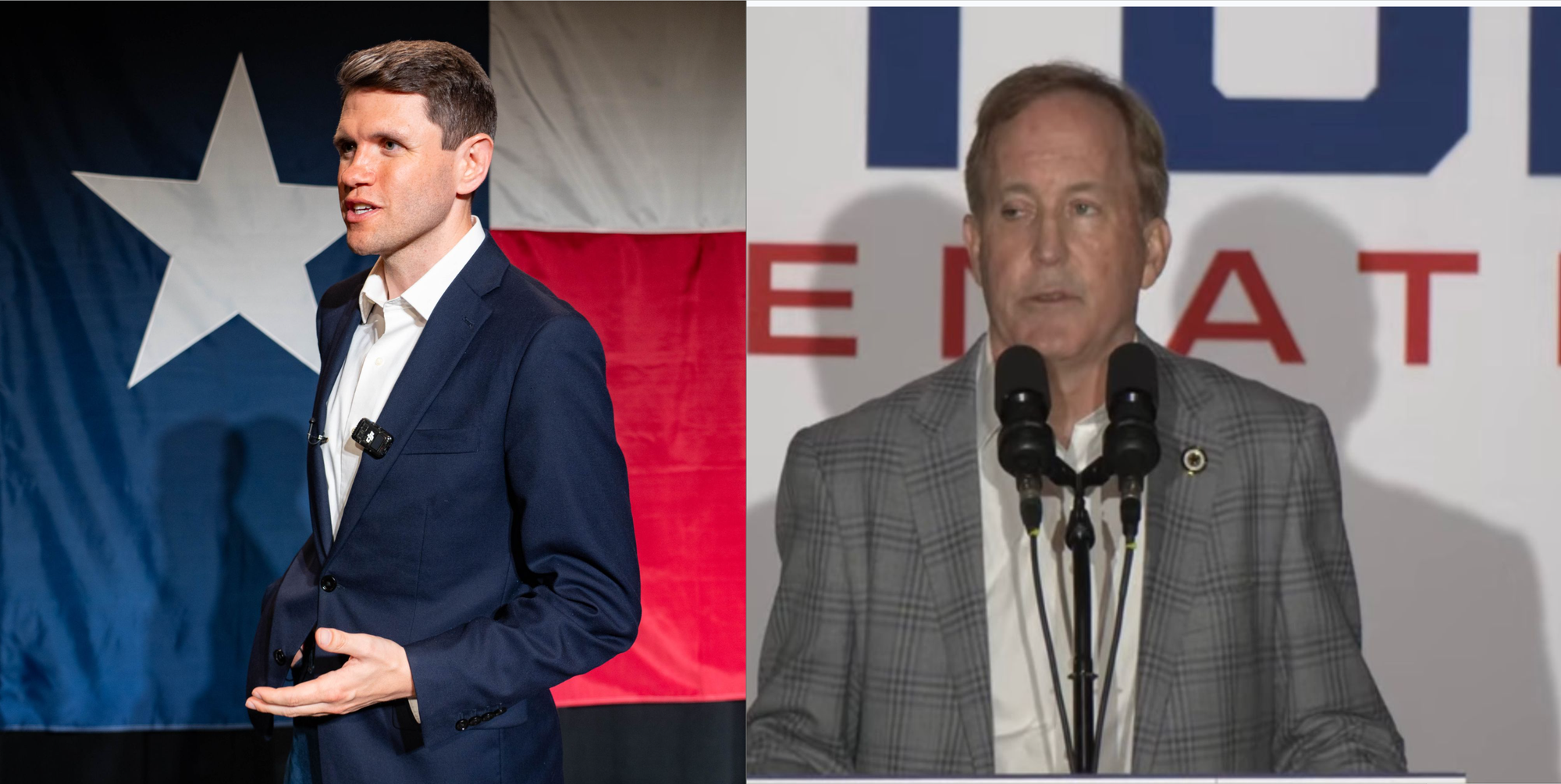
That concern also surfaced in Mauriello’s assessment of the Texas U.S. Senate race between Republican Ken Paxton and Democrat James Talarico.
Mauriello said allegations of corruption surrounding Paxton have become a prominent argument against his candidacy. She views corruption as a particularly important issue in a race that has attracted significant attention.
Landskov said he has also heard concerns about Paxton’s record as attorney general, though he acknowledged that he did not live in Texas during much of that tenure.
The students’ concerns differed in emphasis, but they agreed that candidates should be judged not only by the positions they campaign on, but also by how they have exercised power.
Religion
Religion adds another layer to how some students evaluate candidates, particularly in a Texas Senate race in which both Paxton and Talarico have emphasized their religious beliefs.
Miller said his Catholic faith shapes his understanding of political responsibility, including his positions on abortion, immigration and the death penalty. He believes religious convictions inevitably influence how voters understand the common good.
Mauriello, who also considers her Christian faith when voting, said she does not believe one political party is inherently more Christian than another. Instead, she asks whether a candidate’s policies reflect the call to care for others.
“I want to be able to articulate my reasons for who I’m voting for,” Mauriello said.
Landskov offered a more strategic interpretation of the candidates’ religious appeals. He suggested Talarico’s emphasis on faith may help him reach Christian voters, while Paxton relies more on his established support among Republicans and Christians.
Banks, meanwhile, said he opposes efforts to bring religious endorsements into public school classrooms, citing First Amendment concerns. For him, education policy is another test of how candidates understand the limits of government.
Making their voices heard
Despite their different priorities, students also shared an interest in political participation.
Mauriello said voting is a way to care for others, a perspective she believes resonates with Baylor’s Christian community. She worries that midterm elections receive less attention than presidential races, leaving some voters unfamiliar with the offices and candidates on their ballots.
Landskov said he is encouraged by how many young people he has seen voting during this election cycle. He said members of his generation sometimes assume their votes will not make a difference.
Seeing them participate anyway, he said, is something to be proud of regardless of the outcome.