By Anne Wall | Reporter
People often discard hair once it falls out, but artist Rosemary Meza-DesPlas has found another use for it.
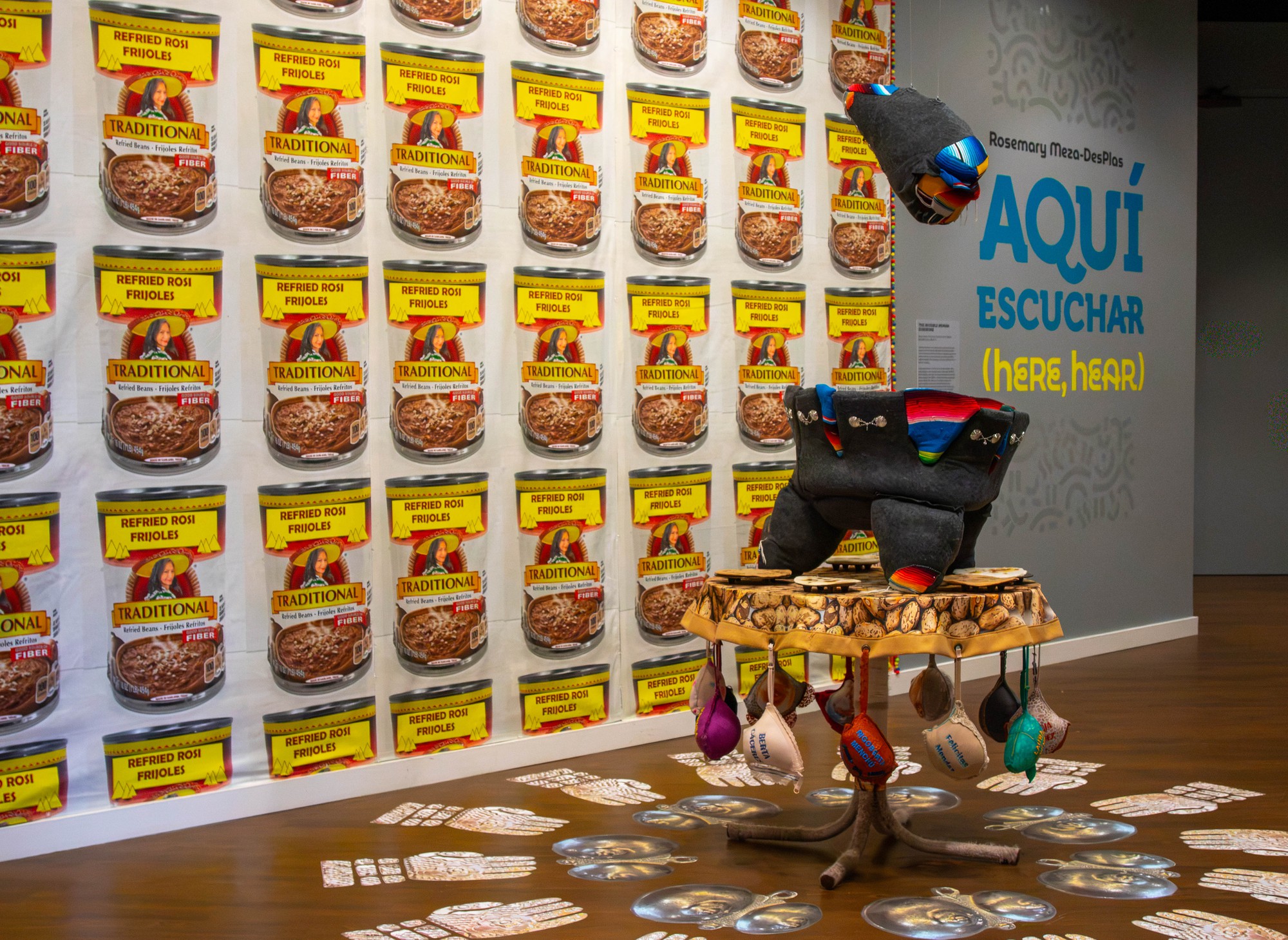
Students can view “Aquí, Escuchar,” an exhibit by visual artist Rosemary Meza-DesPlas, for free at the Martin Museum of Art through Nov. 7. The exhibit, which preserves the artist’s own human hair, is an homage and commentary on ethnicity, identity and the aging of women.
Allison Chew, director of the Martin Museum of Art, said that the exhibit brings together multiple stories about the feminine experience, especially for women of Hispanic descent.
“[Meza-DesPlas is] not necessarily looking to pinpoint one particular thing; she’s trying to bring in more stories, lots of stories of women,” Chew said.
The exhibit’s Spanish title has symbolic meaning. “Aquí” means “here,” while “escuchar” means “to hear.”
“As a multidisciplinary artist, I create figurative artworks exploring the intersection of gender inequality, political agency, and cultural misconceptions,” Meza-DesPlas said in a statement to Baylor. “Challenging beauty standards, the feminine body is portrayed with attention to veracity.”
In a 2026 interview with Arts and Culture Texas, Meza-DesPlas discussed the impact of the exhibit’s name and how women over 50 often feel pressure to conceal signs of aging.
“We’re supposed to dye our hair and get rid of the gray,” Meza-DesPlas said. “The aging woman is often invisible in society and pushed to the side.”
The art installation includes several pieces in which Meza-Desplas’s hair is sewn directly into a portrait.
“I love the depiction of the woman here because she’s not a model — she’s a real woman, which I really appreciate,” Chew said.
Meza-Desplas has been collecting her own hair for 25 years, and Chew said the practice has inspired others to give Meza-Desplas their hair as well.
“Working with hair is an act of resistance,” Meza-DesPlas said. “Hair is tied to identity and certainly how you present it as part of your identity. It’s tied into DNA, race and ethnicity.”
The exhibit displays Meza-DesPlas’ aging through her hair. The first hair featured is brunette, with subsequent strands becoming grayer.
Meza-DesPlas has centered her work around the “invisible woman syndrome,” which she describes as the idea that women become less visible or valuable to others as they age.
“The aging woman is often invisible in society and pushed to the side,” Meza-DesPlas said.
Meza-DesPlas has embroidered the names of notable Latina activists, such as Dolores Huerta and Adelina Otero-Warren, into several of her works.
Michael Schuetz, collection manager at the Martin Museum of Art, said Meza-DesPlas’ exhibit aligns with the museum’s desire to project unheard women’s voices.
“There’s some smaller narrative woven into it, but the larger picture is about the missing women,” Schuetz said. “That piece probably speaks about all of the work in here. It’s a culmination of each piece.”