By Joana Karoshi | Staff Writer
A neurological explanation of resilience, centering exercises and journaling one’s feelings are all packed into a one-hour credit course — The Science of Thriving.
The Science of Thriving is an elective course offered by the Department of Public Health in the Robbins College of Health & Human Sciences. According to Baylor’s Student Health and Wellness page, the class is designed to “understand and strengthen their capacity for resilience and well-being.”
Amber Thompson, coordinator of the Resilience Initiative and a professor of the course, said the idea for the class emerged from patterns she noticed while working in Baylor’s Success Center, where students often came in for academic help but revealed deeper struggles beneath the surface.
“We realized we needed to provide a resource that supported students before they reached a point of crisis — whether that was mental health, academic or otherwise,” Thompson said.
For students like Houston senior Olivia Davis, the need for support made the course immediately appealing.
“I always wanted to take a stress management class,” Davis said. “When I saw something that was targeted towards mental health and was applicable in our daily lives, I was immediately interested.”
Junior Liam Laddusaw from Inver Grove, Minn., said he was persuaded to enroll after Davis recommended the class, drawn by the opportunity to step away from traditional coursework and focus more on personal well-being.
“It’s nice to have a class during the day where you’re not just learning about the world, but actually taking time to learn about yourself,” Laddusaw said.
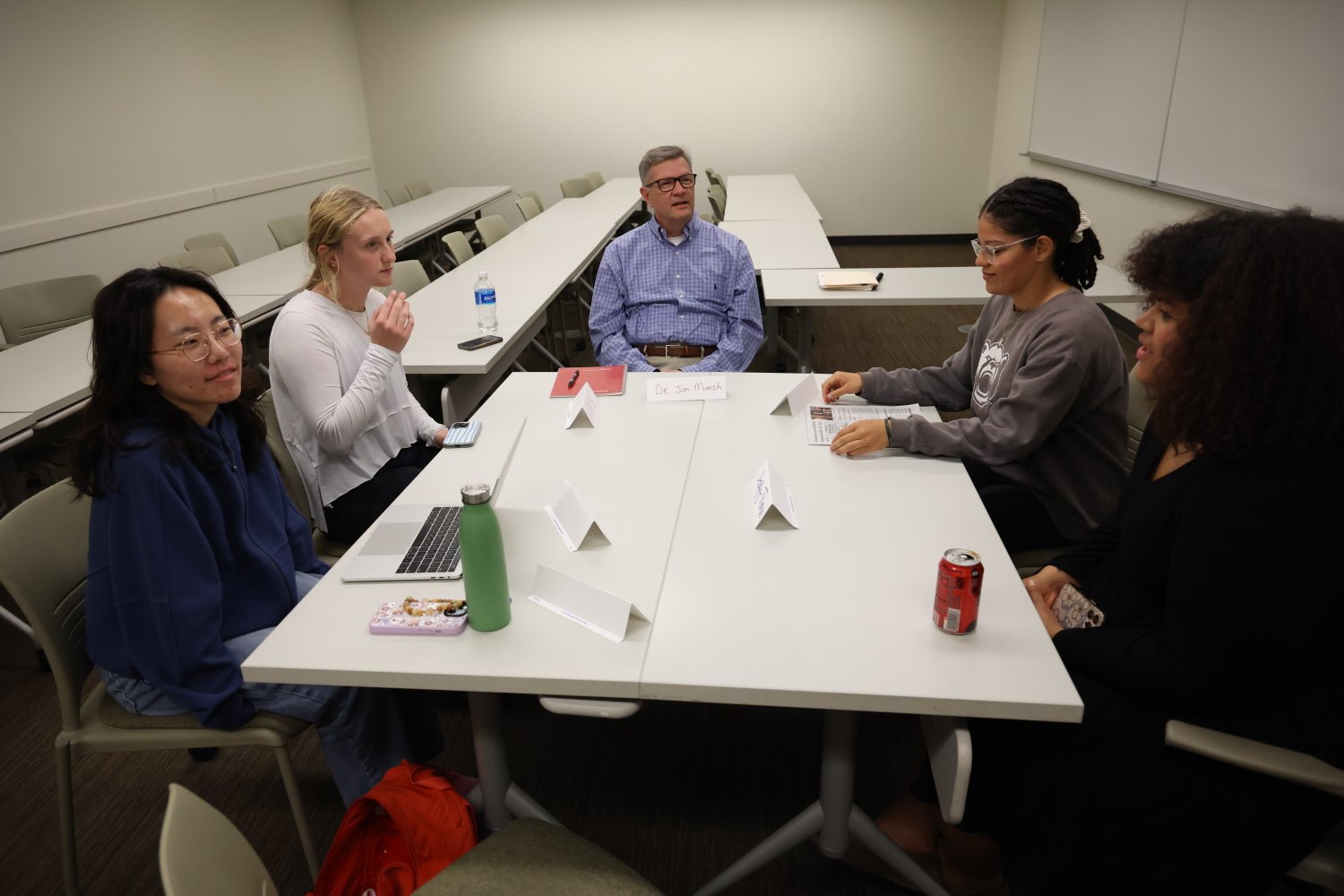
In a schedule often filled with lectures and assignments, both students described the course as a pause allowing them to reflect rather than perform. Through weekly journaling prompts, small-group discussions and centering exercises, students are encouraged to slow down and engage more intentionally with their thoughts and emotions.
For Davis, those practices have translated beyond the classroom.
“The strategies that we learn in this course may look simple at first, but in practice they’ve helped shift the weight of my days,” Davis said. “Life feels a little bit softer to live inside.”
Laddusaw said the course has also shifted how he approaches stress, particularly through small, consistent habits.
“Even just two minutes of centering yourself can change your entire day,” Laddusaw said.
He added that the class’s group setting creates a sense of shared experience that differs from more individual approaches to mental health.
“When you’re in a group, you don’t feel as alone,” Laddusaw said. “You realize other people are going through the same things.”
Thompson said that sense of connection is intentional and central to the course’s design.
“Counseling is a valuable one-on-one resource, but this course provides a space where students can build a sense of belonging and connection while learning how to respond to challenges,” Thompson said.
Rather than focusing solely on theory, Thompson said the course emphasizes application, helping students develop practical strategies they can carry into their daily lives.
“Resilience is not a trait — it’s a response,” Thompson said. “We’re not teaching students what resilience is, but how to practice it when they face challenges.”
While the course is still relatively new, early data suggest measurable outcomes for students. According to post-course assessments shared by Thompson, 87% of students reported improved use of coping skills, 80% said they were better able to cope with stress, and 82% said they were able to apply what they learned to their daily lives.
For some students, those outcomes manifest in subtle yet lasting changes. Fort Worth freshman Mya Gonzalez, who took the course during her first semester, said the class helped shift how she approaches stress.
“I think it really taught me to focus more on the positives of myself instead of harping on the negatives,” Gonzalez said. “Instead of saying, ‘I’m really bad at this,’ taking a step back and being like, ‘I’m really good at this,’ and trying to implement that.”
She added that journaling — one of the course’s core practices — has remained part of her routine even after the class ended.
“Writing things down and just getting it out, it’s therapeutic,” she said.
Gonzalez said the class also created a sense of openness that extended beyond coursework.
“I feel like I’m more open with my friends now,” she said. “We were all able to open up together, and I kind of took that outside of the classroom.”