


By The Editorial Board
Foreign conflicts are nothing new. Many of us were born in the midst of the 2003 Iraq War, as a war in Afghanistan raged on into our teenage years. Since then, we’ve watched conflicts in Russia, Palestine, Yemen and more through our screens, and now — Iran.
On Feb. 28, we again watched a war unfold behind the safety of our screens, more notably through President Donald Trump’s social media platform, Truth Social.
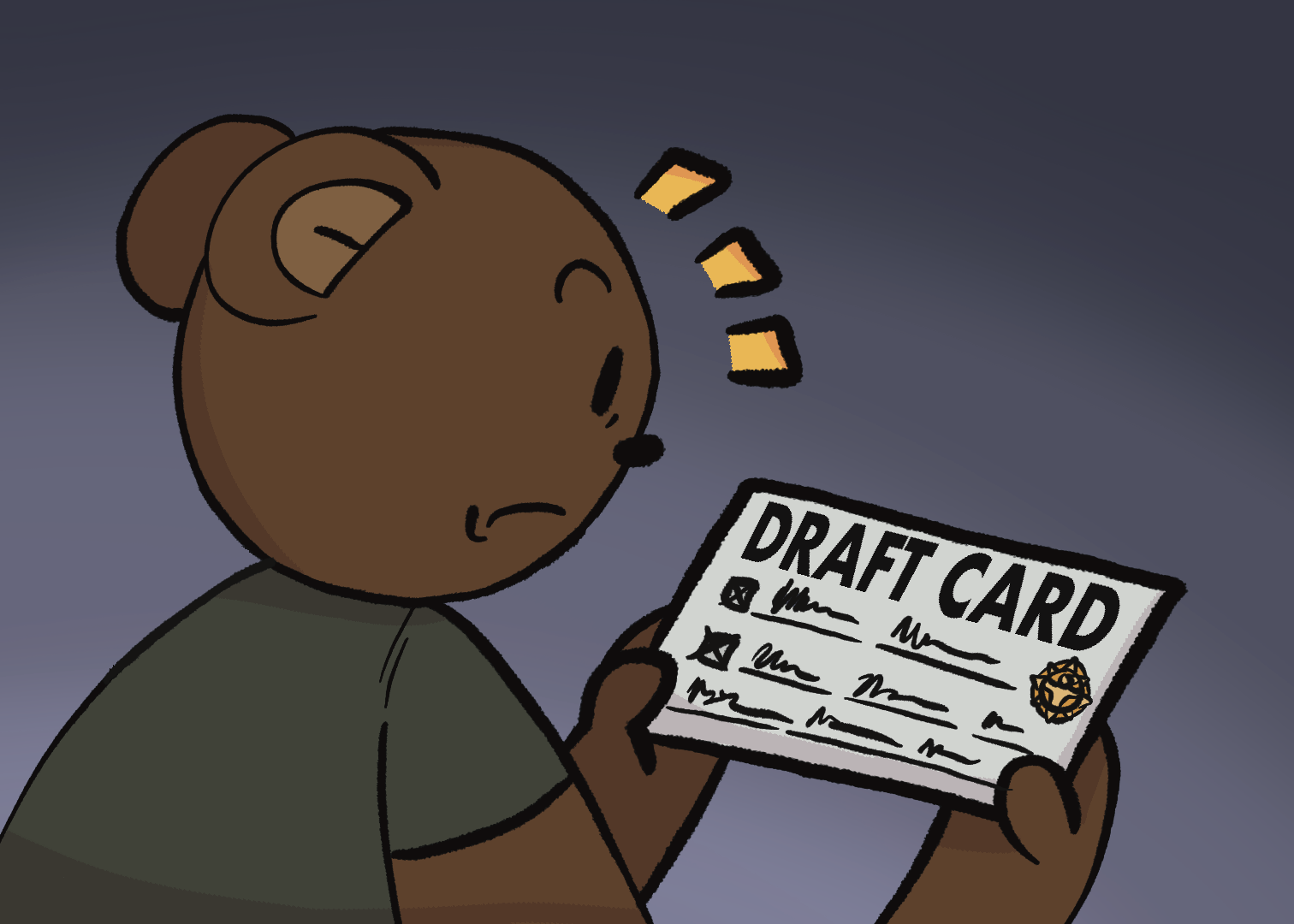
When Trump announced the U.S. had bombed Iran in collaboration with Israel, the internet, for lack of a better word, exploded. Suddenly, college-aged students were confronted with political rhetoric, wondering whether they would be drafted into World War III instead of attending classes.
According to Dr. Peter Campbell, an associate professor of political science who specializes in causes of war and international politics, there is a 100% chance there will not be a U.S. draft to Iran, in his professional opinion.
“The conflict is too limited to require a draft,” Campbell said. “Ground operations, if there are any, will be handled basically exclusively by U.S. and Israeli special forces.”
Campbell argued that the objectives of attacking Iran are not necessarily to impose democracy through military occupation, like in Iraq and Afghanistan. More so, he said Iran is a strategic problem for the U.S., and an existential one for Israel.
“The campaign to disarm Iran and to undermine the regime in Iran is too limited to require anything like a draft,” Campbell said. “Not only that, but the reason you’d need a draft is that you’d have major land operations, which is not something that’s going to happen. America’s not going to deploy ground troops against Iran.”
Throughout the 20-year conflict, 775,000 U.S. soldiers were deployed in Afghanistan, with over 1.5 million in Iraq. Campbell pointed out the difference in objectives between these previous conflicts and the war in Iran. Based on the current U.S. objectives, a draft won’t be needed, he said.
“When you had Iraq and Afghanistan happening at the same time, it put an incredible strain on the volunteer force,” Campbell said. “But there was never, even then, a real danger that you would get a draft.”
It is for these reasons, Campbell said, that it is unlikely we will see a draft at the current state of this conflict. However, an additional point of interest seems to rest in what a draft means for students like us.
First, we have to understand what a military draft actually is. You might also have heard it referred to as conscription, which just means a mandatory enlistment of a country’s armed forces. The U.S. first instituted a draft during the Civil War and used it in four other major wars: World Wars I and II, the Korean War and the Vietnam War.
Additionally, there is a difference between conscription and selective service. In 1917, President Woodrow Wilson signed the Selective Services Act into law, which required all men ages 21-30 to register in the newly created Selective Service. The two are related, but often misconstrued online.
If you are a male U.S. citizen between the ages of 18 and 25, you are already registered in the Selective Service system. Registration does not mean you are automatically drafted the next time we enter into a foreign conflict. Selective Service is similar to a lottery system, in which names would be drawn in the event of a national emergency and with congressional approval.
In the event of a draft, names aren’t chosen out of a bowl in a “Hunger Games” style either. Campbell said that active university students have historically received exemptions from the draft, as have several other groups outlined on the Selective Service official website.
“So there were all sorts of deferments for the draft,” Campbell said. “So even if tomorrow a draft was declared, it’s not as if they would just be randomly picking people out of society. There would be criteria by which some people would get deferments and some people wouldn’t.”
The U.S. military has operated on an all-volunteer force since 1973. Additionally, reinstating the draft would require authorization of both Congress and the president to amend the Military Selective Service Act.
As of now, Campbell doesn’t think we need to pick out any tactical gear. However, this doesn’t mean you are free to disengage. Foreign conflicts do have implications for us, no matter how many oceans stand between us. Gas is already up 80 cents from February, and more importantly, 13 American service members and 1,300-plus Iranians are dead, with thousands more injured.
It’s important to stay engaged as this conflict develops, as that luxury to scroll through “war-core” TikToks is part of what those 13 Americans died for. War spares no one, and the inflammatory clickbait you see online is not a real representation of its impact.
If you’re worried about what a draft or the Iran war might mean for you personally, listen to foreign policy experts, research your eligibility and — above all — stay engaged. Apathy and misinformation kill as bullets and bombs do, without us even setting foot on the battlefield.
